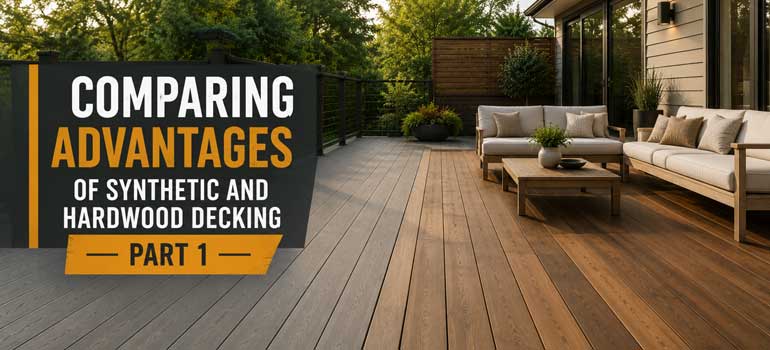
Decking can genuinely transform a garden, giving an outdoor space a defined, usable area rather than just grass or paving. Before getting into the details of a project, though, the first real decision is the material itself: synthetic (composite) or hardwood. Neither is a straightforward "better" choice, and understanding what each material actually is makes the rest of the decision considerably easier.
What Composite Decking Actually Is
Composite decking, sometimes called synthetic or WPC (wood-plastic composite) decking, is manufactured from a blend of wood fibres and plastic, often incorporating recycled material from both sources. It's engineered specifically to resemble natural timber while addressing some of wood's more demanding maintenance requirements.
A few genuine characteristics worth knowing:
- Low maintenance is composite's biggest selling point. It doesn't need staining, sealing, or the periodic treatment real timber requires.
- Consistent appearance across the full length of a board, since it's manufactured rather than grown, without the natural variation timber has.
- Quality varies significantly between products. Cheaper composite decking can look noticeably artificial and may fade or degrade faster than better-engineered alternatives, so it's worth researching specific products rather than assuming all composite decking performs the same.
What Hardwood Decking Actually Is
Hardwood decking is exactly what it sounds like: solid, natural timber, milled and finished specifically for outdoor use. The species commonly used for this purpose, teak, ipe, balau, and iroko among them, are mostly hardy, naturally durable hardwoods chosen specifically for their ability to withstand sustained outdoor exposure, weather, and temperature swings without losing structural integrity.
A few genuine characteristics worth knowing:
- Real, natural material, with all the grain variation and character that comes with that, something composite decking can only approximate.
- Generally more expensive than composite, both in material cost and often in installation, given the specific skills required to work with dense hardwood species properly.
- Requires ongoing maintenance, periodic oiling or treatment to keep the timber protected and looking its best, in a way composite genuinely doesn't.
Weighing The Two Options
Neither material is objectively superior, the right choice depends on your priorities. If low ongoing maintenance matters more than having a completely natural material underfoot, composite is worth serious consideration, provided you research the specific product's quality rather than assuming all composite is equal. If the natural look, feel, and character of real timber matters more, and you're prepared for the additional maintenance that comes with it, hardwood remains a genuinely compelling choice.
Part two of this guide looks at the specific advantages of each material in more depth, cost, longevity, and the practical day-to-day differences once either option is actually installed in a garden.
Synthetic Vs Hardwood Decking: Common Questions
Is composite decking actually made from recycled materials?
Often, yes, at least in part. Most composite decking blends wood fibres and plastics, and many products incorporate recycled material from one or both sources, though this varies by manufacturer.
Why do teak, ipe, balau, and iroko come up so often for hardwood decking specifically?
These species are naturally dense and durable, able to withstand sustained outdoor weather exposure without losing structural integrity, which is exactly what decking needs that indoor flooring doesn't.
Does composite decking really need no maintenance at all?
It needs considerably less than hardwood, no staining or sealing required, but "no maintenance" oversells it slightly. Regular cleaning still keeps it looking its best over time.
Is hardwood decking worth the extra cost over composite?
It depends on your priorities. If the natural material and character matter more to you than minimising upkeep, the extra cost and maintenance are generally considered worthwhile by people who choose it.
If you're planning indoor wood flooring as part of the same renovation project, that's exactly what we specialise in. Call us on 020 7036 0625 or request a free site visit for advice on your indoor flooring.