Monday - Friday 07:30 - 17:30, Saturday 07:30 - 16:00
Floor Sanding in London
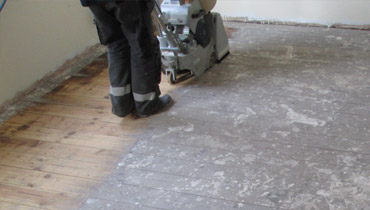
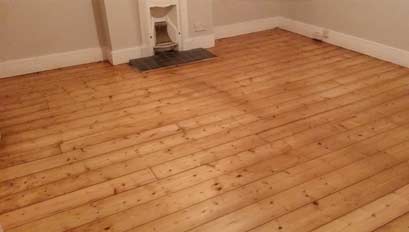
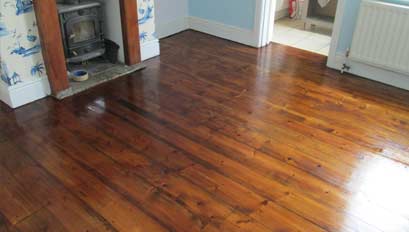
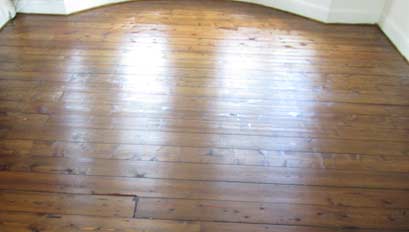
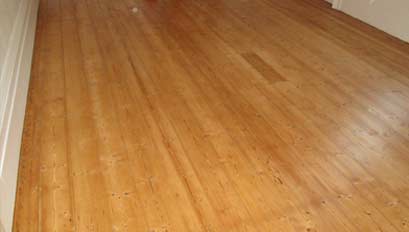
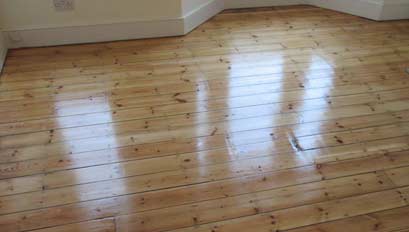
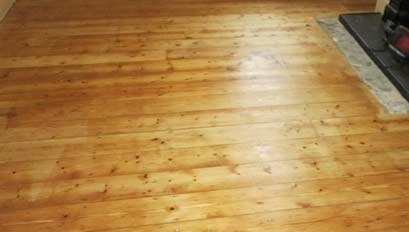
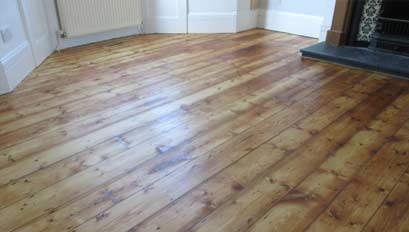
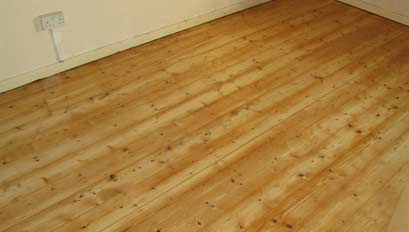
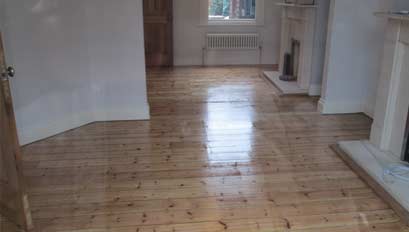
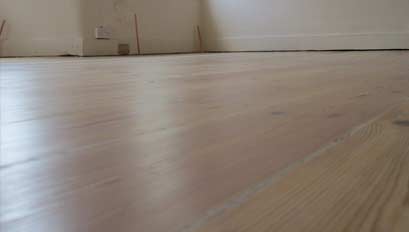
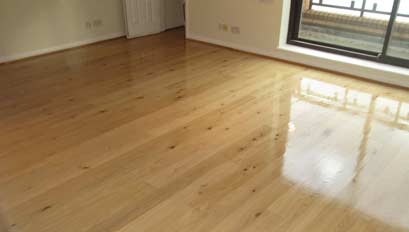
Floor sanding is the process of removing the worn surface layer of a wood floor using professional belt, drum, and orbital sanders, then refinishing with lacquer, oil, or wax — restoring the floor's appearance, renewing its protective finish, and extending its working life by many years.
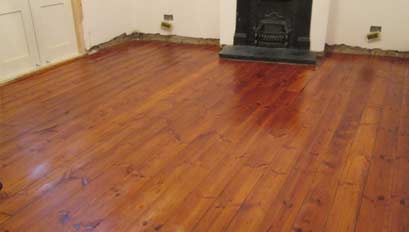
It is one of the most impactful and cost-effective improvements available to London homeowners. A worn, scratched, or dull wood floor that looks beyond saving will, in the vast majority of cases, come back to a condition better than new after a professional sand and refinish. The original timber — particularly in London's Victorian and Edwardian period properties, where floorboards and parquet were laid in dense, high-quality old-growth timber that is no longer commercially available — is almost always worth restoring rather than replacing.
Flooring Services London has been sanding floors across London for over 20 years, working in residential and commercial properties throughout all London boroughs. Floor sanding is priced from £25/m² for sanding, buffing, and varnishing or oiling. For a full breakdown of all sanding and finishing charges, our complete floor restoration price guide has everything you need.
When Does a London Wood Floor Need Sanding?
Floor sanding is the right treatment when the damage or wear on a floor has gone beyond what floor maintenance — recoating, polishing, re-oiling — can address. The key indicators that sanding is needed include:
Finish worn through to bare wood — when the lacquer or oil has worn through entirely in high-traffic areas (hallway thresholds, areas in front of sofas, kitchen doorways) and bare timber is exposed, a full sand is the only way to reset the finish system evenly across the floor.
Deep scratches penetrating the timber — surface scratches confined to the finish layer can often be treated with targeted scratch repair or a recoat. Scratches that have cut into the wood fibres themselves require sanding to level the surface before refinishing.
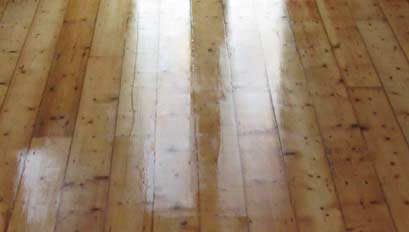
Widespread staining or discolouration — grey or black water staining, UV bleaching near windows, and old paint or varnish that has darkened unevenly over decades all require sanding to remove before a consistent new finish can be applied.
Uneven or cupped boards — boards that have lifted, cupped, or settled unevenly over time create a surface that cannot be properly maintained without first being levelled through sanding.
Complete finish change — switching from a lacquered floor to an oiled or waxed floor, or changing the colour of the floor through staining, requires sanding back to bare timber first. Finish types cannot be applied over incompatible existing finishes.
First sand after new installation — unfinished solid wood and floorboard installations are always sanded on site after fitting, levelling minor height differences between boards and producing a smooth, consistent surface for finishing.
Where wear is confined to the finish layer and the timber itself is sound, wood floor recoating or floor polishing is often sufficient, and significantly cheaper and faster than a full sand. We assess every floor honestly during the free site visit and will always recommend the most cost-effective, appropriate treatment.
Dust-Free Floor Sanding — Why It Matters in London
All floor sanding with Flooring Services London uses dust-extraction equipment connected directly to the sanding machines, capturing up to 99% of airborne particles at source throughout the sanding process.
This matters particularly in London for several reasons:
Occupied properties — the majority of London floor sanding jobs are carried out in occupied homes. Traditional open-drum sanding generates enormous quantities of fine dust that settles on every surface in the property, penetrates into wardrobes and soft furnishings, and takes days to clear. Dust-free sanding allows the rest of the property to remain in normal use during the work.
Period properties — London's Victorian and Edwardian buildings have ornate plasterwork, cornicing, dado rails, and original features that are easily damaged by uncontrolled dust penetration. Dust-free equipment protects these features throughout.
Health and safety — fine wood dust is classified as a respiratory hazard. Dust-extraction equipment protects both the client's household and our own team throughout the sanding process.
Some fine dust will always settle on adjacent surfaces during sanding — we always recommend covering open wardrobes and bookshelves near the work area — but the volume produced with dust-free equipment is a fraction of what traditional sanding generates.
Floor Sanding Services
Not all wood floors are sanded the same way — timber species, construction type, pattern, and wear layer thickness all determine the technique and equipment used. Across London we regularly work on:
Solid wood floor sanding — the most common sanding job in London's Victorian and Edwardian period properties. Solid floors — typically 18–22mm thick — can be sanded multiple times over their lifetime. Key facts:
- Can be sanded 5 or more times, depending on thickness
- Covers oak, pine, Douglas fir, walnut, ash, and all hardwood species
- The preferred restoration option over replacement in almost every case
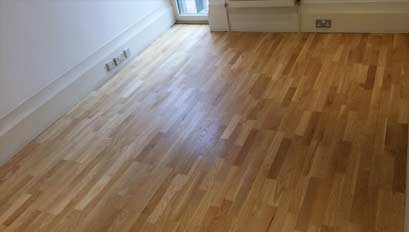
Engineered floor sanding — sanding engineered wood floors while carefully protecting the real hardwood wear layer. The wear layer thickness determines how many times the floor can be sanded:
- 6mm wear layer — typically allows two sands
- 3–4mm wear layer — usually allows one sand
- We measure and confirm wear layer thickness before every engineered sanding job
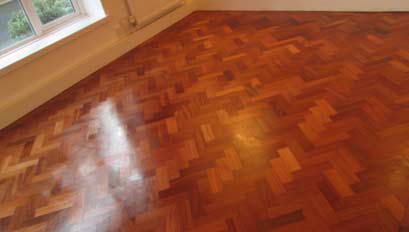
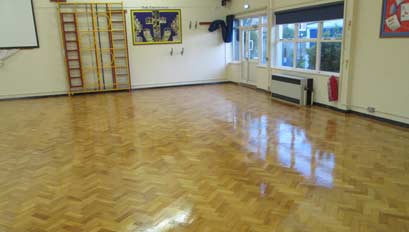
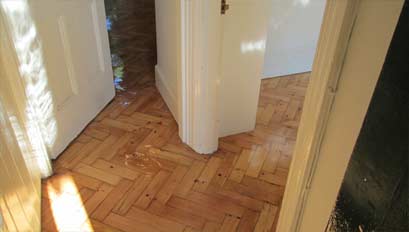
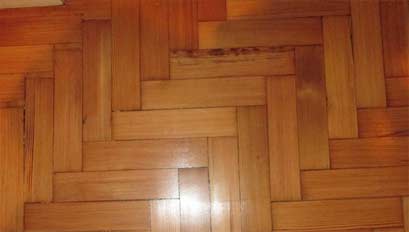
Parquet floor sanding — specialist restoration of herringbone, chevron, and block parquet. Common in London's Edwardian mansion flats and period terraces across Kensington, Islington, and Hackney. Unlike standard floorboards, parquet must be sanded diagonally at 45 degrees across the pattern to avoid working against the grain of individual blocks — a technique that requires specific equipment and experience.
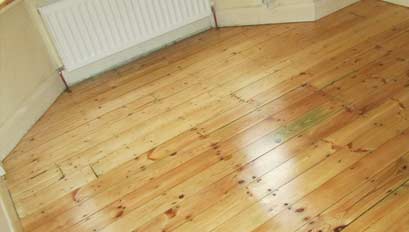
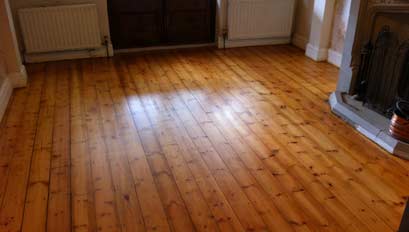
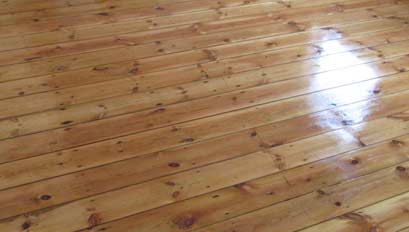
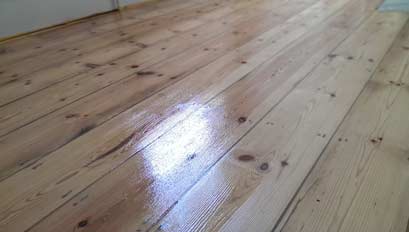
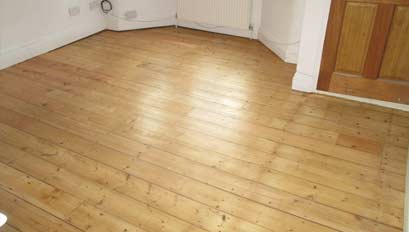
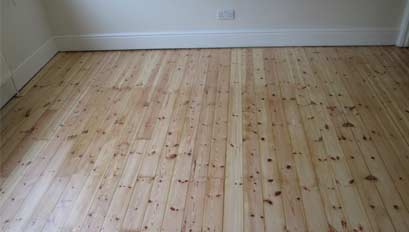
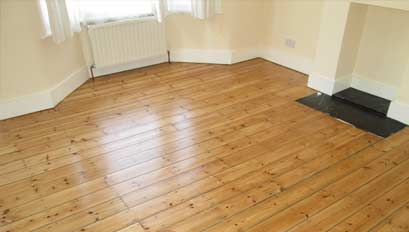
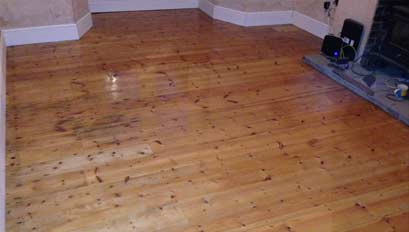
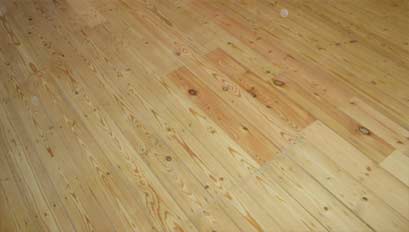
Floorboards sanding — restoring the traditional tongue-and-groove pine and softwood boards that are standard in London's Victorian and Edwardian terraced houses. Old-growth Victorian pine — denser and tighter-grained than modern softwood — responds particularly well to a full sand and refinish, often producing results that look better than any new floor that could be laid over the top.
Stairs sanding — sanding and refinishing wooden stair treads, risers, and string cappings. Staircases require more detailed work than flat floors, including:
- Individual tread sanding around nosings and spindle bases
- Edge and detail sanding where machines cannot reach
- Finishing with Bona Traffic HD — the hardest-wearing lacquer available — for maximum durability on a heavily used surface
Commercial floor sanding — restoration of wood floors in offices, restaurants, bars, retail spaces, and hospitality venues across London. All commercial sanding is scheduled outside trading hours — evenings, early mornings, or weekends — to avoid any impact on business operations.
School floor sanding — specialist sanding of sports hall, gym, and classroom floors in London's schools and educational buildings. Always carried out during holiday periods, using non-toxic, low-VOC finishes appropriate for environments occupied by children. Junckers and similar sports floor systems maintained to manufacturer specification.
The sanding process also includes two further stages that are priced and specified separately:
Gap filling — carried out after the main sand and before finishing. Gaps between floorboards or parquet blocks are filled with flexible resin blended with sanding dust (matching the board colour) or with fitted timber slivers for wider gaps. Pricing:
- Resin gap filling (gaps up to 5mm) — from £7/m²
- Strip gap filling (gaps over 5mm) — from £15/m²
Floor sealing and finishing — the final stage, applying a protective finish coat that defines the floor's appearance, durability, and ongoing maintenance requirements. Available finishes include:
- Water-based lacquer — Bona Mega, Bona Traffic HD (most durable, low odour, fast drying)
- Hard-wax oil — Osmo Polyx, Bona Craft Oil (natural matte look, easy to spot repair)
- Danish oil and wax — for period floors where a traditional finish is preferred
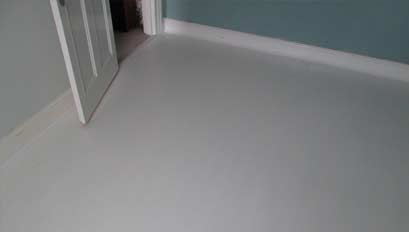
Where a colour change is required before sealing, wood floor staining is applied after the main sand — available in a full range of tones from light whitewash to deep ebony, priced from £8/m².
Our Floor Sanding Process
1. Free site visit and assessment — We examine the floor, identify its type and condition, check for any repairs needed before sanding begins, and provide a fixed-price written quote.
2. Preparation — Furniture moved, protruding nail heads punched below the board surface, and any required repairs — board replacement, squeak elimination, loose parquet re-laying — carried out before sanding starts.
3. Main sanding — Belt or drum sander covers the main floor area, working through progressively finer grits from coarse (to remove old finish and surface damage) through medium to fine (to produce a smooth surface ready for finishing). Edge sander works around the perimeter close to skirting boards. Hand tools and corner sanders used for areas machine access cannot reach.
4. Gap filling — Where specified, flexible resin filler blended with sanding dust is applied to gaps between boards and allowed to cure before the final finishing stage.
5. Staining — Where a colour change is specified, wood dye is applied evenly across the sanded surface and allowed to dry fully before sealing.
6. Finishing — Two or three coats of the specified finish applied by roller or brush, with light abrasion between coats for adhesion. The floor is inspected between each coat for drips, bubbles, and missed areas.
7. Aftercare — Written care instructions and compatible cleaning and maintenance product recommendations provided at the end of every job.
Floor Sanding Costs in London
| Service | Price |
|---|---|
| Floor sanding, buffing & varnishing | from £25/m² |
| Floor sanding, buffing & oiling | from £25/m² |
| Gap filling — resin (up to 5mm) | from £7/m² |
| Strip gap filling (over 5mm) | from £15/m² |
| Wood floor staining | from £8/m² |
*All prices shown are exclusive of VAT.
All prices will be confirmed in writing after the free site visit. Properties within the London ULEZ and Congestion Charge zones may include a daily access surcharge, stated explicitly in every quote. Our complete floor restoration price guide covers all services and charges in full.
Frequently Asked Questions — Floor Sanding in London
How many times can a wood floor be sanded?
For solid wood floors — typically 18–22mm thick — most can be sanded five or more times over their lifetime, depending on how much material is removed each time. Victorian and Edwardian pine floors in London period properties can often be sanded more times than this given their original thickness. Engineered wood floors are limited by the wear layer thickness — a 6mm wear layer allows approximately two sands; a 3mm wear layer may allow only one. We measure wear layer thickness before every engineered floor sanding job and confirm the remaining sanding life before proceeding.
How long does floor sanding take?
A standard room (15–25 m²) is typically completed in one to two days, including sanding and two finish coats. A full ground floor (50–80 m²) usually takes two to three days. Parquet restoration, staircase sanding, and floors requiring significant repair work before sanding take longer. We confirm the expected duration in the written quote after the site visit.
How soon can I walk on the floor after sanding?
With water-based lacquer — the most commonly applied finish — the floor is walkable in socks within two to three hours of the final coat and ready for furniture after 24 hours. Full cure and maximum hardness is reached after five to seven days. With oil and hard-wax oil finishes, the floor is typically walkable within two to four hours, but benefits from 24–48 hours before furniture is replaced and heavy use resumes.
Do I need to move all my furniture before sanding?
Yes — the floor area needs to be clear before sanding begins. We can assist with moving lighter items as part of the job, but heavy furniture, large appliances, and fixed items need to be organised by the client in advance. We discuss furniture and preparation requirements during the site visit and confirm what needs to be cleared before the start date.
Is dust-free sanding completely dust-free?
Our extraction systems capture up to 99% of airborne particles during sanding — the improvement over traditional open sanding is dramatic. However, a very small amount of fine dust will always settle on nearby surfaces. We recommend covering open wardrobes, bookshelves, and any sensitive items adjacent to the work area. The floor area itself and the immediate working space are kept as clean as possible throughout.
Can you sand a floor in a flat without disturbing the neighbours?
We start work from 07:30 Monday to Saturday. Sanding equipment produces significant noise — comparable to a vacuum cleaner at close range — so we cannot sand during early morning or evening hours. For London flats where neighbour relations are a concern, we recommend notifying immediate neighbours before the start date. The sanding phase is typically the noisiest part of the job; finishing coats are applied quietly.
Call us on 020 7036 0625 or request a free quote online — we respond to all floor sanding enquiries the same working day.