Monday - Friday 07:30 - 17:30, Saturday 07:30 - 16:00
Wood Floor Staining in London
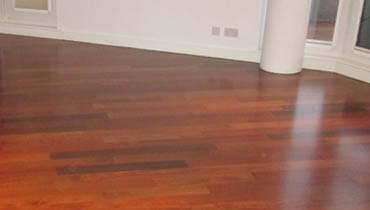
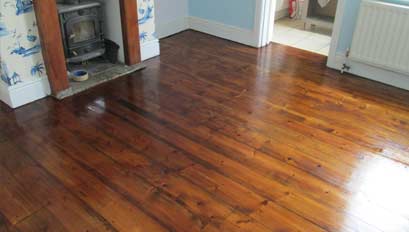
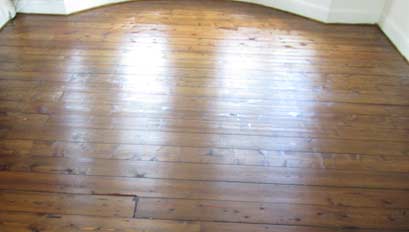
Wood floor staining is the application of a penetrating wood dye to a freshly sanded timber floor surface — changing its colour tone before the protective finish coats are applied — to achieve a specific aesthetic result that the natural timber colour alone cannot produce.
Staining is always carried out as part of a floor sanding project — never as a standalone service applied over an existing finish. The floor must be sanded back to bare, clean timber before any stain is applied, as stain cannot penetrate through an existing lacquer, oil, or wax finish. The staining stage sits between the final fine sanding and the application of the protective finish coats — it is one step in the complete sanding and restoration process.
Not every floor needs staining. Many London homeowners choose to sand and refinish their floors in a clear finish that preserves the natural colour of the timber — the warm honey tone of original Victorian pine, the pale cream of freshly sanded European oak. Staining is the right choice when the client wants a specific colour that differs from the timber's natural sanded tone, or when colour consistency across different timber types or different rooms is the objective.
Flooring Services London applies professional-grade wood stains from Bona, Morrells, Osmo, and Rubio Monocoat across London, working in all floor types — solid hardwood, engineered wood, pine floorboards, and parquet — in residential and commercial properties throughout all London boroughs. Wood floor staining is priced from £8/m², applied as part of a complete floor sanding project. Our floor restoration price guide covers all charges in full.
Why London Homeowners Choose to Stain Their Floors
The most common reasons London clients request floor staining include:
Achieving a specific interior design colour — the most straightforward reason. A client who wants a light grey Scandi-style floor, a dark smoked oak tone for a contemporary open-plan space, or a rich walnut colour in a period reception room cannot achieve those results from natural timber alone. Staining makes these colours achievable on almost any wood species.
Matching floors across different rooms — in London period terraces where different rooms have original boards in varying conditions, or where a new extension or loft conversion has a different timber species than the existing house, staining can bring all floors to a consistent tone across the entire property.
Darkening pale or inconsistent timber — freshly sanded European oak, which is very pale cream when first sanded, can look stark and cold in a London period property where a warmer tone is more appropriate. A light amber or light oak stain warms the colour significantly. Bona Primer Amber — technically a primer rather than a dye — is commonly used for this purpose, adding a warm tone before lacquer is applied without the full colour change of a dye stain.
Lightening or whitewashing original boards — the opposite effect. Victorian pine sands to a warm amber-honey tone that some clients prefer to lighten with a whitewash or grey-wash stain, particularly in contemporary interiors or properties with a lighter, more Scandinavian aesthetic. This is one of the most requested staining effects in London currently, particularly in renovated period properties in inner east and north London.
Concealing colour variation — timber is a natural material with inherent colour variation across boards, and in some floors this variation is more pronounced than the client wants. A stain — particularly a mid-tone rather than a very light or very dark colour — reduces visible colour variation between boards by bringing all boards closer to a consistent target tone.
Colour-matching replacement boards — where new boards have been fitted as part of a repair and the replacement timber is lighter than the aged original, a stain applied to the new boards before the full floor finish can reduce the visible contrast between old and new.
How Wood Floor Staining Works
Wood stain is a penetrating dye — it is absorbed into the open grain of the sanded timber surface and colours the wood fibres themselves, rather than sitting as a film on top of the wood like paint. This means the grain and texture of the timber remain fully visible through the stain — the floor still looks like wood, just in a different colour. The depth and evenness of colour achieved depends on:
- The timber species — open-grained species like oak absorb stain quickly and evenly. Close-grained species like pine are more variable — the denser latewood bands in pine absorb less stain than the softer earlywood bands, which can create a pronounced grain pattern in the finished colour. This is not necessarily a problem — it can look very attractive — but it means the final result on pine is harder to predict from a small sample than on oak
- The sanding preparation — stain applied to a surface that is not fully and evenly sanded produces patchy, uneven colour. The quality of the sanding preparation directly determines the quality of the staining result
- The stain type and concentration — water-based dye stains (Bona Deco, Morrells Light Fast Stains) produce clean, consistent colour. Spirit-based stains dry faster and can be harder to apply evenly on large areas. Oil-based stains are used with oil finish systems (Osmo Wood Stain, Rubio Monocoat colours) and are applied as the first coat of the oil treatment rather than as a separate stage
Stain Colours and Ranges
We work with a comprehensive range of stain colours covering the full spectrum from the lightest whitewash through to deep ebony. The most commonly requested tones in London currently are:
Light and natural tones:
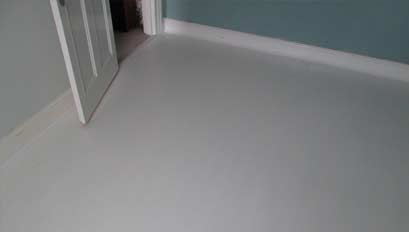
- Whitewash / white — a light white-pigmented stain that opens the grain and gives a bleached, almost Scandinavian appearance. Very popular in contemporary London interiors and renovated period properties in east and north London
- Light grey / grey ash — a cool grey tone currently one of the most requested floor colours in London. Works particularly well on oak; on pine the result is slightly warmer due to the natural amber tone of the pine beneath
- Antique pine / light oak — a warm, slightly amber tone that enhances the natural colour of pale oak and new pine without dramatically changing it. Bona Primer Amber achieves a similar effect as part of the lacquer primer stage
Mid tones:
- Natural oak / honey oak — a mid-warm tone that sits just above the natural colour of sanded oak, enriching it without dramatically changing it. The most popular stain choice for London period properties where the natural character of the timber is valued
- Medium walnut — a classic mid-brown tone with warm reddish undertones. Suits both contemporary and period London interiors and works well on both oak and pine
Dark tones:
- Dark walnut / smoked oak — a deep brown-grey tone that gives oak flooring a dramatic, aged appearance. Very popular in London's higher-specification contemporary residential interiors and commercial spaces
- Dark brown / jacobean — a very deep warm brown, almost chocolate. Creates a strong contrast with white walls and contemporary furniture. Requires careful application on pine, which can look uneven in very dark stains due to grain variation
- Ebony / black — the darkest stain option, producing a near-black floor surface. Striking in the right interior but challenging to apply evenly — particularly on pine — and requires precise execution to avoid lap marks and uneven coverage
Unsure which stain colour is right for your floor? Call us on 020 7036 0625 or book a free site visit — we always provide test areas on your actual floor in your own lighting before committing to any stain across the full surface.
The Importance of Test Areas
Stain colours look different on different timber species, in different lighting conditions, and at different sheen levels under different finish products. A colour that looks ideal on a sample card or in a showroom can look very different on your specific floor in your specific room.
We always sand and stain a small test area — typically 0.5–1.0 m² in an inconspicuous corner or behind a door — before applying any stain across the full floor. The test area is sealed with the specified finish product so the client can see the final result under their own room lighting. Only after the client approves the test area do we proceed with staining the full floor.
This step cannot be skipped. A stain applied across a full floor that does not produce the expected result cannot simply be painted over — the floor must be re-sanded back to bare timber before a different stain can be applied. Test areas protect the client from this outcome and are a standard part of our staining process on every job.
Staining and Finishing — The Correct Sequence
Wood floor staining always follows this sequence as part of a complete floor sanding project:
- Main sanding — floor sanded through progressively finer grits to a smooth, clean, open-grained surface
- Test area — stain applied to a small test area and sealed for client approval
- Full floor staining — dye applied evenly across the entire floor area using a brush, roller, or applicator pad, working in sections along the board grain. Excess stain wiped back before it dries to prevent pooling and lap marks
- Drying — stain allowed to dry fully before any further work. Water-based dyes typically dry in 1–4 hours depending on ambient temperature and humidity; spirit-based stains dry faster
- Light abrasion — once dry, the stained surface is very lightly abraded with a fine abrasive to knock back any raised grain before the finish coat is applied. This stage requires care — over-abrading removes stain unevenly and creates lighter patches
- Finishing — two or three coats of the specified finish applied over the stained surface. Full details on all available finish options are on our floor sealing and finishing page
The finish product applied over the stain affects the final colour result — a matt lacquer will look slightly different from a satin lacquer over the same stain, and a hard-wax oil will produce a different tone to a water-based lacquer over the same dye. We confirm the complete stain-plus-finish combination in the test area before proceeding.
How Different Timber Species Respond to Staining
Not all timber species take stain the same way — understanding the specific characteristics of the floor being stained is essential for a predictable result:
European oak — the most consistent and predictable species to stain. Open grain absorbs dye evenly, producing clean, consistent colour across the surface. Works well with all stain types and colours across the full range.
Victorian pine — more variable than oak due to the pronounced difference in absorption between the soft earlywood bands and harder latewood bands. Light and mid-tone stains on pine produce a striking, enhanced grain pattern — the colour variation between bands is emphasised rather than reduced. Very dark stains on pine can look patchy and require careful technique. We always recommend a test area on pine before committing to a stain, particularly in darker tones.
Ash — a pale, light-toned hardwood with strong grain figuring that responds very well to whitewash and grey stains. The natural pale tone of ash makes it one of the best species for light and cool-toned stains.
Walnut — already a deep brown timber, walnut is rarely stained darker. Lighter stains on walnut can produce interesting results but tend to sit on the surface rather than penetrating as deeply as on paler species. Most walnut floors are finished in a clear or lightly tinted oil to enhance the natural colour rather than changing it.
Parquet (oak blocks) — original Edwardian oak parquet stains very well, and staining is sometimes used to even out colour variation across blocks of different ages or to modernise the tone of a period floor. The diagonal sanding required for parquet means stain absorption is very consistent across all blocks, as all blocks are sanded at the same angle relative to their grain.
Wood Floor Staining Costs in London
| Service | Price |
|---|---|
| Wood floor staining | from £8/m² |
| Floor sanding, buffing & varnishing | from £25/m² |
| Floor sanding, buffing & oiling | from £25/m² |
All prices shown are exclusive of VAT. Staining is always priced in addition to the sanding and finishing costs and is charged per m² of floor area stained. All prices confirmed in writing after the free site visit. Properties within the London ULEZ and Congestion Charge zones may include a daily access surcharge stated explicitly in every quote.
Frequently Asked Questions — Wood Floor Staining in London
Can I stain my floor without sanding it first? No — not if the floor currently has any finish on it. Stain is a penetrating dye that needs to reach the bare timber fibres to work. It cannot penetrate through an existing lacquer, oil, or wax finish. Any floor with an existing finish must be fully sanded back to bare timber before staining can be carried out. Applying stain over an existing finish simply produces an uneven, patchy result that sits on the surface rather than penetrating the wood.
Can you lighten a floor that has been stained dark previously? Yes — but only through sanding. Dark stain penetrates into the timber fibres and cannot be removed chemically or by surface cleaning. The only way to remove dark stain and return to a lighter colour is to sand the floor back to bare timber, which removes the stained surface layer and reveals the natural timber colour beneath. From there, a lighter stain can be applied or the floor finished in a clear product.
Will staining hide the grain of my floorboards? No — stain is a dye, not a paint. It colours the wood fibres but does not coat the surface or obscure the grain. The grain, texture, and character of the timber remain fully visible through a stained finish. The grain is often enhanced rather than hidden — the contrast between lighter and darker grain bands in a stained floor is frequently more visually prominent than in a clear-finished floor.
How does staining affect the long-term maintenance of my floor? Staining does not change the maintenance requirements of the floor — maintenance is determined by the finish applied over the stain, not by the stain itself. A stained floor finished with lacquer requires the same recoating maintenance as a clear lacquered floor; a stained floor finished with hard-wax oil requires the same re-oiling programme as a clear oiled floor.
Can parquet floors be stained? Yes — parquet stains well, particularly original Edwardian oak blocks which have an open grain that absorbs dye evenly. Staining is sometimes used on parquet to even out colour variation between blocks of different ages, or to modernise the tone of a period floor — for example, moving from the yellow-amber tone of old shellac-finished parquet to a cooler, more contemporary grey or natural oak tone.
Call us on 020 7036 0625 or request a free quote online — we respond to all floor staining enquiries the same working day.