Monday - Friday 07:30 - 17:30, Saturday 07:30 - 16:00
School Floor Sanding in London
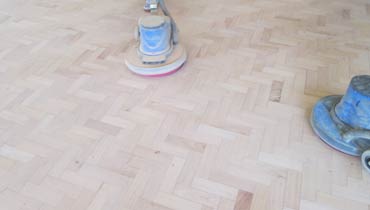
School floor sanding is the professional restoration of wood floors in educational buildings — sports halls, gymnasiums, assembly halls, dance studios, corridors, and classrooms — using industrial-grade sanding equipment, dust-free extraction, and low-VOC finishes appropriate for environments occupied by children, all scheduled during school holidays or weekends to avoid any disruption to the school day.
London's schools contain some of the largest and most demanding wood floor installations of any building type in the city. Victorian and Edwardian board schools — of which London has thousands — were built with solid hardwood flooring in assembly halls and corridors that is now over a century old and in many cases still in excellent structural condition. Post-war schools from the 1950s and 60s frequently have large areas of Junckers solid hardwood or hardwood strip flooring in sports halls. More recent school buildings use a wider variety of floor types — engineered hardwood, sports-specification maple, and composite sports floors — each with its own specific sanding and finishing requirements.
Flooring Services London carries out school floor sanding across London for primary schools, secondary schools, academies, sixth form colleges, and university buildings. We work within school schedules, provide all required health and safety documentation, and use only products appropriate for educational environments. Our floor restoration price guide covers all charges in full.
Floor Types in London Schools
Sports Hall and Gymnasium Floors
Sports hall floors in London schools are almost always one of two types:
Junckers solid hardwood — the most widely installed sports floor system in UK schools. Junckers floors consist of solid beech or oak boards, typically 22mm thick, secret-nailed to a proprietary batten system that provides the controlled surface resilience (flex) required by sports floor standards. Junckers floors have specific sanding and finishing requirements — they must be sanded and refinished using Junckers-approved products and methods to maintain the system's warranty and the floor's sports performance certification.
We sand and refinish Junckers floors using Junckers Strong lacquer — the manufacturer-specified finish for Junckers sports floors — applied following Junckers' maintenance guidelines. We are experienced with the Junckers system and carry out this work to manufacturer specification, preserving the floor's warranty status and EN 14904 sports floor performance certification.
Hardwood strip and maple sports floors — some London school sports halls, particularly those built in the 1970s and 80s, have maple or beech strip flooring not from the Junckers system. These floors are sanded and refinished following the same general approach as solid hardwood — graduated sanding through appropriate grits, gap filling where needed, and a commercial-grade sports floor lacquer finish. Sports hall line markings — the court lines, penalty areas, and boundary markings — are reapplied after refinishing using sports-grade floor paint compatible with the lacquer system used.
Assembly Hall and Corridor Floors
London's Victorian and Edwardian board schools — built across inner London from the 1870s through to the early 1900s — have some of the finest original hardwood floors of any school type. Large assembly hall floors in dense, close-grained oak or pitch pine are still in daily use in schools across Tower Hamlets, Hackney, Islington, Lambeth, and Southwark, often having never been properly restored since the building was constructed. These floors respond extraordinarily well to professional sanding — the timber quality is exceptional and the transformation is dramatic.
Corridor floors in period school buildings are typically the same timber species as the assembly hall, in narrower strip profiles suited to the corridor dimensions. They receive the heaviest footfall of any area in the building — hundreds of pupils multiple times per day — and require the most durable finish specification. Bona Traffic HD two-component lacquer is our standard specification for school corridor floors, providing maximum abrasion resistance.
Classroom Floors
Classroom floors in London schools vary widely by building age:
- Victorian and Edwardian classrooms — original hardwood or softwood strip flooring, typically in good structural condition but carrying decades of old finish, dirt, and surface damage
- Post-war classrooms — a mix of hardwood strip, softwood boards, and in some cases, original parquet in the older rooms
- Modern classrooms — engineered hardwood and composite flooring are more common, requiring wear layer assessment before sanding is committed
Classroom floors are sanded during school holidays, using low-VOC water-based lacquer that off-gases rapidly and leaves no residual odour by the time pupils return.
Dance Studios and Drama Spaces
Dance studio floors have specific requirements beyond standard school floor sanding. A dance floor needs to be smooth enough to allow movement without catching on footwear, but not so smooth or slippery that it becomes unsafe. Bona Traffic HD in a matt finish provides the right combination of surface hardness and controlled slip resistance for dance and drama studio use. We assess slip resistance (Pendulum Test Value) requirements for each studio and confirm the appropriate finish specification before work begins.
Why School Floor Sanding Requires Specialist Knowledge
School floor sanding is not the same as standard residential or commercial floor sanding. The specific requirements that distinguish it include:
Low-VOC product specification — volatile organic compounds (VOCs) are present in many floor finishing products and can linger in enclosed spaces for hours or days after application. Standard commercial lacquers are not appropriate for environments that will be re-occupied by children within days of finishing. We use water-based, low-VOC lacquers — primarily Bona Traffic HD and Bona Mega — which have significantly lower VOC emissions than solvent-based alternatives and are safe for occupied school environments within 24–48 hours of application.
Holiday and weekend scheduling — all school floor sanding is planned around the school's term calendar. We work primarily during half-term, Easter, and summer holiday periods, when the building is unoccupied and the full floor area is accessible. For urgent restoration work, Saturday and Sunday scheduling is available. We plan every project with the school business manager or facilities team well in advance to ensure completion before term restarts.
Large floor areas — sports halls and assembly halls in London schools are frequently 300–1,000 m² or larger — significantly bigger than most commercial floor projects. We use industrial-scale sanding equipment for large-area school floors, working efficiently to complete restoration within the available holiday window.
Health and safety documentation — schools require contractors to provide comprehensive documentation before site access. We provide:
- Public liability insurance certificate (£5 million cover)
- Method statement for the specific sanding project
- COSHH data sheets for all products used
- Risk assessment for the working environment
- Low-VOC product specifications and safety data sheets
All documentation is provided before work begins as standard.
Sports court line marking — sports hall floors have court lines, penalty areas, and boundary markings that are sanded off during restoration and must be reapplied after finishing. We coordinate line marking with specialist sports marking contractors as part of the overall project, ensuring the floor is returned to full use with all markings in place.
Planning a school floor restoration during the next holiday period? Call us on 020 7036 0625 or request a free site assessment — the earlier we assess the floor and agree the schedule, the better we can plan the project around your term dates.
School Floor Sanding Process
1. Pre-holiday site visit and assessment — We visit the school, assess every floor area to be sanded, measure floor areas, identify the floor type and existing finish, check for any repairs needed before sanding, and discuss the project schedule with the school business manager or facilities team. A fixed-price written quote is provided covering all work.
2. Documentation — All health and safety documentation prepared and submitted to the school before work begins. Any access, key holding, or security arrangements confirmed in advance.
3. Preparation — All movable equipment, furniture, and staging removed from the floor area. Protruding fixings punched below the surface. Any required repairs — loose boards re-secured, damaged sections replaced, loose parquet blocks re-adhered — carried out before sanding begins. For Junckers floors, all preparation follows the Junckers maintenance protocol.
4. Main sanding — Industrial belt and drum sanders used for large floor areas, with edge sanders and detail tools for perimeter areas and around fixed features. Dust-free extraction throughout — school environments require the highest standard of dust management given the number of people who will subsequently occupy the space. All doorways to adjacent areas sealed with dust barriers before sanding begins.
5. Gap filling — Where specified, flexible resin filler applied to gaps between boards after the main sand. For sports hall floors, gap filling is assessed carefully — excessive filler in a sports floor can affect surface consistency and ball bounce behaviour.
6. Finishing — Two or three coats of the specified low-VOC, water-based lacquer applied. For sports halls, Junckers Strong (on Junckers floors) or Bona Traffic HD (on other hardwood sports floors) applied in the specified number of coats. For corridor and classroom floors, Bona Traffic HD in matt or satin. Finish applied working from the far end of the floor toward the exit, leaving the floor undisturbed during drying.
7. Court line marking (sports halls) — Sports court lines, penalty areas, and boundary markings applied using sports-grade floor paint after the finish coats have fully cured. Line marking is coordinated with specialist contractors and completed before the school reopens.
8. Final inspection and handover — Floor inspected for even finish, consistent sheen, and complete line marking coverage. All equipment removed from the site. Written confirmation of products used and maintenance recommendations provided for the school's records.
School Floor Sanding Costs in London
School floor sanding is priced on survey — costs vary significantly depending on floor area, floor type, condition, finish specification, and whether sports court line marking is required.
| Service | Price |
|---|---|
| Floor sanding, buffing & varnishing | from £25/m² |
| Floor sanding, buffing & oiling | from £25/m² |
| Gap filling — resin (up to 5mm) | from £7/m² |
| Strip gap filling (over 5mm) | from £15/m² |
| School and sports hall floor sanding | Priced on survey |
All prices shown are exclusive of VAT. For large school floor projects — sports halls, assembly halls, and multi-room restoration programmes — bespoke pricing is provided following a full site survey. All prices confirmed in writing before any work is booked. Our complete floor restoration price guide covers standard service rates.
Frequently Asked Questions — School Floor Sanding in London
Can you guarantee the floor will be ready before term starts?
Yes — we plan every school floor project against the specific term dates provided by the school and build the project schedule to complete all sanding, finishing, and line marking with adequate time before pupils return. We have been scheduling school floor work around London term calendars for over 20 years and understand the importance of the deadline. We confirm the completion date in writing as part of the project agreement.
Do your products meet the VOC requirements for use in school environments?
Yes. All lacquers we apply in school environments are water-based, low-VOC products — primarily Bona Traffic HD and Bona Mega — with VOC classifications well within the requirements for use in educational buildings. We provide full product safety data sheets confirming VOC levels as part of the pre-project documentation package.
Can you sand a Junckers sports floor without voiding the warranty?
Yes — provided the sanding and finishing is carried out following Junckers' maintenance guidelines and using Junckers-approved products. We are experienced with the Junckers system and apply Junckers Strong lacquer — the manufacturer-specified finish — in the correct number of coats following the Junckers maintenance protocol. We can provide documentation confirming the maintenance was carried out to specification for the school's warranty records.
What happens to the sports court markings when the floor is sanded?
Court markings are sanded off as part of the main sanding process — they cannot be preserved during sanding. After the finish coats have fully cured, sports-grade floor paint is applied to reinstate all court markings, penalty areas, and boundary lines to the original specification. We coordinate this with specialist sports line marking contractors as part of the overall project.
Can you work across multiple school sites during the same holiday period?
Yes — we work across multiple London school sites simultaneously where required, deploying separate teams to each site. For academy trusts and local authorities with multiple schools requiring restoration in the same holiday window, contact us to discuss a coordinated multi-site programme.
Call us on 020 7036 0625 or request a free quote online — we respond to all school floor sanding enquiries the same working day.