Monday - Friday 07:30 - 17:30, Saturday 07:30 - 16:00
Wood Floor Sealing in London
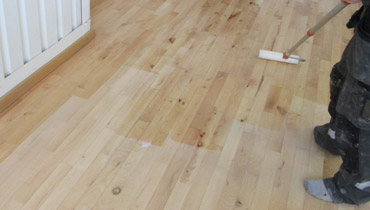
Wood floor sealing is the application of a protective finish — lacquer, hard-wax oil, penetrating oil, or wax — to a sanded wood floor surface, providing a durable protective layer that defines the floor's appearance, sheen level, and resistance to moisture, dirt, and surface wear.
Sealing is the final and most visible stage of any floor sanding and restoration project. The sanding process removes the old finish and prepares the timber surface — but it is the sealing stage that determines how the finished floor looks, how long it lasts between maintenance treatments, and how it ages over time. Choosing the right finish for the specific floor, room, and use pattern is as important as the sanding itself.
Flooring Services London applies professional-grade floor sealing products from Bona, Osmo, Junckers, Loba, and Rubio Monocoat across London, following full certification and manufacturer specification for each product system. We are certified installers for Bona and Osmo — meaning our application methods are backed by manufacturer warranties on the products we apply. Every sealing job starts with a discussion of the client's priorities — appearance, durability, maintenance requirements, and budget — before a finish is recommended.
Floor Finish Types — Choosing the Right Seal for Your London Floor
The finish choice is not simply aesthetic — different finish systems behave very differently in use, require different maintenance, and suit different floor types and room uses. The four main categories we work with are:
Water-Based Lacquer
Water-based lacquer is the most widely applied wood floor finish in London — used in the majority of residential and commercial floor sanding projects across the city. It forms a hard, clear film on top of the timber surface, providing excellent protection against moisture, staining, and surface wear. Key characteristics:
- Fast drying — recoatable in 2–3 hours, walkable in socks within 2–3 hours of the final coat
- Low odour — minimal solvent smell during application, important for occupied London homes and commercial properties
- Available in a full range of sheens — extra-matt, matt, satin, semi-gloss, and gloss
- Durable and easy to maintain — a well-applied lacquer on a London residential floor typically lasts 3–5 years before recoating is needed
We apply two main lacquer grades depending on the use:
Bona Mega — a single-component water-based lacquer for standard residential use. Available in the full sheen range. The most commonly applied finish on London residential floor sanding projects.
Bona Traffic HD — a two-component water-based lacquer offering significantly higher hardness and abrasion resistance than single-component products. The preferred specification for:
- Hallways and entrance areas with heavy foot traffic
- Kitchen and open-plan living floors
- Commercial environments — offices, retail spaces, restaurants
- Staircase treads, where impact loading is concentrated
Junckers Strong — a two-component lacquer from Junckers, the standard finish for Junckers sports hall and school floors, and suitable for commercial use in offices and hospitality environments.
Hard-Wax Oil
Hard-wax oil is a penetrating finish that is absorbed into the upper wood fibres rather than forming a film on the surface. It is a combination of plant-based oils and natural waxes that cure within the timber, enhancing the natural grain and colour while providing a protective layer within the wood itself. Key characteristics:
- Natural matte appearance — the most popular finish for London period properties, where a lacquer finish would look anachronistically shiny on original Victorian or Edwardian timber
- Easier spot repair — scratched or worn areas can be re-oiled locally without refinishing the entire floor
- Requires more frequent maintenance — re-oiling every 1–2 years in residential use, compared to 3–5 years for lacquer recoating
- Breathable — allows the timber to breathe, which suits London's period properties better than a sealed lacquer film in some cases
Products we apply:
Osmo Polyx Oil — the most widely used hard-wax oil in UK residential flooring. Available in clear (original, satin, matt, extra-matt) and a range of tinted shades. Exceptional durability for an oil finish — rated for kitchen and high-traffic residential use.
Bona Craft Oil 2K — a two-component hard-wax oil from Bona, available in a wide range of natural and tinted colours. Popular for contemporary London interiors where a specific colour tone is required alongside a natural finish.
Rubio Monocoat — a plant-based single-coat oil system that bonds molecularly with the timber in one application. Zero VOC and increasingly popular in London's higher-specification and eco-conscious residential and commercial projects. Available in over 40 colours.
Traditional Wax
The oldest wood floor finish and the most appropriate for London's original Victorian and Edwardian floors where authenticity matters. Wax penetrates the timber surface and provides a soft, low-lustre finish that develops character with age. Requires the most frequent maintenance of any finish — professional re-waxing typically annually or biannually — but produces the most characterful and sympathetic result on old-growth pine and oak.
Not sure which finish is right for your floor? Call us on 020 7036 0625 or book a free site visit — we assess the floor, discuss your priorities, and recommend the most appropriate finish before any work is agreed.
Sheen Levels Explained
One of the most common questions we receive is about sheen level — how shiny the finished floor will be. All lacquer and hard-wax oil products are available across a range of sheens:
| Sheen level | Description | Best suited to |
|---|---|---|
| Extra-matt | Almost no reflectivity — the floor looks almost raw | Period properties, Scandi-style interiors, floors where a very natural look is the priority |
| Matt | Low sheen — visible only at certain angles | The most popular choice for London residential floors — natural look with good durability |
| Satin | Medium sheen — a slight lustre visible across the floor | Contemporary interiors, open-plan spaces, commercial environments |
| Semi-gloss | Noticeable sheen across the floor | Hospitality and retail environments, traditional period interiors |
| Gloss | High reflectivity | Rarely specified in modern London interiors — occasionally requested for traditional or period-style projects |
We always show clients the sheen options on a sample board before specifying a finish — the appearance of a sheen level on a small sample card is often very different to how it looks across a full room floor in your own lighting.
Sealing Process — What Happens After Sanding
Floor sealing always follows the main sanding, edge sanding, and gap filling stages. The correct sequence for applying a lacquer finish is:
- Fine sanding — the floor is sanded to the finest grit appropriate for the finish being applied (typically 100–120 grit for lacquer, 80–100 grit for oil)
- Dust removal — all sanding dust removed by vacuum and tack cloth. Any dust remaining on the surface will be trapped in the first finish coat
- Primer coat (where specified) — Bona Classic or Bona Amber primer applied to open-grain timbers (particularly oak) before lacquer to improve adhesion and control grain raise. Bona Amber adds a warm, slightly golden tone to the timber; Bona Classic remains neutral
- First finish coat — applied by roller or applicator pad in even, overlapping passes. Edges cut in by brush
- Inter-coat abrasion — once dry, the surface is lightly abraded with a fine abrasive screen to knock back any grain raise and provide a mechanical key for the second coat
- Second finish coat — applied in the same way as the first. For most residential projects two coats of lacquer are sufficient. For commercial environments or heavily used areas, three coats are applied
- Final inspection — the floor is checked under raking light for drips, missed areas, and roller marks before handover
For hard-wax oil and penetrating oil finishes, the process differs — oil is applied in thin coats with an applicator pad or cloth, worked into the grain, and the excess buffed off before curing. A second coat is applied the following day on new or freshly sanded floors.
Floor Sealing Costs in London
Floor sealing is included in the price of our floor sanding service — it is not charged separately from the sanding work.
| Service | Price |
|---|---|
| Floor sanding, buffing & varnishing | from £25/m² |
| Floor sanding, buffing & oiling | from £25/m² |
| Wood floor staining (before sealing) | from £8/m² |
All prices shown are exclusive of VAT. Full pricing for all services is available in our floor restoration price guide. All prices confirmed in writing after the free site visit. Properties within the London ULEZ and Congestion Charge zones may include a daily access surcharge stated explicitly in every quote.
Frequently Asked Questions — Wood Floor Sealing in London
What is the most durable floor finish for a London hallway?
Bona Traffic HD is the hardest-wearing finish we apply — a two-component water-based lacquer formulated for commercial-grade abrasion resistance. For London hallways, which see concentrated foot traffic including outdoor footwear with grit and moisture from the street, it is consistently the most practical specification. Available in extra-matt, matt, satin, and semi-gloss. The matt finish is the most popular in London residential hallways — it provides maximum durability without looking obviously lacquered.
How long does floor sealing take and when can I walk on it?
The sealing stage itself — applying two coats of water-based lacquer with inter-coat drying and abrasion between — takes approximately half a day to a full day per floor area, depending on size. With water-based lacquer, the floor is walkable in socks within 2–3 hours of the final coat and ready for furniture after 24 hours. Full cure and maximum hardness is reached after 5–7 days — heavy furniture and rugs should not be placed on the floor during this period. Oil finishes are walkable within 2–4 hours but benefit from 24–48 hours before normal use.
Can I change from lacquer to oil without sanding the whole floor?
No — lacquer and oil are incompatible finish systems. Oil cannot penetrate through an existing lacquer film to reach the timber beneath. Switching from lacquer to oil always requires sanding the floor back to bare timber first, then applying the oil system from scratch. If your floor has a lacquer finish and you would like to switch to an oil or hard-wax oil finish, this is done as part of a full floor sanding project.
What is the difference between Bona Classic and Bona Amber primer?
Both are primer products applied before lacquer on open-grain timbers — primarily oak. Bona Classic is a clear, neutral primer that does not change the natural tone of the timber. Bona Amber adds a warm, slightly golden tone that enriches the natural colour of pale oak, making it look closer to the warmed-up appearance of aged timber. For London period properties where the oak has a pale, freshly sanded appearance that looks too light, Bona Amber is often the better choice. We show the difference on a sample area before committing to either product.
How often does a sealed floor need resealing?
A lacquered floor in normal residential use typically needs professional recoating every 3–5 years. A hard-wax oiled floor needs re-oiling every 1–2 years. A waxed floor needs professional re-waxing every 1–2 years. These intervals vary depending on traffic levels — a London hallway or kitchen floor will need attention more frequently than a bedroom. A full sand and refinish is typically needed every 8–15 years, depending on the finish type and maintenance history.
Call us on 020 7036 0625 or request a free quote online — we respond to all floor sealing enquiries the same working day.