Monday - Friday 07:30 - 17:30, Saturday 07:30 - 16:00
Wood Floor Repair in London for Damaged, Loose & Worn Floors
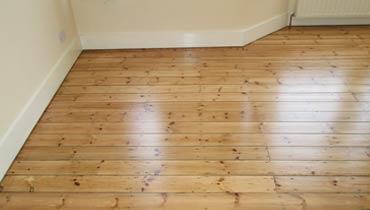
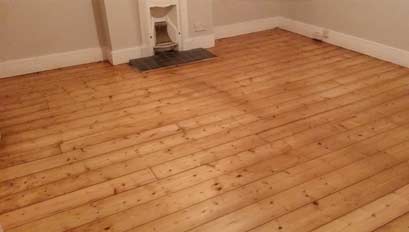
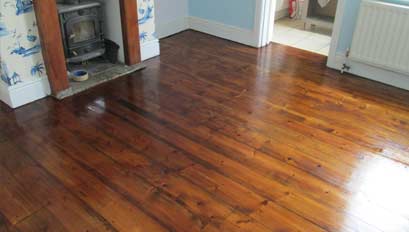
Wood floor repair covers the restoration of damaged, worn, or unstable wooden flooring — addressing everything from loose boards and surface scratches to structural movement, water damage, and failing parquet — to improve both the appearance and long-term durability of the floor without full replacement.
Flooring Services London carries out wood floor repair across all London boroughs, working with solid hardwood, engineered wood, parquet, and traditional floorboards in residential and commercial properties. With over 20 years of experience in London's varied housing stock — Victorian terraces, Georgian townhouses, Edwardian mansion flats, post-war conversions, and modern apartment buildings — we have encountered and resolved practically every type of floor damage there is.
Depending on the condition and type of floor, repairs are often combined with floor sanding and refinishing to produce a consistent, finished result across the entire floor. In some cases a targeted repair alone is all that is needed. We assess every job individually and recommend only the work that is genuinely necessary.
Wood Floor Problems We Repair in London
London's housing stock presents a specific set of recurring floor problems — many rooted in the age of the buildings, the effects of central heating on period timber, and the wear patterns of long-term occupation. The most common issues we deal with across the city include:
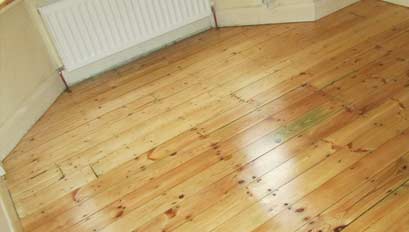
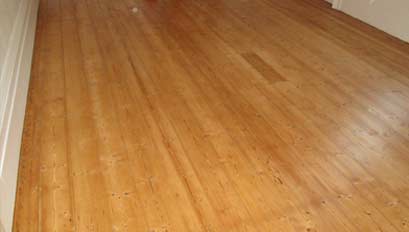
Gaps between floorboards — one of the most frequent complaints in London's Victorian and Edwardian period properties. Solid timber contracts in winter as central heating dries the air, opening gaps between boards that can cause draughts, trap dirt, and affect the floor's appearance. Flexible resin filling or fitted timber slivers resolve most gap problems effectively and durably.
Squeaking and movement — boards that squeak underfoot are caused by friction between boards, between boards and joists, or at loose fixings. In most cases squeaks can be eliminated without lifting the floor, either from above using concealed fixings or from below through a ceiling void where access allows.
Surface scratches and wear — the most visible form of floor damage, ranging from light finish scratches that only affect the top coat to deeper cuts into the timber itself. Light scratches can often be treated with localised refinishing; deeper or widespread scratch damage is best addressed as part of a full floor sanding and recoat.
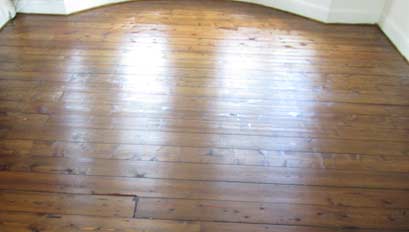
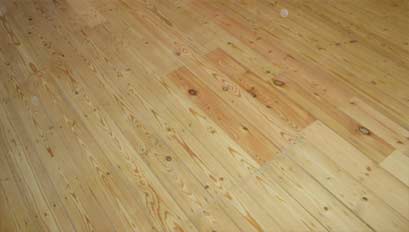
Loose, damaged, or rotten boards — individual boards that have cracked, split, lifted, or rotted through water damage or structural movement can be lifted and replaced without disturbing the surrounding floor. Matching replacement boards to existing period timber requires sourcing reclaimed wood in the correct species and profile — something we do regularly for London's Victorian and Edwardian floor stock.
Water damage and staining — leaking pipes, overflowing baths, condensation around windows, and rising damp in basement rooms are all common causes of water damage to London floors. Grey or black water staining, cupped boards, and localised rot are all repairable, though the source of moisture must always be identified and resolved before repair work begins.
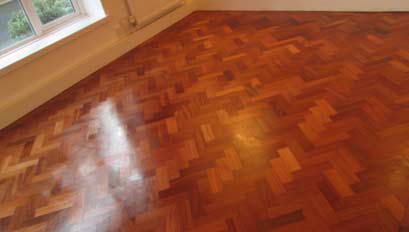
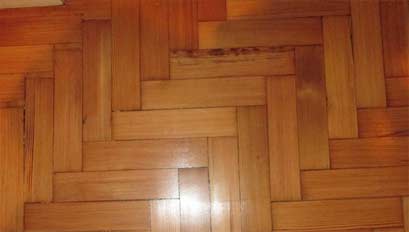
Loose or failed parquet — original herringbone and block parquet floors, common in London's Edwardian and inter-war properties, can develop loose blocks, uneven sections, and adhesive failure over time. Parquet repair requires specialist knowledge of block patterns, adhesion methods, and diagonal sanding techniques.
Worn or failed finish — a floor whose finish has worn through in high-traffic areas, become cloudy, or started peeling is not always in need of a full sand. In many cases floor recoating or floor polishing can restore the surface at a fraction of the cost of full restoration.
Wood Floor Repair Services
We offer a full range of repair services covering all wood floor types. Each sub-service is described in detail on its own page:
Floor Boards Repair — fixing, securing, or replacing individual timber boards. Covers squeaking boards, lifted boards, cracked or split planks, and damaged sections requiring replacement with matching timber. Applicable to solid pine, oak, and hardwood floorboard installations throughout London's period housing stock.
Floor Scratch Repair — treating surface and structural scratches in wood floors. Light finish scratches addressed with localised touch-up or recoating; deeper cuts into the timber treated through spot sanding and refinishing. We assess the depth and extent of scratching before recommending the most cost-effective approach.
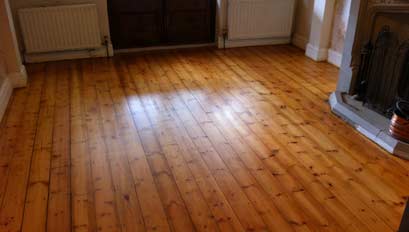
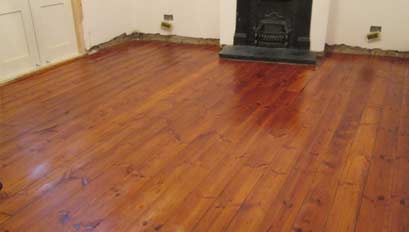
Solid Wood Floor Repair — specialist repair of solid hardwood and pine floors, covering board replacement, gap filling, water damage, squeak elimination, and subfloor stabilisation. Solid wood floors — typically 18–22mm thick — offer more repair options than engineered floors and can often be restored to excellent condition even when significantly damaged.
Engineered Floor Repair — restoring damaged engineered wood floors while protecting the wear layer. The thin real-wood surface of engineered boards (typically 3–6mm) limits sanding options, so repair techniques are carefully selected to avoid reducing the wear layer below a safe thickness. Delamination, surface damage, and board replacement all covered.
Parquet Floor Repair — restoration of herringbone, basket weave, and block parquet floors. Covers re-laying and re-adhering loose or lifted blocks, sourcing matching replacement sections from reclaimed parquet stock, subfloor stabilisation, and complete restoration including sanding and refinishing. We carry reclaimed Victorian and Edwardian parquet stock specifically for London repair projects.
Should You Repair or Replace Your Wood Floor?
This is the most common question we are asked, and the honest answer depends on the type of floor, the extent of the damage, and the cost comparison between repair and replacement.
For solid wood floors, repair and restoration is almost always more cost-effective than replacement — solid boards are thick enough to be sanded multiple times, and original period timber in London homes is often of a quality and character that cannot be matched by new flooring at any price point. A badly damaged Victorian pine floor with gaps, staining, and worn finish can typically be restored for £15–£25 per m² — a fraction of the cost of new flooring and installation.
For engineered wood floors, the calculus depends on the thickness of the wear layer. A floor with 6mm of hardwood on top has meaningful repair and sanding life remaining; a floor with 2–3mm already sanded once may be approaching the end of its resandable life. We measure wear layer thickness as part of every engineered floor assessment and give an honest view on remaining life before recommending repair or replacement.
For parquet, original Edwardian or Victorian block parquet is genuinely irreplaceable — new reproduction parquet does not match the density, grain, and character of 100-year-old timber. Where repair is structurally possible, we always recommend it over replacement.
Where replacement genuinely is the right answer, we say so clearly. Our floor fitting service covers the installation of all floor types across London.
Repair and Sanding — When to Combine Them
Repair work and floor sanding are often carried out together, as sanding is the most effective way to level repaired areas, blend replacement boards into the existing floor, and produce a consistent finish across the entire surface.
The typical sequence is: structural repairs first (board replacement, subfloor work, squeak elimination), then surface preparation (gap filling, levelling), then sanding, then finishing. Attempting to sand before repairs are completed produces poor results — uneven surfaces, visible repair lines, and inconsistent finish absorption.
Where only surface finish restoration is needed — a floor with no structural issues but a worn or dull surface — floor recoating or floor polishing may be all that is required, without any sanding or structural work.
Wood Floor Repair Costs in London
Repair costs depend on the type of floor, the nature and extent of the damage, and the access and location of the property. As a general guide:
| Repair type | Typical cost |
|---|---|
| Gap filling (per room, as part of a sand) | from £7/m² (resin) / from £15/m² (strip) |
| Single board replacement (inc. matching) | from £375/day (solid wood / engineered repairs) |
| Surface scratch treatment (localised) | from £375/visit |
| Water damage repair (localised) | from £375/day |
| Parquet block re-laying (per m²) | from £30/m² |
| Full repair and resand (per m²) | from £25/m² |
*All prices shown are exclusive of VAT.
All jobs are assessed on site and priced in writing before work begins. Properties within the London ULEZ and Congestion Charge zones may include a daily access surcharge, stated explicitly in every quote.
Frequently Asked Questions — Wood Floor Repair in London
How do I know if my floor needs repair or a full replacement?
The key factors are floor type, board thickness, and the nature of the damage. Solid wood floors almost always warrant repair over replacement — the timber is thick enough to be worked and restored, and original period boards are often irreplaceable. Engineered floors depend on wear layer thickness. Parquet is almost always worth repairing, given the quality and character of original blocks. We give an honest assessment at the free site visit with no obligation to proceed.
Can you repair just one or two damaged boards without sanding the whole floor?
Yes — targeted board replacement is possible without a full sand. The repaired boards will be blended in finish as closely as possible to the surrounding floor. An exact match is rarely achievable, particularly on older floors where the existing finish has aged and mellowed, but a skilled repair is not noticeable in normal use. If the floor as a whole is due for a sanding in the near future, it is often worth combining the two jobs.
How long does wood floor repair take?
Simple repairs — squeak elimination, gap filling, localised scratch treatment — can typically be completed in a single day. Board replacement with matching and finishing takes one to two days per room, depending on the number of boards and the finish drying time. Full repair combined with sanding and refinishing follows the same timescale as a standard sanding job: one to three days for a typical residential floor area.
Do you repair floors in tenanted or occupied properties?
Yes. We work regularly in occupied London properties and understand the need to minimise disruption. We use dust-free equipment throughout, seal doorways to contain dust to the work area, and work one room at a time where the rest of the property needs to remain accessible. We are happy to discuss scheduling around your occupancy or tenancy requirements.
Can you repair a floor that has been badly DIY repaired previously?
Yes — we frequently repair floors where a previous attempt at DIY or cheap repair has made things worse. Common issues include wrong filler used (shrinking or cracking), boards fixed incorrectly, wrong finish applied over an incompatible existing finish, and visibly mismatched replacement boards. In most cases, these problems are fully correctable, though they may add to the overall scope and cost of the repair project.
Call us on 020 7036 0625 or request a free quote online — we respond to all wood floor repair enquiries the same working day.