Monday - Friday 07:30 - 17:30, Saturday 07:30 - 16:00
Wood Floor Gap Filling in London
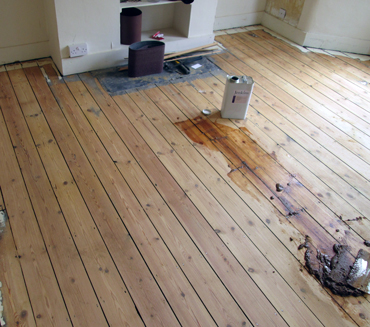
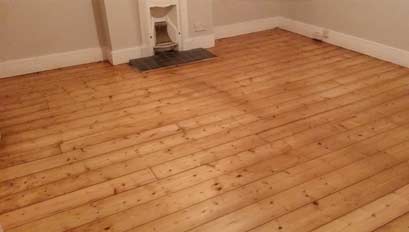
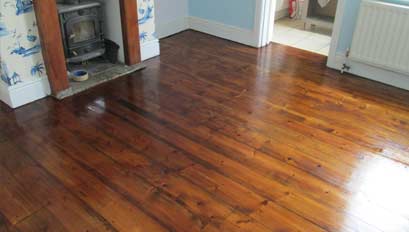
Wood floor gap filling is the process of filling the spaces between timber floorboards or parquet blocks — using flexible resin filler or fitted timber slivers — to eliminate draughts, improve the floor's appearance, prevent dirt accumulation, and create a consistent surface before finishing.
Gaps between floorboards are one of the most common issues in London's period housing stock. The city's Victorian and Edwardian terraces — built with solid pine and softwood floorboards across suspended timber subfloors — are particularly susceptible to gapping. The central heating that runs through London homes for much of the year dries the air significantly, causing timber to shrink across its width each winter. Over decades of this repeated seasonal movement, even well-laid floorboards can develop gaps that are noticeable both visually and as a source of cold draughts at floor level.
Flooring Services London carries out professional gap filling across London as part of every floor sanding and restoration project. Gap filling is always carried out after the main sanding stage and before finishing — this is the only sequence that produces a clean, flush result. Gap filling as a standalone service, without sanding, is not something we recommend — the filler cannot be sanded truly flush with the board surface unless a full sand is part of the same job.
Why London Floors Gap More Than Most
The combination of factors in London properties creates ideal conditions for floorboard gapping:
- Central heating — London homes run their heating from October through to April or later, creating prolonged periods of low indoor humidity that dry out timber and cause it to shrink across the grain
- Old-growth Victorian pine — the softwood used in London's period terraces is highly responsive to moisture changes, shrinking and expanding more than modern kiln-dried timber
- Age of the floors — boards that have been through 100+ seasonal cycles of shrinking and expanding have accumulated cumulative movement that leaves permanent gaps even in summer
- Suspended subfloors — the void beneath London's Victorian subfloors allows cold, damp air to circulate beneath the boards, contributing to the moisture differential that drives gapping
The result is that practically every pre-1940s London property with original floorboards has some degree of gapping — ranging from hairline cracks that are largely cosmetic to wide gaps that allow cold air to rise through from the subfloor void below.
Gap Filling Methods
The right gap filling method depends primarily on the width of the gap and the type of floor being filled.
Flexible Resin Filling — from £7/m²
The standard gap filling method for gaps up to approximately 5–6mm. A two-part flexible resin is mixed with fine sawdust produced during the sanding process — the sawdust acts as both a filler and a colour-matching agent, giving the finished fill a tone very close to the surrounding boards. The mixture is applied with a spatula, worked firmly into the gaps, and allowed to cure before the final fine sanding stage smooths it flush with the board surface.
Key properties of flexible resin filler:
- Flexible after curing — accommodates continued seasonal movement of the boards without cracking. This is the critical advantage over rigid fillers — a non-flexible filler in a timber floor that continues to move will crack and need redoing within a season or two
- Colour-matched to the specific floor — the sawdust component is taken from the actual sanding of the floor being filled, so the colour match is as close as possible to the surrounding timber
- Appropriate for glued, nailed, and floating floors — works with all fixing methods
- Not suitable for gaps over 6mm — resin filler applied in thick sections can shrink slightly as it cures and may not bond reliably in very wide gaps
Strip Gap Filling — from £15/m²
For gaps wider than approximately 6mm, fitted timber slivers are the more appropriate and durable solution. Thin strips of matching timber — cut to the exact width of each gap — are glued into place with wood adhesive, left to cure under pressure, then sanded flush with the surrounding floor surface as part of the final sanding stage.
Timber slivers provide:
- Greater structural solidity in wide gaps where resin filler alone would be too thick to cure properly
- A closer visual match in wider gaps where a large area of filler would be more visible than a well-matched timber insert
- Better long-term durability in the widest gaps, particularly in hallways and high-traffic areas
The timber used for slivers is matched as closely as possible to the species, colour, and grain of the existing floor. For London's Victorian pine floors, we use new or reclaimed pine in the appropriate profile. Some colour difference between new timber slivers and aged original boards is normal — this difference is minimised through the finishing stage.
Not sure which gap filling method your floor needs? Call us on 020 7036 0625 or book a free site visit — we assess every floor individually and recommend the most appropriate treatment before any work is agreed.
When Gap Filling Is and Isn't the Right Solution
Gap filling is appropriate and effective in the right circumstances — but it is not the answer to every gapping situation. Understanding when to fill and when to leave gaps alone is part of what separates a professional assessment from a DIY approach.
Gap filling is the right choice when:
- Gaps are present year-round and do not close up fully in summer — these are permanent gaps that will not self-resolve
- Gaps are wide enough to accumulate dirt, cause draughts, or create a trip hazard
- The floor is being sanded as part of the same project — filling is most effective and cost-efficient when combined with a full sand
- The floor is in a habitable room where gap-related draughts are affecting comfort
Gap filling is not always necessary when:
- Gaps appear in winter and close up fully in summer — this is normal seasonal movement and does not require filling. Filling a gap that closes seasonally with a rigid filler will cause the boards to push against the filler in summer, potentially causing buckling or the filler to be forced out
- Gaps are very narrow (under 1–2mm) and purely cosmetic — the visual improvement from filling hairline gaps is minimal and may not justify the cost
- The floor has significant structural issues that need addressing first — wood floor repair should precede gap filling where boards are loose, damaged, or structurally compromised
Gap Filling and Floor Sanding — The Correct Sequence
Gap filling is always carried out as stage five of the sanding process — after the main sanding stages remove the old finish and level the surface, and before the final finishing coats are applied. The correct sequence is:
- Main sanding — coarse through fine grits
- Edge sanding and corner detail work
- Gap filling — resin or timber slivers applied and allowed to cure
- Final light sanding to flush the filler with the board surface
- Staining (where specified)
- Finish coats — lacquer, oil, or hard-wax oil applied in two or three coats
Attempting gap filling before sanding produces poor results — the sanding process will partially remove the filler and leave an uneven surface. Attempting it after finishing means the filler cannot be sanded flush without damaging the new finish coat.
For floors that have recently been sanded and finished by another contractor and now need gap filling, the existing finish must be lightly abraded and the gap filling and recoating carried out as a combined treatment. We assess these situations during the site visit and advise on the most practical approach.
Gap Filling Costs in London
| Service | Price |
|---|---|
| Resin gap filling (gaps up to 5mm) | from £7/m² |
| Strip gap filling (gaps over 5mm) | from £15/m² |
| Floor sanding, buffing & varnishing | from £25/m² |
| Floor sanding, buffing & oiling | from £25/m² |
*All prices shown are exclusive of VAT.
Gap filling is always priced per m² of floor area treated and is charged in addition to the sanding price, where both services are carried out together. All prices are confirmed in writing after the free site visit. Properties within the London ULEZ and Congestion Charge zones may include a daily access surcharge, stated explicitly in every quote. Full pricing for all services is available in our floor restoration price guide.
Frequently Asked Questions — Wood Floor Gap Filling in London
Why do my floorboards gap in winter and close in summer?
This is a normal seasonal movement in solid timber. Wood expands when it absorbs moisture and contracts when it dries out. In London homes, central heating during winter reduces indoor humidity significantly, causing floorboards to shrink across their width and open gaps. In summer, higher humidity causes the boards to expand and the gaps to close. If gaps close fully in summer, they do not need filling — doing so can cause problems when the boards try to expand in the warmer months. If gaps remain open year-round, they are permanent and benefit from professional filling.
Can gap filling be done without sanding the whole floor?
Not effectively. The gap filler needs to be sanded flush with the surrounding board surface after application, which means at minimum, the filled area needs to be sanded. If only a small section of gaps is being treated, localised sanding of that area is possible, but the sanded section will look noticeably different from the rest of the unsanded floor. For a consistent result across the entire floor, gap filling should always be part of a full floor sanding project.
What colour will the gap filler be?
Flexible resin filler is mixed with the fine sawdust produced during the sanding of your specific floor, so the colour is matched directly to the timber being filled. It will not be a perfect match (the filler has a slightly different texture and sheen to the surrounding wood) but the result is substantially closer than any off-the-shelf filler product. The colour difference becomes less noticeable once the finish coats are applied over both the boards and the filler together.
Can you fill gaps in parquet floors?
Yes — gap filling in parquet is carried out in the same way as floorboard gap filling, using flexible resin mixed with oak sawdust from the sanding process. The gaps between parquet blocks are typically smaller than those between full-width floorboards, so resin filling is almost always the appropriate method. As with floorboard gap filling, it is carried out after the main sanding stage and before finishing as part of our parquet floor sanding service.
Is gap filling suitable for engineered wood floors?
Yes, for gaps between engineered boards. Engineered floors are more dimensionally stable than solid timber and tend to gap less, but gaps can develop over time, particularly in floating installations where boards have shifted at their joints. Resin filling is the appropriate method for engineered floor gaps. We assess the cause of gapping during the site visit — if gaps are the result of board movement rather than timber shrinkage, stabilising the floor structure may be needed before filling.
Call us on 020 7036 0625 or request a free quote online — we respond to all gap filling enquiries the same working day.