Monday - Friday 07:30 - 17:30, Saturday 07:30 - 16:00
Floorboards Sanding in London
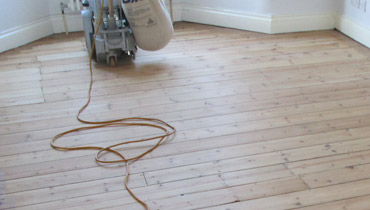
Floorboards sanding is the professional restoration of traditional tongue-and-groove softwood boards — primarily Scots pine, Douglas fir, and redwood in the 75–125mm wide profiles standard in London's Victorian and Edwardian terraced houses — using belt and drum sanders, edge sanders, and corner tools, followed by gap filling and refinishing to restore the floor's appearance and extend its working life.
Floorboard sanding is one of the most frequently requested services we carry out across London. The city's enormous stock of Victorian and Edwardian period properties — terraced houses, semi-detached houses, and period conversions across inner and outer London boroughs — was built with solid pine floorboards as standard. Millions of square metres of these boards are still in place, often hidden beneath decades of carpet, lino, or old laminate. Restoring them through professional sanding is consistently the most cost-effective, most durable, and most characterful flooring option available for these properties.
Flooring Services London has been sanding period pine floorboards across London for over 20 years, working in properties throughout all London boroughs from period terraces in Hackney and Islington to Victorian semis in Wandsworth and Richmond. Floorboards sanding is priced from £25/m² for sanding, buffing, and varnishing or oiling. Our floor restoration price guide covers all charges in full.
Why Victorian Pine Floorboards Are Worth Restoring
The pine floorboards in London's period properties are not the same as modern softwood. Victorian and Edwardian pine — primarily Scots pine and Baltic redwood imported from Scandinavia and Russia — was old-growth timber with:
- Tight annual growth rings — old-growth trees grew slowly, producing dense, tight-grained timber that is significantly harder and more durable than modern fast-grown softwood
- High resin content — naturally resistant to moisture, insect damage, and the kind of surface wear that quickly damages modern plantation pine
- Substantial thickness — original floorboards in London period properties are typically 19–22mm thick, giving them enough depth to be sanded four to six times over their lifetime
- Character and patina — the grain, knots, and colour variation of century-old pine give these floors a visual character that no modern flooring product replicates
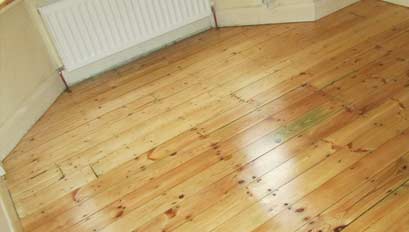
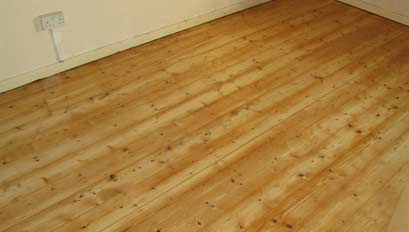
A Victorian pine floor that looks beyond saving — painted over, badly scratched, grey with age, stained from old carpet underlay — will in almost every case respond exceptionally well to a professional sand and refinish. The transformation is one of the most dramatic results we produce, and the cost is a fraction of replacing the floor with new timber.
What We Find Under London Carpets
A significant proportion of the floorboard sanding jobs we carry out in London begin with the discovery of original boards beneath carpet that has been in place for decades. The condition of the boards when the carpet comes up varies considerably:
Boards in excellent condition — protected by the carpet from foot traffic and UV light, with the original surface only lightly marked. These floors typically need only a light sand to remove the surface layer before finishing — starting at a finer grit than heavily worn floors.
Boards with carpet adhesive or underlay residue — gripper rods leave tack holes along the perimeter; some older carpet installations used bitumen or rubber adhesive directly on the boards. These require a coarser starting grit and sometimes a chemical pre-treatment before sanding begins.
Boards with old paint — many London period properties had their floors painted at some point, often with Victorian-era oil paint that has hardened over decades. Paint is removed in the coarse sanding stage but requires appropriate starting grits and a heavier initial pass.
Boards with historic surface treatments — shellac, early oil-based varnish, and traditional wax are all found on London period floors. Each requires a different starting approach — some old shellac finishes respond well to chemical stripping before sanding to reduce the amount of material that needs to be removed mechanically.
We assess the condition and existing surface treatment during the site visit and confirm the sanding approach before work is booked.
Preparation Before Sanding — What Needs to Be Done First
Floorboard sanding in London period properties almost always involves preparatory work before the sanders start. The most common preparatory steps include:
Nail head punching — all protruding nail heads must be punched below the board surface before sanding begins. A nail head left proud of the surface tears the sanding belt on first contact and can damage the drum. We check every board systematically and punch all nail heads before starting.
Board securing — loose or squeaking boards are secured before sanding. A loose board that moves under the sander produces an uneven result and can be damaged by the machine. We identify and secure loose boards using appropriate fixings for the specific subfloor construction.
Damaged board replacement — boards that are cracked, split, heavily stained beyond what sanding can address, or structurally compromised are replaced before the main sand. Matching replacement boards to original Victorian pine profiles is something we do regularly — see our wood floor repair service for details on board sourcing and replacement.
Knotting solution application — Victorian pine floors often have prominent knots that can bleed resin through a finished surface coat, causing discolouration and finish adhesion failure. We apply a shellac-based knotting solution to knot faces before sealing to seal the resin in and prevent bleed-through.
Floorboards Sanding Process
1. Free site visit and assessment — We examine the boards, check their thickness and condition, identify the existing surface treatment, assess any boards needing replacement or repair, and provide a fixed-price written quote.
2. Preparation — Nail heads punched, loose boards secured, damaged boards replaced, knotting solution applied where needed.
3. Main sanding — coarse grit — Belt or drum sander run parallel to the boards across the main floor area. Starting grit depends on the floor condition:
- Heavily painted or finished floors — 24 or 36 grit
- Old varnish or wax with moderate surface wear — 40 or 60 grit
- Lightly worn floors in reasonable condition — 60 or 80 grit
4. Main sanding — medium and fine grits — Progressive passes through 80, 100, and 120 grit, with the drum sander working parallel to the boards throughout. Each pass removes the scratch marks left by the previous grit and produces progressively smoother surface.
5. Edge sanding — Edge sander works around the perimeter of the room, following the same grit sequence as the main sand. Edge sanding is carried out parallel to the boards where possible and with the grain at the ends of boards.
6. Corner and detail sanding — Hand scrapers, detail sanders, and corner tools used for areas the machine cannot reach — behind radiators, in door reveals, and at hearth surrounds. Particularly relevant in London period terraces where chimney breast recesses and Victorian hearth surrounds create tight corners on every floor.
7. Gap filling — Where specified, flexible resin filler blended with pine sanding dust applied to gaps between boards after the main sand. Gap filling is from £7/m² for resin and from £15/m² for strip filling of wider gaps — always carried out before finishing.
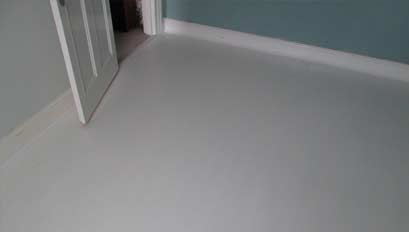
8. Staining — Where a colour change is specified, wood dye applied evenly to the sanded surface. Victorian pine sands to a warm honey-amber tone — some clients prefer to enhance this warmth with an amber or light oak stain; others prefer a whitewash or grey-wash for a more contemporary look. We provide test areas before committing to a stain across the full floor.
9. Finishing — Two or three coats of the specified finish applied. Full details on all available finish options are on our floor sealing and finishing page.
Uncovered original boards and not sure what condition they're in? Call us on 020 7036 0625 or book a free site visit — we assess the boards, give you an honest view on what's achievable, and provide a fixed-price written quote with no obligation.
Finishes for Victorian Pine Floorboards
The finish choice for pine floorboards is particularly important — pine is a softer, more porous timber than hardwood and responds differently to different finish systems.
Hard-wax oil — Osmo Polyx, Bona Craft Oil
The most popular finish for London period pine floors in owner-occupied homes. Penetrates the pine fibres and enhances the natural grain and warm colour of old-growth Victorian timber. Easier to spot-repair than lacquer and more forgiving of the seasonal movement that pine undergoes with London's central-heating cycle. Requires re-oiling every one to two years.
Water-based lacquer — Bona Mega
The most practical finish for busy households, rental properties, and any floor where ease of cleaning and durability are the priorities. Fast-drying, low odour, available in extra-matt through satin. For pine floors, extra-matt is the most natural-looking lacquer sheen — satin and semi-gloss can look too shiny on the slightly uneven surface of original boards. Bona Traffic HD is recommended for pine hallways and high-traffic areas.
Wax
The most historically authentic finish for London Victorian pine — the original boards were wax-finished, and wax remains the most sympathetic finish where period character is the priority. Requires the most frequent maintenance and re-waxing but produces the warmest and most characterful result. Popular in owner-occupied period properties where the owner is committed to regular floor care.
Floorboards Sanding Costs in London
| Service | Price |
|---|---|
| Floorboards sanding, buffing & varnishing | from £25/m² |
| Floorboards sanding, buffing & oiling | from £25/m² |
| Gap filling — resin (up to 5mm) | from £7/m² |
| Strip gap filling (over 5mm) | from £15/m² |
| Wood floor staining | from £8/m² |
| Original floorboard repairs | from £12/metre |
All prices shown are exclusive of VAT. All prices confirmed in writing after the free site visit. Properties within the London ULEZ and Congestion Charge zones may include a daily access surcharge stated explicitly in every quote.
Frequently Asked Questions — Floorboards Sanding in London
My boards look terrible — are they actually worth sanding or should I just replace them?
In the vast majority of cases, original Victorian and Edwardian pine boards are worth sanding. The timber quality — dense, old-growth pine with tight grain and high resin content — is simply not available in new softwood at any price. Boards that look badly worn, painted, or stained almost always come back beautifully after a professional sanding. We assess every floor honestly during the site visit and will tell you clearly if replacement is genuinely the better option — but in over 20 years of working in London, we rarely recommend replacement over restoration for structurally sound original boards.
My boards have been painted — can the paint be fully removed through sanding?
Yes — paint is removed in the coarse sanding stage. Victorian-era oil paint that has hardened over decades requires a coarser starting grit and sometimes a heavier initial pass, but it comes off completely with the correct equipment. Lead paint in pre-1960s properties requires additional precautions — we assess and flag this during the site visit and follow appropriate safety protocols where lead paint is identified.
How do I deal with the gaps between my floorboards — should I fill them?
It depends on whether the gaps are seasonal or permanent. Gaps that open in winter and close in summer are normal seasonal movement in solid pine — filling these with a rigid filler can cause problems when the boards expand in warmer months. Gaps that remain open year-round, or that are wide enough to cause draughts or accumulate dirt, are worth filling with a flexible resin or timber slivers. We assess the gap situation during the site visit and advise on whether filling is appropriate and which method suits the specific floor.
Can you sand a floor that has had carpet adhesive applied directly to the boards?
Yes — this is a common situation in London period properties, particularly where carpet was installed in the 1960s and 70s using bitumen-based adhesive. The adhesive is removed in the coarse sanding stage, though it can clog abrasives quickly and may require more frequent belt changes than a standard floor. We account for this in the assessment and quote.
How long does floorboard sanding take in a London period property?
A standard room (15–25 m²) is typically completed in one to two days including sanding and two finish coats. A full ground floor (50–80 m²) usually takes two to three days. Floors with significant painted surfaces, heavy preparation requirements, or three finish coats take longer. We confirm the expected duration in the written quote after the site visit.
Call us on 020 7036 0625 or request a free quote online — we respond to all floorboards sanding enquiries the same working day.