Monday - Friday 07:30 - 17:30, Saturday 07:30 - 16:00
Engineered Wood Floor Sanding in London
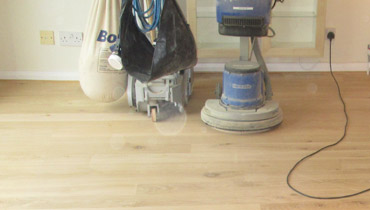
Engineered wood floor sanding is the careful removal of the worn surface layer of an engineered hardwood floor — using professional orbital and belt sanders calibrated for light material removal — followed by refinishing with lacquer, oil, or hard-wax oil to restore the floor's appearance and renew its protective coating.
Engineered wood is currently the most widely installed floor type in London, found in the city's post-war flats, warehouse conversions, renovated period properties, and new-build apartments across all boroughs. As these floors age — and London's earliest engineered installations are now approaching 25–30 years old — sanding and refinishing is increasingly the right treatment to restore them rather than replacement. However, engineered floor sanding is fundamentally different from solid wood floor sanding in one critical respect: the wear layer thickness limits how many times the floor can be sanded, and that limit must be assessed before any sanding work begins.
Flooring Services London sands engineered wood floors across London for residential and commercial clients. We measure the wear layer thickness on every engineered floor before committing to sanding — and we will always tell you honestly if a floor has insufficient wear layer remaining to be sanded safely. Engineered floor sanding is priced from £25/m² for sanding, buffing, and varnishing or oiling. Our complete floor restoration price guide covers all charges in full.
Understanding Engineered Wood — Why the Wear Layer Is Everything
Engineered wood flooring consists of a real hardwood surface layer — the wear layer — bonded under high pressure to multiple layers of cross-ply plywood beneath. The wear layer is the only part of the board that is sanded. Each time the floor is sanded, a small amount of material is removed from the wear layer — typically 0.5–1.0mm per sand depending on the floor condition and the starting grit used.
The wear layer thickness, therefore, directly determines how many times the floor can be sanded before the real wood surface is exhausted and the plywood core beneath becomes exposed. Once the wear layer is gone, the floor cannot be sanded again — it must be replaced.
Wear layer thicknesses across London's engineered floor stock vary significantly:
| Wear layer thickness | Typical sanding life |
|---|---|
| 2–3mm | Usually one sand remaining, sometimes none |
| 4mm | Typically one to two sands |
| 6mm | Usually two to three sands |
| 8mm+ | Three or more sands — approaching solid wood in longevity |
The most common engineered floors installed in London in the 1990s and 2000s had 3–4mm wear layers — many of these floors have already been sanded once and are approaching the end of their sandable life. More recent installations, particularly premium engineered products from Kahrs, Boen, and Junckers, frequently have 6mm wear layers and still have meaningful sanding life remaining.
We measure wear layer thickness using a calibrated tool during the free site visit and confirm the remaining sanding life before any work is booked. If the wear layer is too thin to sand safely, we advise honestly and can discuss engineered floor repair options or new engineered floor installation as alternatives.
When Does an Engineered Floor Need Sanding?
The decision to sand an engineered floor is not only about visible wear — it also depends on how much wear layer remains. The right treatment for a worn engineered floor depends on the severity of the surface damage and the remaining wear layer depth:
Sand when:
- The finish has worn through to bare wood in high-traffic areas and the wear layer has sufficient depth remaining
- Deep scratches have penetrated through the finish into the hardwood surface layer
- Widespread staining, discolouration, or old finish incompatible with maintenance recoating affects the entire floor
- A complete colour or finish change is required
Consider recoating or re-oiling instead when:
- The finish is dull or thin but has not worn through to bare wood
- The wear layer is too thin to safely sand again
- Surface scratches are confined to the finish layer only
- The floor is structurally sound and the timber beneath the finish is undamaged
For many London engineered floors — particularly those installed in the last 10–15 years with adequate wear layer remaining — professional floor maintenance is a more appropriate and cost-effective treatment than sanding. We assess every floor honestly and recommend the right treatment during the site visit.
Engineered Floors We Sand in London
London's engineered floor stock covers a wide range of products, species, and formats. The most common we work on include:
Oak engineered floors — by far the most common engineered floor species in London, installed in straight plank, herringbone, and chevron formats across residential and commercial properties. Oak wear layers sand well across all thickness grades and accept the full range of lacquer, oil, and hard-wax oil finishes.
Walnut and ash engineered floors — less common but found regularly in London's higher-specification residential properties and contemporary commercial interiors. Both species sand well; walnut's darker natural tone means staining is less commonly requested, while ash's pale tone lends itself well to whitewash and natural oil finishes.
Wide-plank engineered floors (180mm+) — increasingly popular in London's open-plan loft conversions and renovated period properties. Wider boards can show more movement across their width if the wear layer is thin — we assess flatness carefully before sanding wide-plank floors and advise if any boards have cupped or bowed in a way that affects the sanding approach.
Herringbone and chevron engineered parquet — one of the fastest-growing flooring trends in London over the past decade. Engineered herringbone parquet must be sanded diagonally across the pattern at 45 degrees — the same technique required for solid parquet sanding — to avoid sanding against the grain of individual blocks. The wear layer of engineered herringbone blocks is typically 3–4mm, making wear layer assessment particularly important before sanding is carried out.
Factory pre-finished engineered floors — many engineered floors installed in London were supplied pre-finished with UV-cured lacquer or oil applied in factory conditions. These finishes are exceptionally hard and require a coarser starting grit to break through than site-applied finishes. We adjust the sanding sequence accordingly.
Engineered Floor Sanding Process
1. Free site visit and wear layer assessment — We visit the property, measure the wear layer thickness using a calibrated tool, assess the floor condition and existing finish, identify any required repairs before sanding, and provide a fixed-price written quote. If the wear layer is insufficient for safe sanding we advise alternatives at this stage.
2. Preparation — Furniture cleared from the room, protruding fixings checked and addressed, doorways sealed with dust barriers. Any repairs — board replacement, delamination repair, re-bonding of lifted sections — completed before sanding begins.
3. Main sanding — Orbital or belt sander used at a carefully controlled cut depth to remove the minimum material necessary to eliminate the existing finish and surface damage while preserving as much wear layer as possible. Key differences from solid wood sanding:
- Lighter pressure and finer starting grits — typically 40–60 grit rather than the coarser grits used on solid floors
- Careful monitoring of material removal — we check wear layer depth periodically during sanding on thinner floors
- Orbital rather than drum sanding, where the wear layer is particularly thin — orbital sanders remove less material per pass and reduce the risk of sanding through to the plywood core
- Edge sander and hand tools are used around the perimeter, corners, and doorway thresholds
4. Gap filling — Where gaps are present between boards, flexible resin filler blended with sanding dust is applied after the main sand and before finishing. Gap filling is priced from £7/m² for resin filling.
5. Staining — Where a colour change is specified, wood dye is applied evenly to the sanded surface. Wood floor staining is available from £8/m² in a full range of tones.
6. Finishing — Two coats of the specified finish applied by roller or applicator, with light abrasion between coats. Full details on all available finishes are on our floor sealing and finishing page.
7. Aftercare — Written care instructions and maintenance product recommendations provided at job completion.
Finishes for Engineered Wood Floors
The same finish options available for solid wood floors apply equally to engineered floors after sanding:
Water-based lacquer — Bona Mega, Bona Traffic HD. The most popular choice for London engineered floors. Fast-drying, low odour, available in extra-matt through to semi-gloss sheens. Bona Traffic HD is the hardest-wearing option — recommended for engineered floors in hallways, open-plan kitchen-living areas, and commercial spaces where durability is the priority.
Hard-wax oil — Osmo Polyx, Bona Craft Oil. A penetrating finish producing a natural matte look. Particularly popular on wide-plank oak engineered floors in London's period conversions and contemporary interiors where a natural appearance is preferred. Requires periodic re-oiling maintenance — typically every one to two years in residential use.
Rubio Monocoat - a single-coat plant-based oil system popular in London's higher-specification residential and commercial interiors. Bonds molecularly with the timber surface in one coat. Compatible with engineered wear layers of all thicknesses and produces an exceptionally natural result.
Engineered Floor Sanding Costs in London
| Service | Price |
|---|---|
| Floor sanding, buffing & varnishing | from £25/m² |
| Floor sanding, buffing & oiling | from £25/m² |
| Gap filling — resin (up to 5mm) | from £7/m² |
| Strip gap filling (over 5mm) | from £15/m² |
| Wood floor staining | from £8/m² |
*All prices shown are exclusive of VAT.
All prices are confirmed in writing after the free site visit. Properties within the London ULEZ and Congestion Charge zones may include a daily access surcharge, stated explicitly in the quote.
Frequently Asked Questions — Engineered Floor Sanding in London
How do I know if my engineered floor can still be sanded?
The only reliable way is to measure the wear layer thickness, which we do with a calibrated tool during the free site visit. As a rough guide, if the floor has never been sanded and was installed with a 4mm or thicker wear layer, it almost certainly has sufficient depth remaining. If it has been sanded before, or was installed with a 2–3mm wear layer, it may be at or near the end of its sandable life. We measure and confirm before any work is booked.
My engineered floor has deep scratches — can sanding fix them?
Yes, provided the scratches have not gone through the wear layer into the plywood core beneath, and provided sufficient wear layer remains after sanding to remove them. We assess scratch depth and wear layer thickness together during the site visit and advise on whether sanding is the appropriate treatment or whether engineered floor repair is more suitable.
Can engineered herringbone parquet be sanded?
Yes — but it requires the same diagonal sanding technique used for solid parquet, running at 45 degrees across the block pattern. The wear layer of engineered herringbone blocks is typically 3–4mm, so wear layer assessment before sanding is particularly important. We carry out this assessment as standard before every parquet sanding job.
My engineered floor was pre-finished in the factory — does that affect sanding?
Yes — factory UV-cured finishes are significantly harder than site-applied lacquers and require a coarser starting grit to break through effectively. We adjust the sanding sequence and starting grit based on the existing finish type identified during the site visit.
How long does engineered floor sanding take?
A standard room (15–25 m²) is typically completed in one to two days, including sanding and two finish coats. A full ground-floor or open-plan space (50–80 m²) usually takes two to three days. We confirm the expected duration in the written quote after the site visit.
Call us on 020 7036 0625 or request a free quote online — we respond to all engineered floor sanding enquiries the same working day.