Monday - Friday 07:30 - 17:30, Saturday 07:30 - 16:00
Parquet Floor Sanding in London
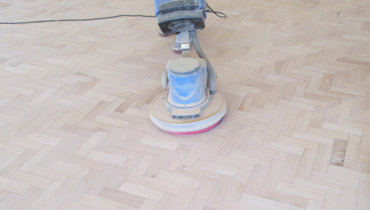
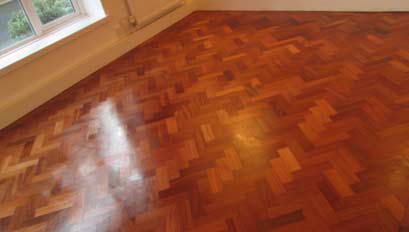
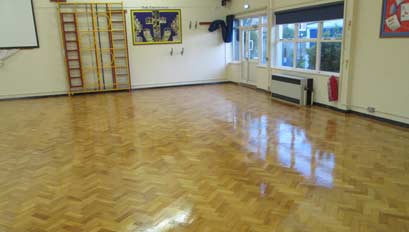
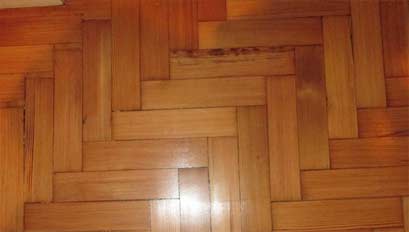
Parquet floor sanding is the professional restoration of patterned wood block floors — herringbone, chevron, basket weave, and solid block parquet — using specialist diagonal sanding techniques, dust-free extraction equipment, and professional-grade finishes to remove worn surface material, eliminate scratches and staining, and refinish the floor to a consistent, even result across the entire pattern.
Parquet sanding is the most technically demanding type of floor sanding we carry out. The patterned layout of individual blocks — each with its own grain direction — means that the standard straight-line sanding approach used for floorboards and solid plank floors cannot be applied. Sanding against the grain of a parquet block tears the timber fibres, leaving chatter marks and surface damage that is impossible to remove without sanding even deeper. Getting parquet sanding right requires specific knowledge of pattern geometry, the correct diagonal angles for each pattern type, and the right combination of equipment for the field area, edges, and corners.
Flooring Services London has been sanding parquet floors across London for over 20 years, working on original Edwardian and Victorian parquet in period properties throughout the city as well as newly installed engineered herringbone and chevron in contemporary London interiors. Parquet floor sanding is priced from £25/m² for sanding, buffing, and varnishing or oiling. Our floor restoration price guide covers all charges in full.
Parquet in London — What We Work On
London has one of the highest concentrations of original period parquet of any city in the UK. The Edwardian period — roughly 1900 to 1914 — saw herringbone oak parquet installed as standard in the hallways, reception rooms, and dining rooms of middle-class and upper-middle-class London houses across a wide sweep of inner boroughs. The same floors are still in place in properties across:
- Kensington, Chelsea, and Fulham — Edwardian townhouses and mansion flat conversions with original herringbone oak in entrance halls and principal rooms
- Islington, Hackney, and Stoke Newington — Victorian and Edwardian terraces with original parquet in ground-floor rooms, many now uncovered after decades under carpet
- Mayfair, Belgravia, and St James's — high-specification period properties with elaborate original parquet, sometimes including inlaid borders and bespoke patterns
- Marylebone, Bayswater, and Paddington — Edwardian mansion block conversions with original block parquet in hallways and landings
Alongside this original stock, London also has a rapidly growing number of properties with engineered herringbone and chevron parquet installed in the past five to fifteen years — a format that also requires diagonal sanding when restoration becomes necessary.
Why Parquet Sanding Is Different
The fundamental difference between parquet sanding and standard floorboard sanding comes down to grain direction. In a straight-lay floor, all boards run in the same direction — the sander runs parallel to the grain across the entire floor without issue. In a herringbone parquet floor, adjacent blocks are laid at 90 degrees to each other — meaning there is no single direction in which a sander can run parallel to the grain of every block simultaneously.
The solution is to sand diagonally across the pattern — typically at 45 degrees to the main laying axis. At this angle, the sander crosses the grain of every block at the same diagonal, removing material evenly across all blocks without running directly against the grain of any of them. This requires:
- Precise angle setting — the 45-degree diagonal must be maintained consistently across the entire floor area. Drifting off angle produces uneven sanding and visible differences in surface texture between sections
- Specialist rotary and oscillating sanders for the main field area, rather than standard belt sanders, which are too aggressive for parquet work at close range
- Careful edge and corner work — the perimeter of a herringbone floor and the areas around doorways, hearths, and room features cannot be reached by the main field sander. Hand tools, detail sanders, and scrapers are used in these areas with the same diagonal approach applied by hand
- Multiple passes at the same angle through progressively finer grits — the same graduated grit sequence used for floorboard sanding, but all passes running at the diagonal throughout
For chevron parquet, where blocks are cut at an angle so that adjacent rows meet in a straight line, the sanding angle is adjusted accordingly — typically 45 degrees to the chevron's central spine rather than to the room axis.
Parquet Sanding and Repair — The Correct Sequence
Before any parquet can be sanded, the floor must be structurally sound. Sanding a parquet floor with loose or lifted blocks simply causes those blocks to move further during sanding, producing an uneven result and potentially damaging the floor. The correct sequence for a parquet restoration project is:
1. Structural assessment — all blocks checked for adhesion, looseness, and level. Lifted or loose blocks identified and assessed.
2. Block repairs — loose blocks re-adhered or replaced before any sanding begins. Missing blocks sourced from reclaimed stock and fitted. Subfloor levelled where significant unevenness exists. Full details on this stage are on our parquet floor repair page.
3. Main sanding — diagonal sanding through graduated grits across the field area, followed by edge and corner work.
4. Gap filling — flexible resin filler blended with oak sanding dust applied to gaps between blocks after the main sand. Gap filling is from £7/m² for resin filling and is always carried out before finishing.
5. Staining — where a colour change is specified, wood dye is applied evenly to the sanded surface before sealing.
6. Finishing — two or three coats of the specified finish applied. See below for finish options specific to parquet.
Working on an original London parquet floor that needs both repair and sanding? Call us on 020 7036 0625 or book a free site visit — we assess the full scope of structural and surface restoration needed and provide a single fixed-price quote covering both stages.
Finish Options for Parquet Floors
The finish choice for a parquet floor is particularly important — the pattern and block structure of parquet responds differently to different finish systems than straight-lay boards do.
Hard-wax oil — Osmo Polyx, Bona Craft Oil, Rubio Monocoat
The most sympathetic finish for original Edwardian and Victorian parquet. A penetrating oil sits within the timber fibres rather than on top, enhancing the natural grain variation and colour depth of the individual blocks without adding a surface film that can obscure the pattern's three-dimensional quality. The different grain directions of adjacent herringbone blocks catch light slightly differently — this natural visual variation is enhanced by oil and partly flattened by lacquer. Hard-wax oil is easier to spot-repair between full sands, and floor re-oiling is a straightforward annual or biannual maintenance treatment.
Water-based lacquer — Bona Mega, Bona Traffic HD
The more durable option — appropriate for parquet in high-traffic hallways, commercial environments, and properties where ease of maintenance is the priority over a natural appearance. Available in extra-matt through to satin sheens. For the original period parquet where a lacquered finish might look anachronistic, extra-matt lacquer is the best compromise — providing lacquer's durability while minimising surface sheen. Bona Traffic HD is specified for commercial parquet and heavily used residential hallways.
Wax
The traditional finish for London period parquet — the original Edwardian floors were typically wax-finished. Wax produces the most characterful and authentic result on old-growth oak parquet but requires the most frequent maintenance, including periodic professional floor waxing. Suitable for period residential properties where maintaining the original character of the floor is the primary objective.
Parquet Floor Sanding Costs in London
| Service | Price |
|---|---|
| Parquet floor sanding, buffing & varnishing | from £25/m² |
| Parquet floor sanding, buffing & oiling | from £25/m² |
| Gap filling — resin (up to 5mm) | from £7/m² |
| Strip gap filling (over 5mm) | from £15/m² |
| Wood floor staining | from £8/m² |
All prices shown are exclusive of VAT. All prices are confirmed in writing after the free site visit. Properties within the London ULEZ and Congestion Charge zones may include a daily access surcharge stated explicitly in every quote.
Frequently Asked Questions — Parquet Floor Sanding in London
Why can't parquet be sanded the same way as floorboards?
Because adjacent parquet blocks are laid at 90 degrees to each other, there is no single direction that runs parallel to the grain of every block. Sanding directly against the grain of a block tears the timber fibres and leaves visible marks. The correct technique — sanding diagonally across the pattern at 45 degrees — crosses the grain of every block at the same angle, producing an even cut across the entire pattern. This requires specific equipment and techniques that not all flooring contractors possess.
My Edwardian parquet has some loose blocks — does that need fixing before sanding?
Yes — always. Sanding a parquet floor with loose blocks causes them to move during sanding, producing an uneven surface and potentially dislodging them entirely. All loose blocks must be re-adhered and any missing sections replaced before sanding begins. We assess the structural condition of the floor as part of the site visit and include all required repair work in the overall project quote.
Can engineered herringbone parquet be sanded?
Yes — but the wear layer thickness must be assessed before sanding. Engineered herringbone blocks typically have a 3–4mm real hardwood wear layer, which allows approximately one to two sands over the floor's lifetime depending on how much material is removed each time. We measure wear layer thickness during the site visit as standard before any engineered floor sanding is booked. The sanding technique is the same as for solid parquet — diagonal at 45 degrees across the pattern.
What is the best finish for an original Edwardian parquet floor in a London period property?
For most original Edwardian parquet in London period properties, hard-wax oil — Osmo Polyx or Bona Craft Oil — is the most appropriate finish. It enhances the natural grain and colour depth of the old-growth oak, allows the block pattern's three-dimensional visual quality to show through, and is sympathetic to the age and character of the timber. Lacquer is more practical for high-traffic and commercial environments; wax is the most historically authentic but requires the most frequent maintenance.
How long does parquet floor sanding take?
A standard hallway or reception room (20–40 m²) typically takes two to three days including sanding, gap filling, and two finish coats. Larger areas — a full ground floor in herringbone parquet — take three to five days. Floors requiring significant structural repair before sanding add to the overall timescale. We confirm the expected duration in the written quote after the site visit.
Call us on 020 7036 0625 or request a free quote online — we respond to all parquet floor sanding enquiries the same working day.