Monday - Friday 07:30 - 17:30, Saturday 07:30 - 16:00
Solid Wood Floor Sanding in London
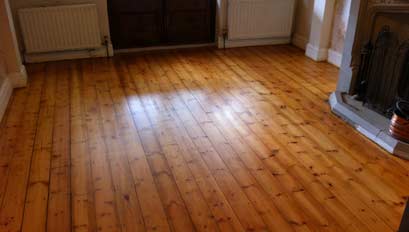
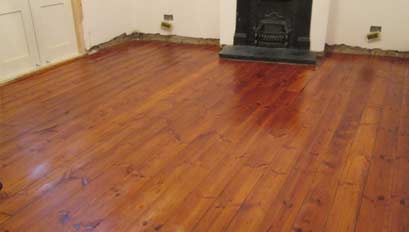
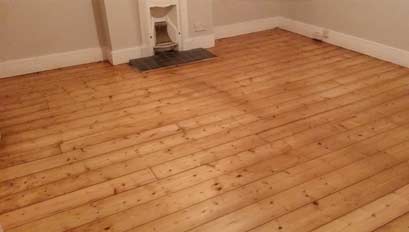
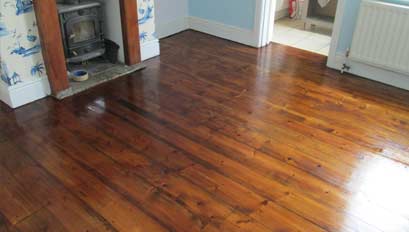
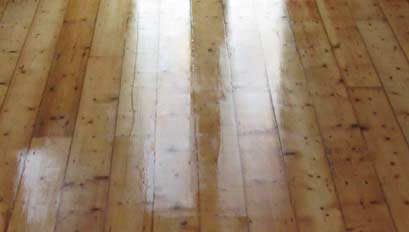
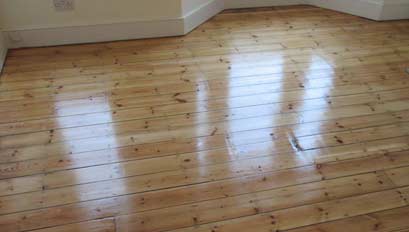
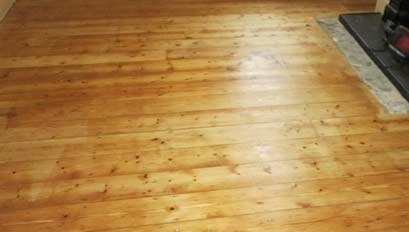
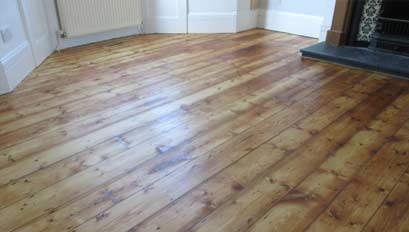
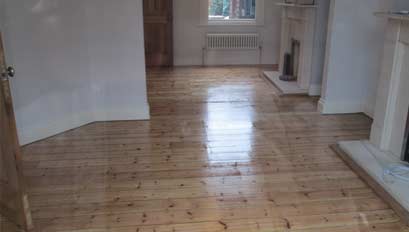
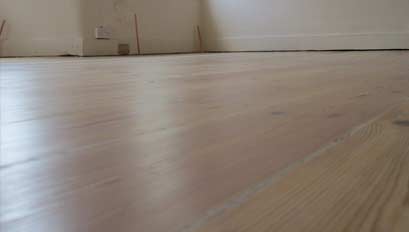
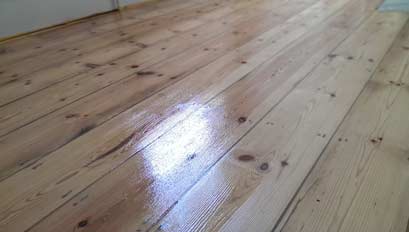
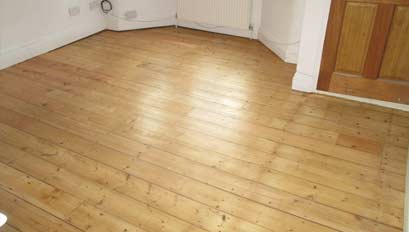
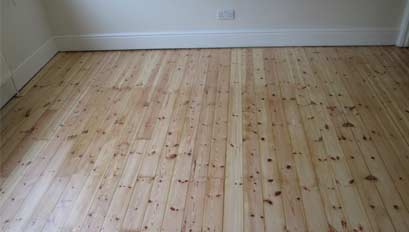
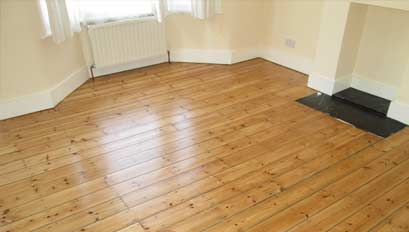
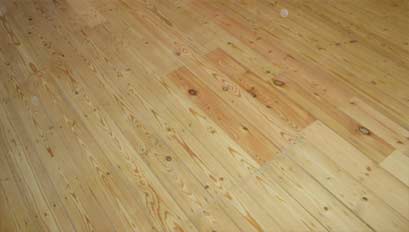
Solid wood floor sanding is the process of removing the worn surface layer of a solid hardwood or softwood floor — using professional belt, drum, and orbital sanders — to eliminate scratches, staining, old finish, and surface damage, then refinishing with lacquer, oil, or wax to restore the floor's appearance and protection.
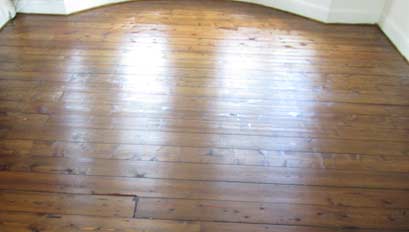
Solid wood is the most sandable floor type available. A typical solid hardwood board is 18–22mm thick, giving it enough depth to be sanded five or more times over its lifetime — which for a London Victorian or Edwardian property means the original floor can outlast the building itself if properly maintained. Even floors that look beyond saving — badly scratched, grey with age, painted over, or stained from decades of use — will in the vast majority of cases respond exceptionally well to a professional sand and refinish.
Flooring Services London has been sanding solid wood floors across London for over 20 years, working in period terraces, Georgian townhouses, Edwardian mansion flats, modern apartments, and commercial properties throughout all London boroughs. Solid wood floor sanding is priced from £25/m² for sanding, buffing, and varnishing or oiling. For a full breakdown of all sanding charges, our complete floor restoration price guide covers everything in detail.
Solid Wood Floors in London's Housing Stock
London's Victorian and Edwardian period properties — which make up the majority of housing in inner London boroughs, including Islington, Hackney, Lambeth, Wandsworth, Hammersmith, Kensington, and Camden — were built with solid timber floors as standard. The most common timber species we encounter across London are:
- Scots pine and redwood — the standard floorboard timber in Victorian and Edwardian terraced houses, typically in 75–125mm wide tongue-and-groove boards, 19–22mm thick. Old-growth Victorian pine is significantly denser and tighter-grained than modern softwood — it sands beautifully and takes finish well
- European oak — used in wider plank formats in higher-specification period properties, and in the solid hardwood floors of Georgian townhouses and Edwardian mansion conversions. Also, the most common solid hardwood installed in London homes in the last 30 years
- Douglas fir — similar to pine, slightly harder and with a more pronounced straight grain. Common in London properties built from the 1890s onward
- Pitch pine — an exceptionally dense and resinous softwood found in some Victorian properties, particularly in original school buildings and community halls converted to residential use across London. Very hard-wearing and distinctive in appearance after sanding
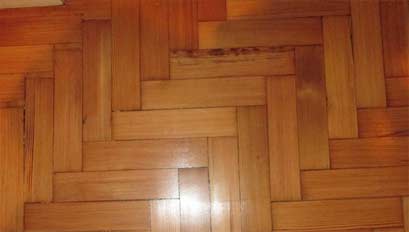
- Hardwood strip flooring — solid oak, walnut, ash, and maple strip floors, typically 14–22mm thick, installed in London homes from the 1970s onward. These floors are usually the easiest to sand, being already flat and uniform
The thickness and species of the floor determine the sanding approach — coarser starting grits for heavily finished or painted floors, finer graduation for floors in reasonable condition that only need a light surface removal before refinishing.
When Does a Solid Wood Floor Need Sanding?
Solid wood floors need sanding when the damage or wear has gone beyond what professional floor maintenance treatments — recoating, polishing, re-oiling — can address. The most common situations we assess in London properties include:
Finish worn through to bare wood — when lacquer or oil has worn through entirely in high-traffic areas and bare timber is exposed. Localised recoating over worn-through sections does not work — the new coat cannot bond to bare wood the same way it bonds to an existing finish. A full sand resets the finish system evenly.
Deep scratches into the timber — surface scratches confined to the finish layer can often be treated with targeted scratch repair. Scratches that have cut into the wood fibres themselves require sanding to level the surface before any new finish will look consistent.
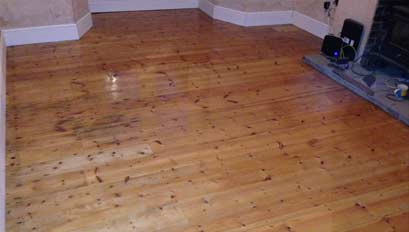
Widespread staining and discolouration — grey or black water staining around old radiators, UV bleaching near south-facing windows, paint splashes from decades of redecoration, and old varnish that has darkened unevenly. Most staining responds to sanding, though deep black water staining occasionally requires oxalic acid treatment before the final sanding stages.
Old or incompatible finishes — many London period floors were finished with wax, shellac, or early oil-based varnishes that have darkened, cracked, or become incompatible with modern maintenance products. Sanding removes the old finish entirely and provides a clean base for a modern, durable finish system.
Colour or finish type change — switching from lacquer to oil, from a dark stain to a lighter natural tone, or from a gloss finish to matt. All of these require sanding back to bare timber before the new finish or stain can be applied.
Solid Wood Floor Sanding Process
1. Free site visit and assessment — We examine the floor, identify the timber species and board thickness, assess the existing finish and extent of damage, identify any repairs needed before sanding begins, and provide a fixed-price written quote. All repair work — board replacement, squeak elimination, loose board securing — is carried out before sanding starts.
2. Preparation — Furniture moved from the room, protruding nail heads punched below the board surface. Doorways sealed with dust barriers. Any repairs completed and allowed to cure fully.
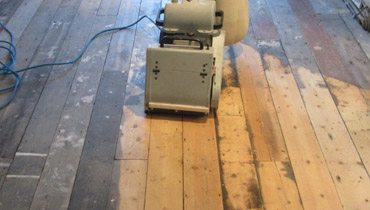
3. Main sanding — coarse grit — Belt or drum sander runs across the floor to remove the existing finish, old staining, and surface damage. The starting grit depends on the floor condition:
- Heavily finished or painted floors — typically start at 24 or 36 grit
- Lightly worn floors with a single old finish — start at 40 or 60 grit
- Floors in reasonable condition, needing only a light refresh — start at 80 grit
4. Main sanding — medium and fine grits — Progressive sanding through 80, 100, and 120 grit (or finer, depending on the species and finish specified), producing a smooth, consistent, open-grained surface. Edge sander works around the perimeter close to skirting boards in the same grit sequence. Hand tools and corner sanders used for areas machine access cannot reach.
5. Gap filling — Where specified, flexible resin filler blended with sanding dust is applied to gaps between boards after the main sand and before finishing. This is always carried out at this stage — not before sanding — as the filler must be sanded flush with the board surface. Gap filling is priced from £7/m² for resin filling and from £15/m² for strip filling of wider gaps.
6. Staining — Where a colour change is specified, wood dye is applied evenly across the fully sanded surface and allowed to dry completely before sealing. Wood floor staining is priced from £8/m² and is available in a full range of tones from light whitewash through to deep ebony.
7. Finishing — Two or three coats of the specified finish applied by roller or brush, with light abrasion between coats. Full details on all available finishes are on our floor sealing and finishing page.
8. Aftercare — Written care instructions and compatible cleaning and maintenance product recommendations provided at the end of every job.
Finishes for Solid Wood Floors
The finish applied after sanding defines the floor's appearance, durability, and what maintenance it will need going forward. The main options we apply to solid wood floors in London are:
Water-based lacquer — Bona Mega, Bona Traffic HD The most popular finish for London residential and commercial floors. Fast-drying (recoatable in 2–3 hours), low odour, and available in extra-matt, matt, satin, and semi-gloss sheens. Bona Traffic HD is a two-component formula offering maximum hardness — the preferred specification for hallways, kitchens, and commercial floors where durability is the priority.
Hard-wax oil — Osmo Polyx, Bona Craft Oil A penetrating finish that sits within the timber fibres rather than on top, producing a natural matte look that enhances the grain of old timber without adding a surface sheen. Popular in period London properties, where lacquer can look anachronistically shiny. Easier to spot-repair than lacquer but requires more frequent maintenance — typically re-oiling every one to two years.
Danish oil and wax, traditional finishes suited to period floors where authenticity is a priority. Wax in particular is the correct finish for London's original Victorian and Edwardian floors, where a modern lacquer would be anachronistic. Requires more frequent professional floor waxing maintenance than lacquer or hard-wax oil but produces the most characterful result on old-growth pine and oak.
Solid Wood Floor Sanding Costs in London
| Service | Price |
|---|---|
| Floor sanding, buffing & varnishing | from £25/m² |
| Floor sanding, buffing & oiling | from £25/m² |
| Gap filling — resin (up to 5mm) | from £7/m² |
| Strip gap filling (over 5mm) | from £15/m² |
| Wood floor staining | from £8/m² |
*All prices shown are exclusive of VAT.
All prices are confirmed in writing after the free site visit. Properties within the London ULEZ and Congestion Charge zones may include a daily access surcharge, stated explicitly in every quote.
Frequently Asked Questions — Solid Wood Floor Sanding in London
How many times can a solid wood floor be sanded?
It depends on the board thickness and how much material is removed each time. A 22mm solid oak or pine board can typically be sanded five or more times over its lifetime. Victorian and Edwardian floors in London — where the original boards are often 19–22mm thick and have frequently only ever been sanded once or twice — usually have significant sanding life remaining. We check board thickness during the site visit and confirm the remaining sanding life before proceeding.
My floor has been painted over — can it still be sanded?
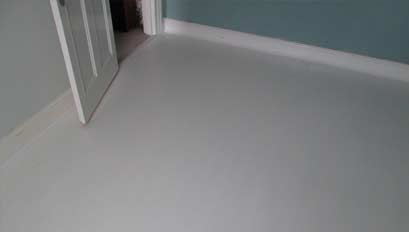
Yes — painted solid wood floors are one of the most common jobs we carry out in London period properties. Paint is removed in the coarse sanding stage, starting with a 24 or 36 grit abrasive. Lead paint in pre-1960s properties requires specific precautions — we assess this during the site visit and follow appropriate safety protocols where lead paint is identified.
Can you sand a floor that has been stained dark and restore it to a natural colour?
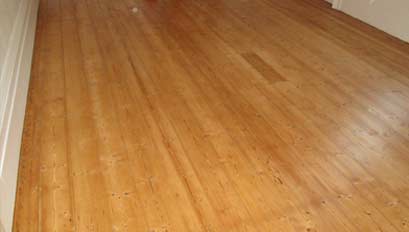
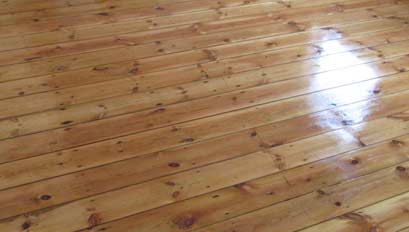
Yes. Dark stain is removed during sanding along with the old finish. The floor returns to its natural timber colour after sanding, and a new lighter stain or a clear finish can then be applied. The result is the natural tone of the sanded timber, which for Victorian pine is typically a warm honey colour and for oak a pale cream to light tan, depending on the specific boards.
How long does solid wood floor sanding take in a London home?
A standard room (15–25 m²) is typically completed in one to two days, including sanding and two finish coats. A full ground floor (50–80 m²) usually takes two to three days. Floors requiring significant repair work, staining, or three finish coats take longer. We confirm the expected duration in the written quote after the site visit.
Do you sand floors in occupied London properties?
Yes — the majority of our London sanding work is carried out in occupied homes. We work one room at a time, where possible, seal doorways with dust barriers throughout, and use dust-free extraction equipment capturing up to 99% of airborne particles. The floor is walkable in socks within two to three hours of the final lacquer coat, allowing the rest of the property to remain in normal use during the project.
Call us on 020 7036 0625 or request a free quote online — we respond to all solid wood floor sanding enquiries the same working day.