If you have wooden floors in London general and want them restored, the first question is almost always about price. Floor sanding costs vary depending on the size of the room, the condition of the boards, and the finish you want. This guide gives you realistic figures for London in 2026, so you can plan your budget properly.
Typical Price Ranges Per Square Metre
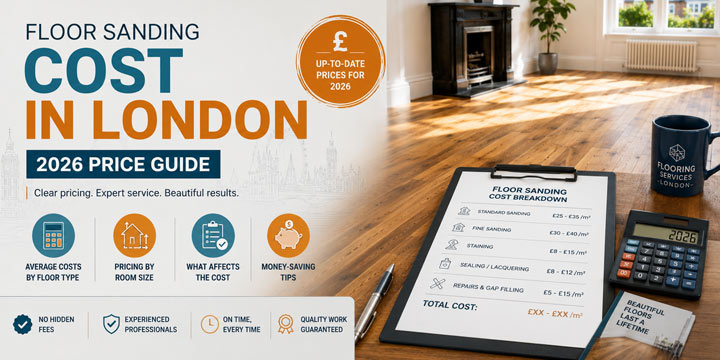
Most floor sanding companies working in London charge between £25 and £45 per square metre for a standard sand and finish. That price usually includes preparation, sanding in multiple passes, and one or two coats of your chosen finish. Some contractors quote a day rate instead, typically £300 to £500 per day depending on experience and equipment.
For a rough guide:
- Small room (up to 15m²): £400 to £650
- Medium room (15 to 30m²): £600 to £1,100
- Large room or open-plan area (30m² and above): £900 to £1,800+
- Whole house (three or four bedrooms): £2,500 to £5,000+
These figures are estimates. The actual quote you receive will depend on several factors specific to your property and boards.
What Drives the Cost Up?
In London general, many homes have original Victorian or Edwardian floorboards, which need careful handling. Boards with lots of gaps, raised nails, cupped edges, or old paint require more preparation time and that adds to the bill. Properties where the floors were previously carpeted often have adhesive residue or underlay staples that need removing before sanding begins.
The finish you choose also affects price. A basic matt lacquer is the most affordable option. Hard wax oil or Danish oil tends to cost more per litre and takes longer to apply correctly. If you want a stained floor, add roughly £5 to £10 per square metre to the base rate.
Room access and furniture removal play a role too. If stairs need sanding, expect a separate charge per tread, usually £8 to £15 each. Narrow hallways with awkward angles take longer to complete and most contractors factor that into their quotes.
Parquet and Specialist Floors
Parquet floors in London are common, particularly in properties built between the 1930s and 1970s. Sanding parquet is more complex than sanding straight boards because the machine must work at angles across the blocks, and any loose sections need re-bonding first. Expect to pay £35 to £55 per square metre for parquet restoration in London general.
How to Get an Accurate Quote
Most reputable companies will visit the property before quoting. Be wary of anyone who provides a firm price without seeing the floor. Photos help for a ballpark figure, but they do not reveal what is hidden under the surface.
When gathering quotes, ask what the price includes: number of sanding passes, which finish, how many coats, and whether moving furniture is included. A written quote makes it easier to compare.
- Get at least two or three quotes in London
- Ask to see completed work in similar properties nearby
- Check reviews from homeowners in London general specifically
- Confirm the contractor is fully insured
Is Floor Sanding Worth the Cost?
In most cases, yes. In London general where property values are relatively high, restoring original wooden floors adds significantly to the appeal and value of a home. Replacing worn boards with new engineered wood or solid timber would typically cost two to five times more than sanding what is already there. Original period boards in particular are difficult and expensive to replicate.
If the boards are structurally sound, sanding and refinishing will often give results that last fifteen to twenty years before another treatment is needed. That makes it one of the better investments you can make in a home in London.
Timing and Availability
Summer months tend to be busier for floor sanding contractors in London general, partly because better ventilation helps finishes dry faster. Booking in autumn or winter can sometimes mean shorter waiting times and more flexibility on dates. Most jobs take one to three days depending on size, though larger properties or heavily worn floors may take longer.
Ask your contractor about drying time before you can walk on the floor. Water-based lacquers are typically ready within 24 hours. Oil finishes often need 48 to 72 hours before normal use.