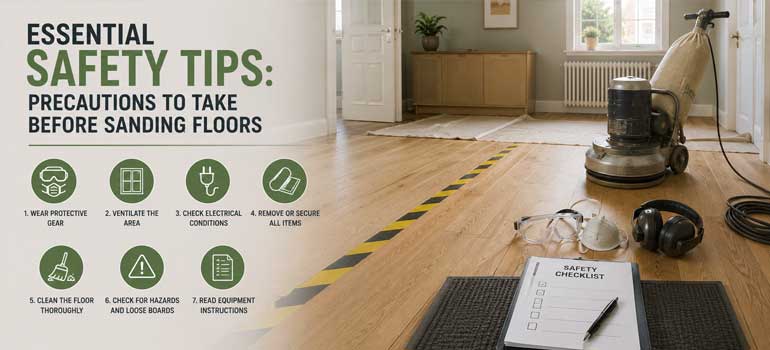
If you've decided to sand your own floor, getting a good-looking result is only part of the challenge. Sanding involves genuine safety risks that are easy to underestimate, from fine dust exposure to fire hazards most people wouldn't think to look out for.
Protecting Yourself Properly
A dust mask isn't optional, and not just any mask will do. Fine wood dust from sanding is a genuine respiratory hazard, so a proper dust-rated mask, ideally FFP2 or FFP3 rated, offers meaningfully better protection than a basic disposable dust mask. Eye protection matters too, since sanders throw fine debris and splinters, and ear protection is worth taking seriously given how loud sanding machines run over a sustained period, hearing damage from prolonged exposure is cumulative and easy to overlook in the moment.
Ventilation And Fresh Air
Open windows and, where possible, use additional ventilation to keep air moving through the room while you work. This helps with both dust levels and any fumes from finishing products used later in the process, and it makes a genuine difference to how bearable the job is over several hours of work.
Understanding Your Machine Before You Start
Read the instructions for any hired equipment properly before switching it on, not just skimmed. Sanding machines behave differently from one another, and operating one without understanding its specific controls and quirks is a common cause of both poor results and accidents. Keep power cables well away from the machine's path as you work, since running a sander over its own cable is a genuine electric shock risk and more common than people expect when concentrating on the sanding itself.
Fire Risk Is Real, Not Theoretical
This is one of the most underestimated risks in DIY sanding. Fine wood dust is combustible, and a dust bag left too full can be a genuine fire hazard, particularly given the heat and friction the machine generates during use. Check and empty the bag well before it's full, roughly once it passes halfway, rather than waiting until it's overflowing.
There's a second, less obvious fire risk worth knowing about if you're applying an oil-based finish afterwards: rags used to apply oil finishes can spontaneously combust if left balled up or piled together, since the oil oxidises and generates heat as it dries. Always lay used rags flat outside to dry fully, or soak them in water in a metal container, before disposing of them. This is a genuine and well-documented fire risk, not an exaggerated precaution.
Being Considerate Of Noise
Sanding is a loud, sustained job, and in London's terraced houses, flats, and shared buildings, that noise carries further than people expect. Working during reasonable daytime hours rather than evenings or weekends, where practical, avoids unnecessary friction with neighbours, and it's worth checking whether your building or lease has any specific rules about noisy work, which is common in flats and leasehold properties.
When The Precaution List Itself Tells You Something
If working through this list leaves you feeling genuinely uneasy about the equipment, the fire risk, or your ability to manage all of this safely over a full day or weekend, that's worth listening to. Professional floor sanding removes all of these specific risks from your hands, proper dust extraction, correctly rated equipment, and none of the guesswork around machine handling or fire safety that comes with a first-time DIY attempt.
Frequently Asked Questions
What kind of mask should I wear for floor sanding?
A proper dust-rated respirator mask, ideally FFP2 or FFP3 rated, offers meaningfully better protection than a basic disposable dust mask, given how fine wood sanding dust actually is.
Is floor sanding dust actually a fire risk?
Yes, genuinely. A dust bag left to overfill, combined with the heat generated by the machine, is a real fire hazard, which is why bags should be emptied well before they're full rather than left to run.
Can oily rags used for wood floor finishing actually catch fire on their own?
Yes, this is a well-documented risk. Oil-based finishes generate heat as they dry, and rags balled up or piled together can spontaneously combust as a result. Laying them flat to dry, or soaking them in water before disposal, avoids this.
Is it worth sanding during the day rather than in the evening?
It's worth considering, particularly in flats or terraced housing where noise carries between properties. Many leases also have specific rules about noisy work, so it's worth checking before starting.
Call us on 020 7036 0625 or request a free site visit if you'd rather have the job done professionally, with all of this handled for you.