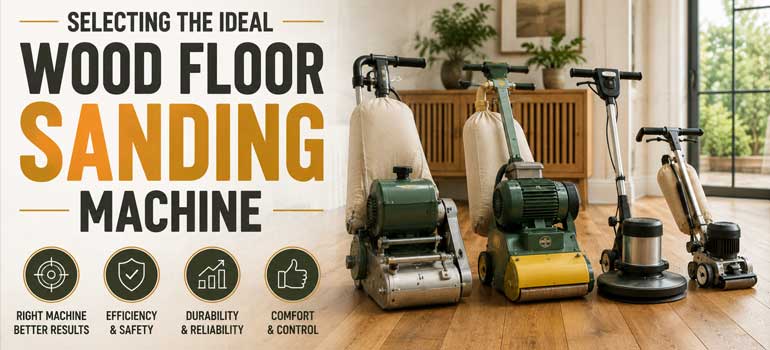
A proper wood floor sand isn't done with a single machine. It typically involves three genuinely different tools, each suited to a specific part of the job, and understanding what each one actually does helps explain why professional sanding equipment looks the way it does, and why it's not something most households own.
The Three Machine Types, At A Glance
- Drum (belt) sander — handles the main, open floor area, removing material quickly and evenly.
- Edger — a smaller, more manoeuvrable machine for the perimeter, corners, and areas tight against skirting.
- Buffer or random-orbit sander — used as a finishing pass, smoothing the surface before a finish is applied.
Each does a job the others genuinely can't, which is why a proper sand typically involves all three rather than one all-purpose machine.
The Drum (Belt) Sander Does The Main Floor Area
This is the primary workhorse for the bulk of an open floor area. Lägler, the German manufacturer behind the widely known Hummel range, has built a genuine reputation in this specific category over decades, and its machines are among the most recognised in the professional flooring industry worldwide. A few features genuinely matter here, not just as extras:
- Multi-stage drum pressure regulation, which helps produce an even, consistent sand rather than uneven, patchy removal.
- Proper dust containment, which keeps the job manageable and considerably reduces mess spreading through the rest of the property.
- Consistent belt tracking, which prevents the kind of visible chatter marks that mark out an inexperienced sand.
The Edger Handles The Perimeter
A drum sander can't reach right up against skirting boards or into tight corners, which is exactly what an edger is built for:
- It's smaller and more manoeuvrable than a drum sander, designed specifically for detailed perimeter work.
- Bona, a well-established Swedish flooring equipment manufacturer, makes genuinely respected edgers used widely across the professional industry, alongside other established brands in this category.
- Getting this work right matters as much as the main floor area, since a mismatched transition between the drum-sanded centre and the edge-sanded perimeter is one of the more visible signs of a rushed or inexperienced job.
The Buffer Or Orbital Sander Finishes The Surface
This is worth clarifying properly, since it's easy to misunderstand what this machine actually does. A buffer or random-orbit sander isn't specifically "for sanding against the grain" it's typically used as a final finishing pass:
- It smooths the surface after the drum sander's main work.
- It reduces the risk of fine cross-grain scratch marks being visible once a finish is applied.
- It plays a genuinely important role in the final result, but it's a finishing tool rather than a substitute for the drum sander's primary material removal.
Why This Is Usually Professional-Grade Equipment
None of these three machines are things most households own or use regularly, and that's worth being realistic about before committing to a DIY sanding project:
- Hiring genuinely good equipment for a single project carries a real cost, one worth weighing against simply hiring a professional who already owns it.
- There's a real skill curve to operating a drum sander without gouging the floor, something we've covered in detail elsewhere when weighing up DIY sanding against hiring a professional.
- Reputable brands like Lägler/Hummel and Bona are trusted specifically because professionals rely on them daily, which is a different proposition from a first-time user handling the same equipment for a single weekend.
Wood Floor Sanding Machines: Common Questions
Do I need all three machine types for a DIY sanding project?
For a genuinely even, professional-looking result, yes, typically. Each machine handles a different part of the job, and skipping the edger or the finishing pass usually shows up as a visible inconsistency in the final result.
What does a buffer or orbital sander actually do?
It's used as a finishing pass after the main drum sanding work, smoothing the surface and reducing fine scratch marks before a finish is applied, rather than being a primary material-removal tool.
Are professional-grade sanding brands worth using for a one-off DIY project?
They're genuinely better equipment, but the cost of hiring top-tier machines for a single project is worth weighing against simply hiring a professional who already owns and knows how to use them.
Why does edger work matter as much as the main floor area?
Because a mismatch between the drum-sanded centre and the edge-sanded perimeter is one of the most visible signs of an inexperienced sanding job, even if the main floor area looks fine.
Call us on 020 7036 0625 or request a free site visit if you'd rather leave the sanding to a team using this equipment daily.