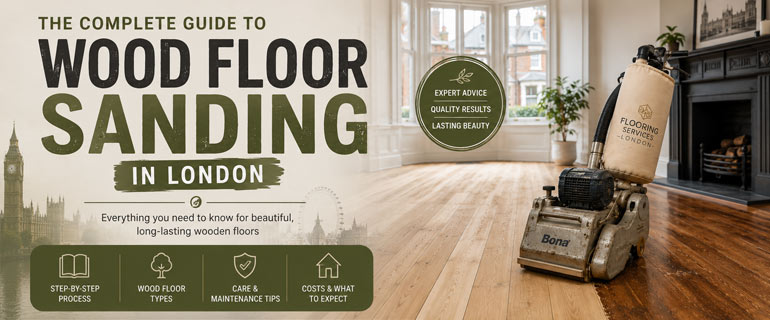
Your wooden floors have taken a beating. Years of footsteps, spilt coffee, and pet accidents have left them looking tired and worn. The good news? Professional floor sanding in London can transform them back to their original beauty, and this guide will walk you through everything you need to know.
Whether you're dealing with Victorian floorboards in Islington, modern engineered wood in Canary Wharf, or reclaimed timber in Shoreditch, London's top floor sanding specialists have the expertise to restore your investment. We'll cover costs, timescales, the process itself, and how to choose the right contractor for your home.
What Is Wood Floor Sanding and Why Does Your London Home Need It?
Wood floor sanding is the process of removing the top layer of your wooden floor using specialised machinery. This strips away surface damage, stains, scratches, and old finishes, revealing fresh wood underneath. Once sanded, your floors are typically sealed with protective coatings like polyurethane, wax, or oil.
London homes are particularly prone to requiring floor sanding because:
- Heavy foot traffic in urban properties wears finishes quickly
- Period properties often have original boards that need restoration rather than replacement
- Moisture from London's damp climate can cause boards to move and finish to fail
- Rental properties in London frequently need floor restoration between tenants
- Heritage properties demand authentic finishes that suit their age and character
If your London wood floors are looking dull, scratched, or uneven, sanding followed by resealing can be far more cost-effective than replacement. Most London homeowners find that professionally sanded and sealed floors last another 10-15 years before needing attention again.
Wood Floor Sanding Costs in London: What to Budget
In 2025, London floor sanding prices vary depending on floor size, condition, and finish type. Here's what you can realistically expect:
- Labour costs: £15-£25 per square metre for standard sanding and sealing across London
- Small room (10-15 m²): £300-£450 labour, plus materials
- Medium living room (20-30 m²): £400-£650 labour, plus materials
- Large ground floor in central London: £800-£1,500 labour, plus materials
- Specialist finishes (matte lacquer, coloured oils): Add 15-30% to base price
Materials like sanding dust bags, abrasive papers, and sealing products typically add £200-£400 to a standard London job. If your floors need edge sanding, reballing, or knot filling, expect additional charges of £50-£150.
Central London postcodes like SW1, W1, and EC1 tend to command higher rates due to access challenges and the higher cost of living. South London and East London areas like SE15 and E8 may offer slightly lower quotes. Always get three written quotes from different London contractors to compare pricing fairly.
The Floor Sanding Process: What to Expect During Your London Project
Understanding the process helps you prepare your home and set realistic expectations. Here's how professional floor sanding unfolds in London homes:
- Initial inspection: A technician visits your London property to assess board condition, identify any repairs needed, and check for nail pops or movement
- Preparation: Furniture is removed, baseboards protected, and the room sealed off to contain dust
- Coarse sanding: Heavy-duty machines with 36-60 grit paper remove old finish and level the floor surface (1-2 days for a typical London room)
- Medium sanding: 80-100 grit paper smooths the surface further (1 day)
- Fine sanding: 150-180 grit paper creates the smooth finish ready for sealing (1 day)
- Edge work: Smaller equipment handles areas near walls and obstacles
- Dust removal: Professional vacuuming and damp mopping prepares the floor for finishing
- Sealing: Two to three coats of polyurethane, oil, or wax applied across London floors
A typical London wood floor sanding project takes 4-7 days from start to finish, depending on floor size and complexity. You'll need to stay out of the sanded areas during drying periods, which is why many London residents arrange accommodation elsewhere or work from another room in their home.
How Long Does Floor Sanding Take? Drying Times and Timeline
One question London homeowners always ask: "When can I use my floors again?" The answer depends on the sealing product chosen.
Water-based polyurethane finish: This popular option in London gives a clear, durable surface. Drying takes 24-48 hours between coats, with full cure in 3-5 days. Light traffic is safe after 5 days, but you should avoid heavy activity for two weeks.
Oil-based polyurethane finish: Stronger and more yellowing than water-based, this takes 48-72 hours between coats with 7-10 days to full cure. Many London Victorian properties use this traditional option.
Hardwax oil finish: Popular in modern London homes, this dries in 24 hours and reaches full hardness in 2-3 weeks, offering a more natural look than polyurethane.
Matte lacquer: Quick drying (4-6 hours between coats), this suits contemporary London interiors. Full cure is 5-7 days.
For a typical London living room (25 m²), you're looking at roughly 5-6 working days on site, plus 7-14 days of restricted use afterwards depending on finish type. Plan accordingly, especially if your London property is a rental that needs quick turnaround.
Choosing the Right Finish for Your London Floors
London floor sanding specialists will present you with several finishing options, each with distinct advantages:
- Polyurethane (water-based or oil-based): Hardest, most durable finish. Best for high-traffic London properties. Cost: included in labour estimate or £2-£4 per m² extra for premium grades
- Hardwax oil: Warm, natural appearance with good durability. Easier to touch-up than polyurethane. Favoured in heritage London homes. Cost: £3-£5 per m² extra
- Matte or satin lacquer: Modern look with excellent durability. Suits contemporary London properties. Cost: £3-£6 per m² extra
- Traditional wax: Beautiful appearance but requires regular maintenance. Rarely recommended for London's busy households
- Natural oil only: Minimal finish, highlighting wood character. Least durable option, requires yearly recoating
London's moisture-prone climate (especially in areas near the Thames like Hammersmith or Greenwich) benefits from water-based finishes that resist humidity fluctuations better than oil-based alternatives.
Finding a Reputable Floor Sanding Contractor in London
Not all floor sanding companies in London are created equal. Here's how to identify trustworthy specialists:
- Check membership: Look for contractors affiliated with The Guild of Master Craftsmen, NICF (National Institute of Carpet and Floorlayers), or the FSB (Federation of Small Businesses)
- Ask for references: Reputable London sanding companies provide recent client contacts and photo portfolios of completed projects
- Verify insurance: Public liability insurance (minimum £1 million) is essential. Request proof before work starts
- Get written quotes: Never agree to work based on phone quotes. A professional London contractor visits, assesses the floor condition, and provides detailed written estimates
- Check online reviews: Read Google, Trustpilot, and Checkatrade feedback from London customers, but remember that disgruntled customers may post disproportionately
- Discuss warranty: Legitimate London floor sanding companies offer 12-month warranties on their workmanship and sealing products
Red flags include contractors who quote over the phone without visiting, offer significantly lower prices than competitors, or can't provide evidence of insurance and professional membership. London's competitive market means genuine professionals can afford to be transparent.
Preparing Your London Home for Floor Sanding
Proper preparation makes the job smoother and faster, potentially reducing your overall costs in London. Before sanding begins:
- Remove all furniture, curtains, and wall hangings from the sanding area
- Protect valuable items in other rooms, as dust can penetrate closed doors in London properties
- Ensure access doors are clear and passageways wide enough for sanding equipment
- Advise your London sanding contractor of any nail pops, squeaks, or damaged boards
- Check that electrical outlets and light switches are functioning properly
- If you have pets, arrange alternative accommodation for the sanding period (5-7 days in London)
In London flats and terraced properties, notify neighbours of upcoming work, as sanding creates noise for 2-3 days. Most contractors work standard hours (8am-5pm) but can negotiate early starts if needed.
Frequently Asked Questions
How often should I sand my wooden floors in London?
Most London wooden floors need sanding every 10-15 years with proper maintenance. Factors like foot traffic, finish type, and climate (London's moisture can accelerate wear) affect this timeline. If you notice significant scratches, dullness, or uneven wear patterns across your floor, it's time to call a London sanding specialist.
Is floor sanding disruptive? Can I stay in my London home during work?
Floor sanding creates considerable dust and noise, making the sanded areas unusable during the process. However, you can typically remain in other areas of your London property if they have separate access. Many residents prefer to arrange temporary accommodation (5-7 days) to avoid dust infiltration and noise disturbance. Contractors in London can seal doorways with plastic sheeting to limit dust spread.
What's the difference between sanding and refinishing London wood floors?
Sanding removes the top layer of wood and old finish entirely. Refinishing (or recoating) means cleaning and resealing existing floors without sanding. Refinishing is cheaper (£5-£10 per m² in London) and faster but only works if the existing finish is intact. If your London floor has deep scratches or stains, full sanding is necessary.
Can I sand and seal laminate or engineered wood floors in London?
Solid hardwood floors can be sanded multiple times. Most engineered wood has a thin veneer (2-3mm) and can be sanded once, sometimes twice. Laminate should never be sanded. If you're unsure what type of flooring you have in your London home, a specialist can assess it during the free consultation.
What's included in a typical London floor sanding quote?
A comprehensive London quote includes: labour for sanding, edge work, and sealing; materials (abrasives, sealer products); dust extraction; basic repairs (filling gaps, resetting nails). It should exclude: underlayment replacement, major structural repairs, or furnishings removal (though many contractors offer this as optional paid services in London).
Get a Free Quote
Ready to restore your London wood floors to their former glory? Our experienced floor sanding team has transformed thousands of homes across London, from Kensington to Hackney. We provide free, no-obligation site visits and detailed written quotes within 48 hours. Contact us today to discuss your floor sanding needs.
Request a Quote