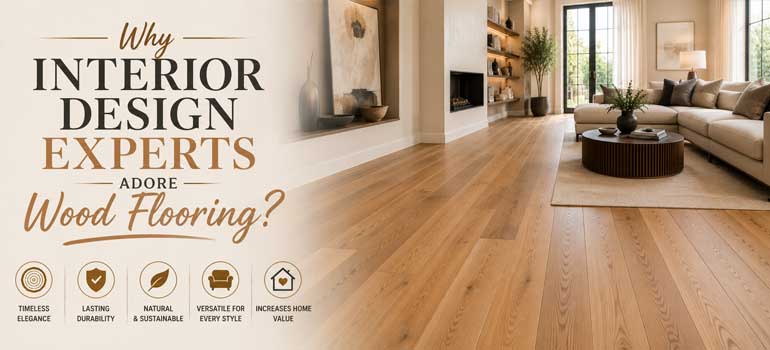
Wood flooring's general appeal - versatile, easy to maintain, genuinely durable - has been covered thoroughly elsewhere on this blog, so rather than repeat that ground, this piece looks at something more specific: how designers actually use wood flooring as a working tool in a project, not just as a nice surface underfoot.
The Short Version, Briefly
For anyone who hasn't read our other posts on this: wood flooring suits an exceptionally wide range of interior styles, needs relatively little day-to-day upkeep for what it delivers, and can realistically last a century or longer with proper care and periodic refinishing. Those points are covered in genuine depth elsewhere on this blog, so here's what's more interesting: how that translates into actual design practice.
Why Designers Treat Wood As A Neutral Canvas
This is a genuinely practical reason wood flooring keeps showing up in professional work, not just consumer preference. A wood floor in a sensible, versatile tone acts as a stable, neutral foundation, which frees a designer to take more risks elsewhere in the room, bolder wall colours, statement furniture, unusual textiles, without worrying the floor itself will clash with whatever direction the rest of the space takes. Because wood so reliably harmonises with almost any palette, it effectively removes one variable from the equation, letting the designer's actual creative decisions happen in the walls, furniture, and accessories instead.
Using Finish Sheen As A Lighting Tool
This is a more technical consideration that doesn't get talked about much outside professional circles. Finish sheen genuinely affects how light behaves in a room, not just how the floor itself looks. A matt finish diffuses light softly, which suits calmer, more understated spaces where a designer wants light to feel gentle rather than reflected sharply back into the room. A higher-sheen finish bounces more light around, which can be used deliberately to brighten a room that's short on natural daylight, effectively using the floor as part of the room's overall lighting strategy rather than treating light and flooring as separate decisions. We've covered the practical trade-offs between matt and gloss finishes in more depth elsewhere, but it's worth knowing this isn't purely an aesthetic choice, it's genuinely functional.
Wood Flooring In Home Staging
This is worth being precise about, since it's easy to overstate. Wood flooring is a genuinely common choice in home staging and real estate presentation, largely because it reads as neutral and move-in ready to the broadest possible range of buyers, unlike bolder flooring choices that can narrow a property's appeal to people who share the same specific taste. It's worth being honest that this doesn't guarantee a faster sale or a higher price on its own, it's one factor among several in how a property presents, but it's a genuine, practical reason staging professionals reach for it consistently rather than treating it as pure marketing.
How Designers Use Wood Flooring: Common Questions
Why do designers describe wood flooring as a "neutral canvas"?
Because it harmonises with such a wide range of styles and colour palettes that it effectively removes one variable from a room's design, freeing the designer to take more risks with walls, furniture, and accessories instead.
Does finish sheen actually affect a room's lighting, or is that just marketing language?
It's genuinely functional. Matt finishes diffuse light more softly, while higher-sheen finishes bounce more light around a room, which designers can use deliberately depending on how much natural light a space already has.
Does wood flooring guarantee a property sells faster or for more money?
Not on its own, no. It's a genuinely common staging choice because it reads as neutral and appealing to a broad range of buyers, but it's one factor among several rather than a guarantee of a faster sale or higher price.
Is wood flooring's versatility really as useful to designers as it is to homeowners?
Yes, arguably more so. For a designer working across many different client briefs and styles, a material that reliably suits almost any direction is a genuinely practical starting point, not just an aesthetic preference.
Call us on 020 7036 0625 or request a free site visit and we'll help you choose the right wood and finish for your project's style and lighting.