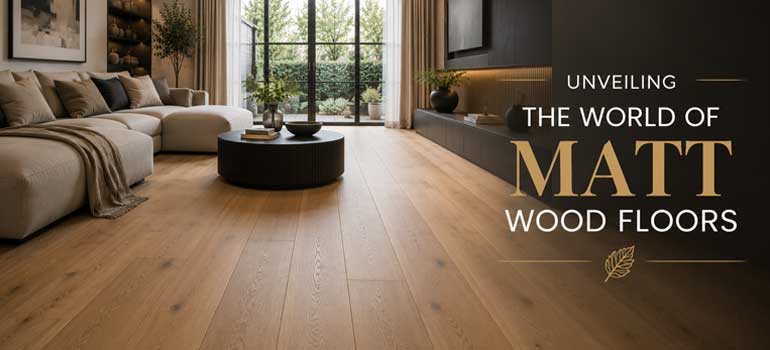
High-gloss wood floors dominated for years, that mirror-like reflection under a bright kitchen light was practically the default image of a "finished" wood floor. That's shifted considerably, and matt finishes have become the preferred choice for a growing number of homes. Understanding what sheen level actually measures, and what genuinely changes between matt and gloss, helps make the choice properly rather than just going with whatever's currently fashionable.
What Sheen Level Actually Means
Gloss isn't a vague, subjective quality, it's a measurable one. Sheen is assessed using a gloss meter at a 60-degree angle, roughly the angle you'd naturally view a floor from while standing, measuring how much light reflects off the surface as a percentage:
- High gloss: roughly 75% and above, the most reflective, mirror-like finish.
- Semi-gloss and satin: roughly 30% to 50%, a noticeable but more moderate shine.
- Matt: roughly 1% to 20%, the least reflective option, giving a natural, low-shine appearance.
These figures vary slightly between manufacturers and testing standards, but the relative ordering, matt lowest, gloss highest, holds consistently across the industry.
Why Matt Has Become So Popular
Matt's appeal comes down to two genuine practical advantages. It's considerably more forgiving of everyday dust, minor scratches, and small marks, since a low-reflectivity surface simply doesn't catch and highlight imperfections the way a glossy one does. It also gives a floor a more natural, raw-timber appearance, closer to how the wood actually looks unfinished, which suits the broader shift toward calmer, more understated interiors that's been happening across flooring trends generally.
The Real Trade-Off With High Gloss
Gloss finishes aren't simply "harder to maintain" in an abstract sense, the real issue is visibility. Every speck of dust, every fine scratch, and every water mark shows up clearly against a highly reflective surface, which means a glossy floor tends to look tired and in need of attention sooner than a matt one, even if the underlying protective coating hasn't actually worn through any faster. This is really a cosmetic wear issue rather than a durability one, but it's exactly why glossy floors often get recoated more frequently in practice, they simply show their age more visibly, prompting earlier attention even when the finish itself would technically still be doing its job.
Matt Lacquer Versus Matt Hardwax Oil
This is worth understanding if you're specifically after a matt look, since there are two genuinely different ways to get there, and they behave quite differently once fitted. A matt lacquer sits on top of the wood as a low-sheen protective film, similar to a glossy lacquer in how it protects the surface, just formulated to reflect far less light. A hardwax oil, brands like Osmo are commonly used, penetrates into the timber itself rather than sitting on top, giving a naturally matt, textured feel that many people find more tactile and authentic, though it typically needs more frequent maintenance, periodic re-oiling, than a lacquered finish does.
Is Matt Right For Every Room?
Largely yes, but it's worth a small caveat. In rooms with a genuine spill risk, kitchens especially, a very low sheen can occasionally make it slightly harder to spot a fresh spill quickly, since matt surfaces don't catch light off standing liquid the way a glossy surface does. This isn't a reason to avoid matt in a kitchen, plenty of kitchens use it successfully, just something worth being a little more attentive about with prompt cleanup habits.
Matt Wood Floors: Common Questions
Is a matt finish genuinely lower maintenance than gloss?
It hides everyday marks and dust more effectively, which makes it feel and look lower maintenance day to day, though the actual protective performance depends more on the specific product (lacquer or oil) than on sheen level alone.
What's the difference between matt lacquer and hardwax oil?
Lacquer sits on top of the wood as a protective film, while hardwax oil penetrates into the timber itself. Both can achieve a matt look, but oil typically needs more frequent reapplication than lacquer does.
Does a glossy floor really need refinishing more often than a matt one?
It often gets recoated sooner in practice, but that's usually because scratches and marks show up more visibly against gloss, prompting earlier attention, not because the protective coating itself wears out faster.
Is matt a good choice for a kitchen floor?
Yes, generally, though it's worth being a little more attentive to spotting spills quickly, since a low-sheen surface doesn't catch light off standing liquid as readily as a glossy one would.
Call us on 020 7036 0625 or request a free site visit and we'll help you choose between matt lacquer and hardwax oil for your floor.