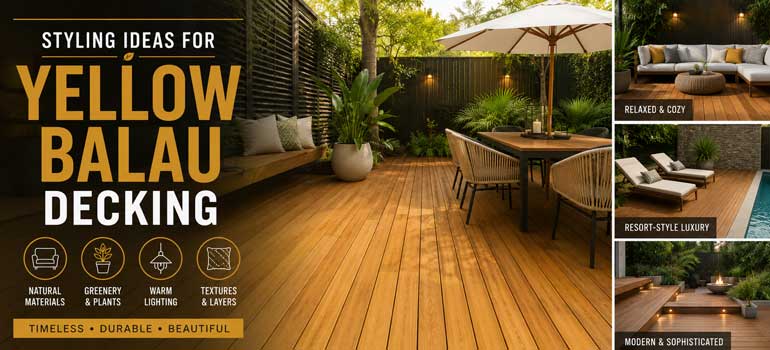
Outdoor space deserves the same consideration as the flooring inside a home, and yellow balau is one of the more genuinely practical hardwood decking options worth knowing about, durable, naturally weather-resistant, and light-toned enough to shape how a space feels.
What Makes Yellow Balau Well-Suited To Decking
Yellow balau, a dense tropical hardwood, shares several characteristics with teak, the more commonly known decking benchmark. A naturally high oil content gives it real resistance to warping, twisting, and pest damage without needing heavy chemical treatment, and its density makes it a genuinely long-lasting choice for sustained outdoor exposure to rain, sun, and temperature swings. It's also a comparatively affordable option relative to some premium decking hardwoods, without giving up much on durability.
Using Colour To Shape How A Space Feels
Yellow balau's naturally light tone does real, practical work beyond just looking good:
- In smaller outdoor spaces, balconies, small terraces, compact gardens, a light-coloured decking surface reflects more light and creates the visual impression of a larger area, similar to how light flooring works indoors.
- Laying narrow planks lengthways along a space's longest dimension amplifies this effect further, drawing the eye along the room's longest sightline and making the area feel more expansive than it actually is.
- In larger outdoor spaces, yellow balau works differently but just as effectively, becoming a genuine focal point and accent rather than needing to work hard to create an illusion of scale.
- Around a pool specifically, the light tone and natural texture create a relaxed, resort-like atmosphere that darker decking options don't achieve as readily.
Maintenance Keeps It Looking Its Best
Like most natural hardwood decking, yellow balau needs periodic oiling to maintain both its appearance and its weather resistance over time. Left untreated, it will naturally weather to a silvery-grey patina, which some people actually like as a look in its own right, but if you want to preserve the warm, original tone, regular reapplication of a suitable decking oil is genuinely necessary rather than optional.
Sourcing Responsibly
As a tropical hardwood, it's worth checking that any yellow balau you're considering comes from a responsibly managed source, verified through certification schemes like FSC or PEFC. This matters both for the material's environmental credentials and, practically, for ensuring consistent quality and legal sourcing, since tropical hardwood supply chains vary considerably in how well they're regulated and verified.
Yellow Balau Decking: Common Questions
Does yellow balau decking need much maintenance?
Yes, periodic oiling is genuinely needed to maintain its original colour and protect it from weathering. Left untreated, it develops a natural grey patina instead, which some people prefer as its own distinct look.
Is yellow balau as durable as teak?
It shares several key characteristics with teak, including a naturally high oil content and strong resistance to warping and pest damage, making it a genuinely comparable option at a typically more accessible price point.
Can light-coloured decking really make a small garden feel bigger?
Yes, the same principle that applies to light indoor flooring applies outdoors: a lighter surface reflects more light and creates a visual impression of more space, particularly when narrow planks are laid along the space's longest dimension.
Should I check the sourcing of tropical hardwood decking before buying?
Yes, it's genuinely worth verifying certification like FSC or PEFC, both for environmental reasons and to ensure consistent quality from a properly regulated supply chain.
If you're also planning indoor wood flooring as part of the same project, that's exactly what we specialise in. Call us on 020 7036 0625 or request a free site visit for advice on your indoor flooring.