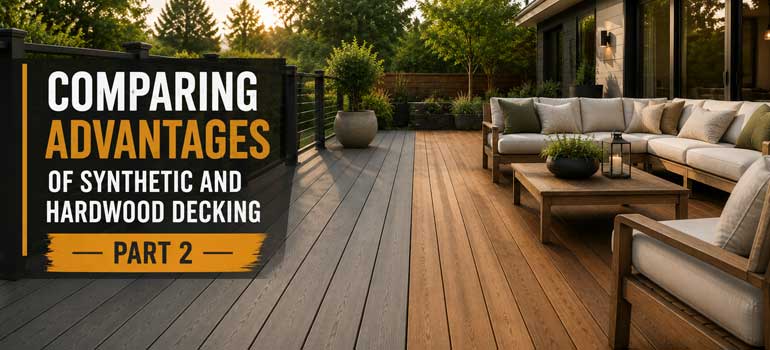
Part one covered what synthetic and hardwood decking actually are. This part gets into the practical comparison: how they differ on look, price, durability, and what installation involves for either option.
About The Look
If a genuinely natural appearance matters most, hardwood decking delivers something composite can only approximate. Real timber carries natural grain variation, and it ages visibly and distinctively through the seasons, developing character over time rather than just wearing down. That natural quality does come at a price premium, but for anyone specifically after the authentic look and feel of real wood, it's difficult to fully substitute.
Synthetic decking takes a different route entirely. Rather than aiming to be indistinguishable from timber, many composite products lean into being bold and contemporary, offering colours and finishes, from matte to gloss, that real wood simply doesn't produce naturally. If you're after a specific modern look rather than a traditional timber deck, this range of finish options is a genuine advantage composite has over hardwood.
Difference In Price
Both materials span a wide price range, and quality varies considerably within each category rather than one material being uniformly cheaper or more expensive than the other. Low-quality composite decking exists, and it looks it. Low-quality hardwood decking exists too, and can still carry a substantial price tag despite disappointing performance. The genuinely useful takeaway here: research the specific product and supplier rather than assuming material choice alone determines value for money. A well-made composite product and a well-sourced hardwood product can end up costing similarly once you're comparing genuinely comparable quality tiers.
Durability And Maintenance
Both materials can last a long time with appropriate care, but the maintenance burden differs considerably. Composite decking needs meaningfully less ongoing maintenance than hardwood, no staining, oiling, or sealing required, which is a real practical advantage for anyone who wants a low-effort outdoor space rather than an ongoing seasonal task. Hardwood decking, in exchange for its natural appearance, asks for regular treatment to keep the timber protected against weathering and to maintain its appearance over time.
Installation Considerations
Both materials are generally considered manageable installation projects for an experienced tradesperson, though the specifics differ. Hardwood decking, being a genuinely dense, hard material, typically needs more specialised handling and cutting than composite, which is engineered specifically to be easier to work with during installation. Whichever material you choose, it's worth engaging an experienced decking specialist or landscaping contractor, someone specifically skilled in outdoor decking installation, rather than assuming any general building tradesperson will have the same expertise with either material.
Synthetic Vs Hardwood Decking: Common Questions
Does hardwood decking really look better than composite over time?
It depends what you're after. Hardwood develops a distinctive natural patina as it ages, which many people find appealing, while composite maintains a more consistent appearance throughout its life rather than visibly changing with weathering.
Is composite decking always cheaper than hardwood?
Not necessarily. Quality varies considerably within both categories, so a well-made composite product and a well-sourced hardwood product can end up costing similarly once you're comparing genuinely comparable quality.
Which material needs less ongoing maintenance?
Composite, clearly. It doesn't need staining, oiling, or sealing the way hardwood does, making it the lower-effort choice for anyone who'd rather not take on regular seasonal upkeep.
Who should I hire to install decking?
An experienced decking specialist or landscaping contractor, specifically skilled in outdoor decking work, rather than assuming any general tradesperson will have equivalent expertise across both hardwood and composite materials.
If you're also planning indoor wood flooring as part of the same project, that's exactly what we specialise in. Call us on 020 7036 0625 or request a free site visit for advice on your indoor flooring.