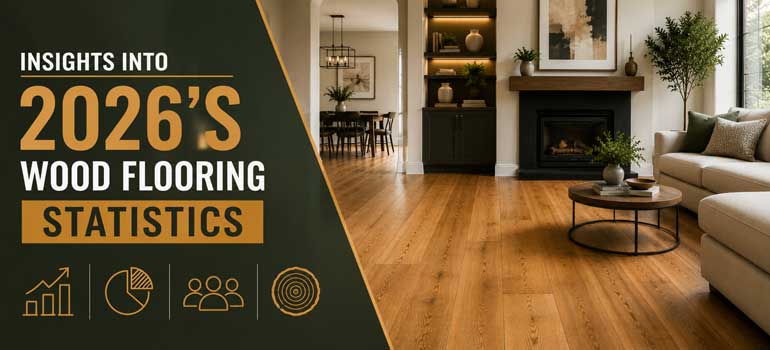
Wood flooring statistics from a decade ago don't tell you much about where things stand now, the market, consumer priorities, and even which construction type dominates have all shifted meaningfully since then. Here's what current data actually shows.
The Market Is Genuinely Growing
The UK flooring market was valued at roughly £4.78 billion in 2026, and it's projected to grow at a 3.74% compound annual rate through to 2034. Globally, hardwood flooring specifically is growing even faster, valued at around £59.62 billion in 2026 and expanding at closer to a 7% annual rate, driven by expanding residential construction, renovation activity, and rising demand for premium, longer-lasting flooring materials over cheaper alternatives.
Why Demand Keeps Rising: The "Improve, Not Move" Effect
A large part of the UK's current renovation demand traces back to what's often described as the "improve, not move" trend. With property prices and mortgage costs both elevated, more homeowners are choosing to upgrade their existing homes rather than relocate, and flooring is one of the most common renovation priorities within that shift. This isn't a passing preference either, it's specifically tied to durable, long-lasting materials being favoured over quick, low-cost fixes, since homeowners investing in their current property want the improvement to genuinely last.
Engineered Wood's Growing Dominance
Across both UK and global markets, engineered wood continues gaining ground on solid timber, particularly in commercial projects, large-scale residential developments, and new-build apartments, especially those with underfloor heating, where engineered construction's stability gives it a genuine practical edge over solid wood. This isn't engineered wood replacing solid entirely, solid timber retains real appeal for its traditional character and long-term refinishing potential, but the growth curve is clearly tilted toward engineered construction for the kinds of projects driving most current demand.
Sustainability Is Now A Mainstream Factor, Not A Niche One
Certified, responsibly sourced timber, verified through schemes like FSC or PEFC, has moved from a niche concern to a genuinely mainstream buying consideration. This shift is reflected directly in current market growth projections, which specifically cite rising demand for eco-certified wood products and sustainable building materials as a driver of the market's expansion through the rest of the decade, not just a talking point in marketing copy.
How Often People Actually Replace Their Floors
One genuinely useful practical figure: the average UK homeowner replaces their flooring roughly every 10 to 15 years. This is a helpful benchmark if you're trying to judge whether your own floor is due an upgrade or a full replacement, though wood flooring specifically, properly maintained and periodically refinished, can significantly outlast that average replacement cycle compared with flooring types that can't be restored the same way.
Wood Flooring Market Statistics: Common Questions
Is the wood flooring market actually growing, or has demand levelled off?
It's genuinely growing. Both the UK flooring market broadly and the global hardwood flooring market specifically are projected to keep expanding at a meaningful rate through the rest of the decade.
Why is engineered wood gaining ground on solid wood?
Largely due to its stability with underfloor heating and a wider range of subfloors, which suits the kind of new-build and large-scale renovation projects currently driving much of the market's growth.
What's driving renovation demand for flooring specifically in the UK right now?
The "improve, not move" trend, elevated property prices and mortgage costs are pushing more homeowners toward upgrading their existing homes rather than relocating, with flooring a common priority within that renovation activity.
How often should I expect to replace my flooring?
The UK average sits around 10 to 15 years, though a well-maintained wood floor that's periodically refinished can genuinely outlast that average considerably compared with flooring types that can't be restored.
Call us on 020 7036 0625 or request a free site visit if your floor is approaching that replacement window, or if you're planning a renovation and want advice on what's genuinely worth investing in right now.