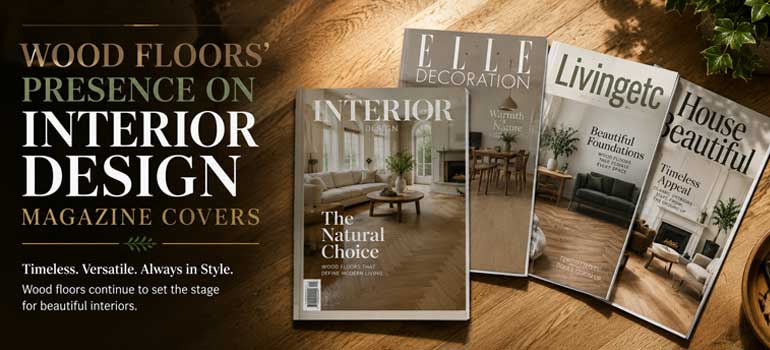
Pick up almost any interior design magazine and there's a strong chance the cover features a wood floor somewhere in shot. It's a genuine pattern, not a coincidence, and it comes down to a few real factors: enduring style, how well it suits current popular interiors, and a track record that's held up for centuries.
A Style That Never Really Goes Out Of Fashion
Wood flooring's association with quality interiors goes back a genuinely long way. Parquet flooring became a defining feature of grand European interiors in the 17th century, and Versailles, where parquet replaced marble floors in 1684, remains one of history's most famous early examples, though parquet itself existed in various forms before that. What started as a genuine luxury reserved for the wealthy has, over the following centuries, become accessible to far more people, without losing the visual association with quality and permanence it built up over that time.
Why It Suits Today's Popular Interior Styles
Wood flooring pairs naturally with farmhouse-style interiors, a look built around natural materials, warmth, and an unpolished, lived-in charm that wood delivers more convincingly than most alternatives. It also suits the popularity of open-plan living, since running the same wood flooring continuously through a kitchen, dining, and living space avoids the visual break that switching materials at each threshold creates, letting the whole area read as one connected space rather than several stitched-together rooms.
A Genuine, But Not Guaranteed, Investment
Wood flooring is generally viewed favourably by buyers and valuers, and in period properties specifically, original or well-restored floorboards are often treated as a genuine selling point. That said, it's worth being realistic: it's one positive factor among several in a property's overall appeal, not a guaranteed dramatic increase in value on its own. Its real long-term strength lies elsewhere, in how it holds up over time: properly maintained, a wood floor can be sanded and refinished repeatedly and realistically last a century, which is a genuinely different value proposition to flooring that simply gets replaced when it wears out.
Being Honest About The Drawbacks
It's worth being straightforward here rather than pretending wood flooring has no downsides, because it does. It costs more upfront than laminate or vinyl. It's genuinely more sensitive to standing water and humidity swings than harder, less porous materials, which is why proper humidity management matters so much, something we've covered in depth elsewhere. And it scratches and dents more readily than some alternatives, particularly in high-traffic households. None of these are reasons to avoid it, they're simply the honest trade-offs behind its other genuine advantages.
The Maintenance Habits That Actually Matter
A few consistent habits keep a wood floor looking its best for decades:
- Grit tracked in on shoes is one of the most underrated causes of fine scratching over time, worth taking seriously alongside any concerns about pet nails, which also play a genuine role.
- Felt pads under furniture legs, particularly on pieces that move frequently, chairs, tables, prevent a surprising amount of everyday scratching and denting for very little cost.
- Mats in high-traffic areas catch dirt and grit before it reaches the floor, reducing wear in the spots that see the heaviest daily use.
- Regular, careful cleaning with a slightly damp mop or soft-bristled broom, the correct vacuum attachment, and a neutral pH cleaning product designed specifically for wood keeps the finish protected without gradually degrading it.
Wood Flooring's Enduring Popularity: Common Questions
Did parquet flooring actually originate at Versailles?
Not quite, parquet existed in various forms before that. Versailles remains one of history's most famous and influential early examples, installed there in 1684, but it wasn't the origin point of the technique itself.
Does wood flooring really have no drawbacks?
No, that's an overstatement. It costs more upfront, is more sensitive to moisture than harder materials, and scratches more readily than some alternatives. These are genuine trade-offs worth knowing, not reasons to avoid it outright.
Is wood flooring guaranteed to increase a property's value?
Not guaranteed, no. It's generally viewed favourably by buyers, particularly in period properties, but it's one positive factor among several rather than a dramatic value increase on its own.
What's the biggest everyday cause of wear on a wood floor?
Grit tracked in on shoes is a genuinely underrated culprit, worth taking as seriously as any concerns about pet nails, which also contribute their own share of everyday wear.
Call us on 020 7036 0625 or request a free site visit and we'll give you an honest assessment of whether wood flooring suits your space.