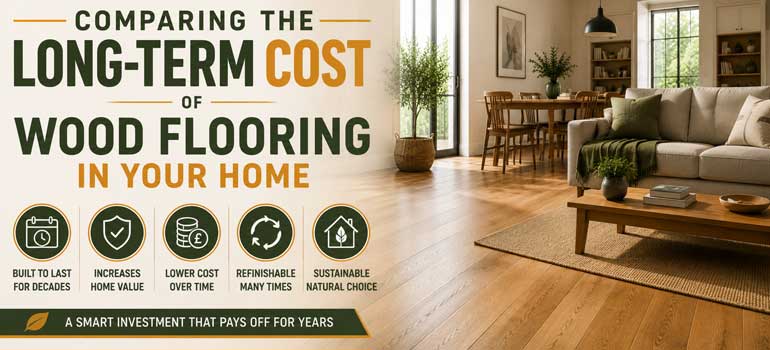
Wood flooring's upfront cost genuinely tends to run higher than laminate or vinyl, which makes a suspiciously cheap deal tempting when working to a tighter budget. But price on its own tells you very little, and understanding what actually drives cost and what genuine long-term value looks like matters more than chasing the lowest number on a quote.
Why Suspiciously Cheap Deals Are Worth Being Wary Of
Price doesn't directly indicate quality, but it's a reasonable general signal. Genuine competition across the industry does create real, legitimate savings, but a price that sits dramatically below the rest of the market for what's supposedly the same product is worth real scrutiny rather than treating as pure luck. It's rarely a case of finding a secret bargain nobody else has spotted.
Solid Versus Engineered: Let Function Decide, Not Price Alone
This is a genuinely important decision, and price shouldn't be the deciding factor on its own. What actually matters first is which construction, solid wood or engineered wood, suits your specific room, subfloor, and household. Both are genuinely capable of serving a home well for decades when properly specified and installed, which is exactly why their typical price point is justified by longevity rather than being an arbitrary premium. What's worth being wary of is either construction sold at a suspiciously low price, since that's rarely a sign of genuine value.
Choosing A Reputable Supplier
A few things worth checking when evaluating a supplier or installer:
- Responsible sourcing, ideally verified through certification like FSC or PEFC, confirming the timber comes from managed, sustainable forestry rather than uncontrolled logging.
- Genuine guarantees, clearly stated rather than vague.
- Willingness to provide samples, so you can judge the actual product rather than a photo or description.
- Installation guidance, a reputable supplier should be genuinely willing to discuss the right installation method for your specific property rather than treating it as someone else's problem.
- References from past clients, a supplier confident in their work should have no issue connecting you with people who've used them before.
A supplier reluctant to provide any of the above is worth treating with real caution, regardless of how appealing their pricing looks.
Why Warranties Matter More Than They Seem
A genuine, clearly stated warranty is one of the better indicators of a supplier's confidence in their own product. It's worth being aware, though, that a warranty on genuinely poor-quality flooring doesn't fully protect you, if the product warps or cups prematurely due to inherent quality issues rather than a fitting fault, getting a satisfactory resolution can still be genuinely difficult, warranty or not. A warranty is a useful signal, not a guarantee that the underlying product is actually good.
Thinking In Cost-Per-Year, Not Just Upfront Price
This is the calculation that actually matters, and it's easy to skip. A genuinely well-made solid or engineered floor, properly installed, can realistically be sanded and refinished five or more times over its life and last a century or longer with proper care. Spread the upfront cost across that lifespan, and the real cost per year of ownership often comes out considerably lower than a cheaper floor that needs full replacement within a decade. A floor bought cheaply and replaced two or three times over the same period, factoring in the removal and disposal of the failed floor each time, frequently ends up costing more in total than paying properly for genuine quality once.
Long-Term Wood Flooring Cost: Common Questions
Is a cheaper wood floor always a bad investment?
Not automatically, genuine competition creates real savings across the market. But a price sitting dramatically below comparable products is worth real scrutiny, since it's rarely simply good luck.
Does a warranty guarantee my wood floor won't have problems?
Not entirely. A warranty is a useful signal of a supplier's confidence, but it doesn't fully protect you if inherent product quality causes problems like premature warping or cupping, resolution can still be genuinely difficult even with a warranty in place.
Is it really cheaper to buy quality flooring once rather than cheap flooring repeatedly?
In most cases, yes, once you spread the cost across actual years of ownership. A well-made floor refinished multiple times over decades typically costs less per year than a cheap floor replaced two or three times over the same period.
What should I check before choosing a wood flooring supplier?
Responsible sourcing certification, clearly stated guarantees, willingness to provide samples, genuine installation guidance, and references from previous clients. A supplier reluctant to offer any of these is worth treating cautiously.
Call us on 020 7036 0625 or request a free site visit and we'll help you understand the genuine long-term value of your flooring options.