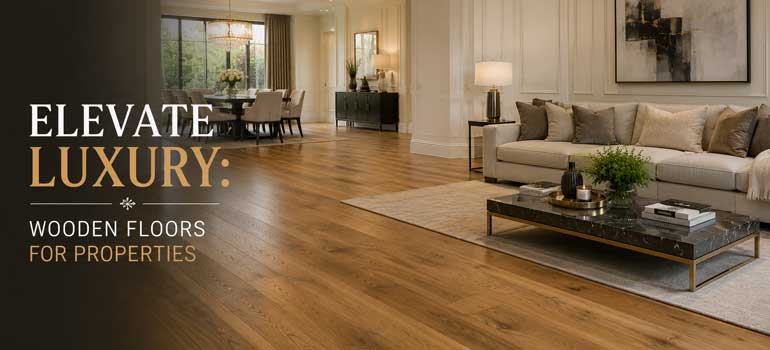
Wood flooring has carried an association with quality and refinement for a long time, and for good reason, it's a genuinely durable, natural material that ages well rather than degrading. But "luxury" isn't really one single thing you buy off a list, it's the result of several decisions working together: the grade, the board's construction, the layout pattern, and the finish. Get all of them aligned and the result reads as considered and high-end. Get only one right and it can still fall a bit flat.
What Actually Signals Luxury In A Wood Floor
Grade plays a genuine role here, prime grade's uniform, clean look with minimal knots and colour variation tends to read as the most polished and formal option, which is part of why it's so often associated with high-end properties. That said, grade alone doesn't determine whether a floor feels luxurious. A well-chosen, well-installed rustic or natural grade floor can look every bit as considered in the right property, particularly period homes where a more characterful, natural look often suits the building better than a very uniform surface would.
Board Thickness: What It Actually Affects
This is worth being precise about, since thickness means genuinely different things depending on construction. For engineered wood, the thickness that actually matters is the depth of the real wood veneer on top, since a thicker veneer allows more future sandings and refinishes over the floor's life, which is a real, meaningful marker of long-term quality and value. For solid wood, board thickness affects stability, how it sounds and feels underfoot, and how well it copes with movement, but a standard-thickness solid board isn't inherently "lower quality" than a thicker one in the way the original framing suggested. Thickness is a genuine factor, but it's not a simple more-is-always-better rule across both constructions.
Pattern And Layout As A Statement Of Craftsmanship
This is one of the more underused levers for a genuinely high-end look. Herringbone and chevron parquet patterns carry real craftsmanship in the precision of their alignment, and they've been associated with grand, considered interiors for centuries, particularly in London's larger period properties where original parquet is often a genuine selling point rather than just a floor covering. Wide-plank layouts, by contrast, create a calmer, more contemporary sense of scale and grandeur, letting the timber's natural grain and character take centre stage rather than the pattern itself. Both are valid directions, they simply signal different kinds of luxury, traditional craftsmanship versus modern spaciousness.
Finish And Texture Choices That Read As High-End
Beyond the wood itself, how it's finished matters just as much. Hand-scraped or brushed textures add a tactile, artisanal quality that a perfectly smooth, machine-finished surface doesn't have, and they're often used specifically to give a floor more character and depth. On the finish side, a matte or low-sheen oil finish tends to read as more considered and natural in a high-end context than a very glossy lacquer, though this genuinely comes down to the overall style of the property, a formal, traditional interior might call for the opposite.
Getting The Installation Quality To Match The Material
None of the above matters much if the installation itself isn't precise. Patterned floors in particular demand careful alignment and subfloor preparation to look genuinely polished rather than slightly off, and even a plain-plank solid or engineered floor needs a properly prepared subfloor to sit flat and perform well over time. Investing in high-quality material and then cutting corners on installation is one of the more common ways an otherwise excellent floor ends up looking less impressive than it should.
Luxury Flooring Questions Worth Asking First
Does a thicker wood floor always mean better quality?
Not straightforwardly. For engineered wood, a thicker veneer genuinely means more future refinishing potential, which is a real quality marker. For solid wood, thickness affects stability and feel underfoot more than it signals overall quality on its own.
Is prime grade always the right choice for a luxury property?
Not necessarily. Prime gives the most uniform, polished look, but a well-chosen natural or rustic grade can suit certain properties, particularly period homes, just as well, depending on the style you're going for.
Is herringbone parquet worth the extra cost over plain plank flooring?
It depends on the look you want. Herringbone and chevron patterns bring genuine craftsmanship and a traditional, grand character that plain planks can't replicate, while wide planks offer a calmer, more contemporary sense of scale instead.
Does the finish matter as much as the wood species for a high-end look?
Yes, genuinely. The same species and grade can look completely different depending on whether it's finished with a glossy lacquer or a matte, hand-textured oil finish, so the finish decision deserves as much attention as the wood itself.
Call us on 020 7036 0625 or request a free site visit and we'll help you plan the right grade, pattern, and finish for your property.