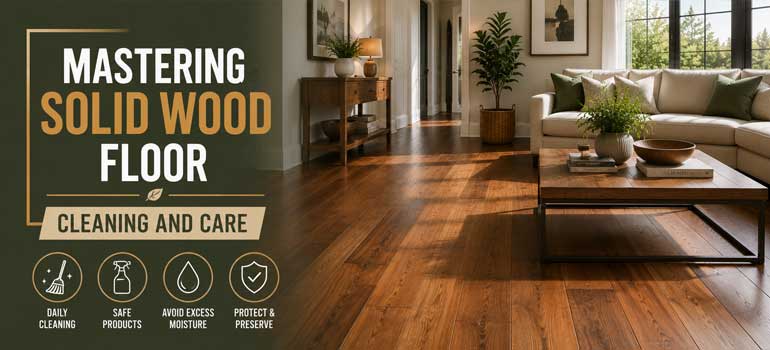
Cleaning a solid wood floor isn't complicated, but there's one detail that genuinely matters and often gets skipped: the cleaning method should match the finish, not just the wood underneath it. Oil, lacquer, and traditional wax behave differently, and treating them all the same way is one of the more common ways people inadvertently damage a floor that's otherwise being cared for properly.
Why Finish Type Changes How You Should Clean
The finish is the actual barrier between your cleaning routine and the timber itself, and each type interacts with water and cleaning products differently. Get this wrong and you're not damaging the wood directly, you're breaking down the protective layer sitting on top of it, which then exposes the wood to exactly the moisture and wear the finish was supposed to prevent.
Cleaning An Oiled Finish
Oil finishes penetrate into the wood rather than sitting on top as a film, and they respond well to a damp, well-wrung mop combined with a cleaner specifically formulated for oiled floors. Avoid harsh degreasers or generic all-purpose cleaners, which can strip the oil's protective quality over time rather than simply cleaning the surface. Periodic floor re-oiling keeps the finish topped up between deeper cleans, since oil naturally wears down with use in a way lacquer doesn't.
Cleaning A Lacquered Finish
Lacquer sits as a protective film on top of the wood, and it's generally the most forgiving of the finish types when it comes to routine cleaning. A neutral pH cleaner formulated for wood floors, used with a damp rather than wet mop, handles most everyday cleaning without issue. Because the lacquer forms a genuine barrier, there's slightly more tolerance for normal cleaning here than with oil, though the same principle still applies: avoid soaking the floor, and wipe up spills promptly regardless of finish.
Cleaning A Waxed Finish
This is the one that catches people out, and it's worth being genuinely careful here. Traditional wax finishes are water-sensitive, and damp mopping a waxed floor with a standard water-based cleaner can leave cloudy white marks or dull patches where water has interacted with the wax layer. Waxed floors are better maintained with dry buffing and, when a deeper clean is needed, a solvent-based product specifically designed for waxed wood rather than anything water-based. If you're not certain whether your floor has a genuine wax finish or a modern lacquer, it's worth checking before cleaning, since the wrong approach here can leave a visible, frustrating mark that's harder to correct than the dirt you were trying to remove.
The Daily And Weekly Basics That Apply Across All Finishes
A few habits stay consistent regardless of finish type:
- Sweep or vacuum daily, using a soft brush or the correct hard-floor attachment, since dust and grit left sitting on the surface acts as fine abrasive material that wears down any finish faster than normal use alone.
- Wipe up spills immediately, since standing liquid is a risk to every finish type, just in slightly different ways.
- Avoid all-in-one or generic multi-surface cleaning products, which are rarely formulated correctly for any of the three finish types and can leave residue or interact poorly with the specific finish on your floor.
Solid wood's genuine hygiene advantage over carpet is worth remembering here too: unlike carpet fibres, a wood floor has nowhere for dust, allergens, and debris to accumulate the way they do in carpet pile, which is part of why the daily routine above is genuinely enough for most households, without needing anything more intensive.
Cleaning Solid Wood Floors: Common Questions
Can I use the same cleaner on any solid wood finish?
No, not reliably. Oil, lacquer, and wax each respond differently to water and cleaning products, so using a product formulated for the wrong finish type risks damaging the protective layer rather than just cleaning the surface.
Why shouldn't I damp mop a waxed floor?
Traditional wax finishes are water-sensitive, and water-based cleaning can leave cloudy white marks or dull patches where it's interacted with the wax. Dry buffing and solvent-based products are the safer route for genuinely waxed floors.
How do I know which finish my floor actually has?
If you're unsure, it's worth checking before cleaning rather than guessing, since the wrong cleaning approach on the wrong finish type can leave a visible mark that's harder to fix than routine dirt. A professional can identify the finish quickly if you're not certain.
Do oiled floors need more frequent attention than lacquered ones?
Generally yes. Oil wears down with use in a way lacquer's protective film doesn't, so periodic re-oiling between deeper cleans keeps an oiled finish properly protected.
Call us on 020 7036 0625 or request a free site visit if you're not sure which finish your floor has, or if it needs a proper clean and refresh.