Monday - Friday 07:30 - 17:30, Saturday 07:30 - 16:00
Wood Floor Re-Oiling in London
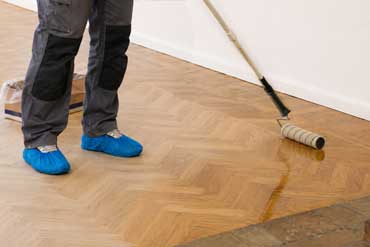
Wood floor re-oiling is the process of applying a fresh coat of penetrating oil or hard-wax oil to a wood floor that was originally finished with an oil-based product, renewing the protective layer within the timber fibres, restoring the floor's appearance, and maintaining its resistance to moisture, dirt, and surface wear.
Re-oiling is the correct routine maintenance treatment for any floor finished with a penetrating oil or hard-wax oil product — including Osmo Polyx, Bona Craft Oil, Rubio Monocoat, Junckers Bio Oil, Loba Invisible, and similar products. It is not the same as recoating a lacquered floor, and the two treatments are not interchangeable — applying lacquer recoat over an oiled floor, or oil over a lacquered floor, will produce a poor result and may damage the finish. Identifying the existing finish correctly is the essential first step before any maintenance treatment is carried out.
Flooring Services London carries out professional wood floor re-oiling across London for residential and commercial properties, as part of our full range of floor maintenance services. We work with all major oil and hard-wax oil products and carry out re-oiling on solid wood, engineered, and parquet floors of all species across all London boroughs.
How Oil Finishes Work — and Why Re-Oiling Is Needed
Understanding how oil finishes behave is important for knowing when re-oiling is needed and what the treatment actually achieves.
Unlike lacquer, which forms a hard transparent film on top of the timber surface, penetrating oils and hard-wax oils are absorbed into the upper wood fibres and cure within them rather than on top. This means the finish is not a separate layer sitting above the wood — it is the wood itself that is protected, from within. The result is a floor that looks and feels like natural timber, responds to touch the way bare wood does, and ages in a way that enhances rather than detracts from the floor's character over time.
The practical implication is that oil finishes wear differently from lacquer. Lacquer wears from the top down — it remains intact until it is scratched or worn through, at which point bare wood is suddenly exposed. Oil finishes wear gradually — the oil depletes over time from foot traffic, cleaning, and the natural breathing of the timber, and the floor becomes progressively drier, more open to soiling, and less resistant to moisture as the oil level drops. The floor does not fail suddenly; it simply becomes less protected incrementally.
Re-oiling reverses this process. Fresh oil applied to a depleted surface is absorbed into the same timber fibres, restoring the protective level and refreshing the appearance. Done at the right interval — before the oil has depleted entirely — re-oiling is a straightforward one-day treatment. Left too long without maintenance, an oiled floor can reach a point where the timber has absorbed soiling and staining deeply enough that a full floor sanding is needed before re-oiling can be effective.
Signs That Your London Wood Floor Needs Re-Oiling
The most reliable indicators that an oiled floor is due for re-oiling include:
Water no longer beads on the surface — a well-oiled floor repels water droplets, which sit on the surface rather than soaking in. When water begins to absorb quickly into the floor rather than beading, the oil level has depleted and re-oiling is needed.
The floor looks dry or faded — oiled floors have a characteristic warmth and depth of colour that comes from the oil enhancing the natural grain. A floor that looks pale, grey, or flat compared to when it was last treated is telling you it needs fresh oil.
Increased surface soiling — an under-oiled floor absorbs dirt into the open grain more readily than a well-maintained one. If the floor looks dirty despite regular cleaning, depleted oil is often the cause.
Dull or worn patches in high-traffic areas — hallways, kitchen thresholds, and areas in front of sofas and chairs show the most wear. Localised dullness or slight discolouration in these zones indicates the oil has worn through in those spots.
More than two years since the last re-oil — for a residential floor in regular use, this is the approximate outer limit of an oil treatment's effective life. Even if the floor looks acceptable, the protective level will have dropped significantly and re-oiling before visible deterioration appears is better than waiting until the floor shows clear signs of wear.
Oil Products We Use for Re-Oiling in London
We work with the leading professional oil and hard-wax oil products used across the London flooring industry:
Osmo Polyx Oil — one of the most widely used hard-wax oil products in UK residential flooring. Available in clear (original, satin, matt, and extra matt sheens) and tinted versions. Extremely durable for an oil finish, suitable for kitchens and high-traffic areas as well as living spaces. The maintenance product Osmo Polyx Oil Refresh is used for routine re-oiling of Osmo-finished floors — it can be applied without full stripping or sanding preparation on well-maintained surfaces.
Bona Craft Oil 2K — a two-component hard-wax oil from Bona, widely specified on engineered and solid wood floors across London. Available in a wide range of natural and tinted shades. Re-oiling with Bona Craft Oil involves a compatible maintenance product applied in a single thin coat after professional cleaning.
Rubio Monocoat — a plant-based single-coat oil system increasingly popular in London's higher-specification residential and commercial interiors. Rubio Monocoat bonds molecularly with the timber surface in a single coat, producing a very natural, almost invisible finish. Re-oiling with Rubio uses the compatible Rubio Monocoat Maintenance Oil product. Identifying a Rubio-finished floor and using the correct maintenance product is important — applying a standard oil over a Rubio finish does not bond correctly.
Junckers Bio Oil and Strong Oil — the standard finish applied to Junckers solid hardwood floors, which are common in schools, sports halls, and commercial properties across London. Re-oiling Junckers floors uses Junckers-specific maintenance products to ensure compatibility and warranty compliance.
Loba and other professional oil systems — we work with the full range of professional oil products and can identify the existing finish on your floor and match the appropriate re-oiling product during the site visit.
Wood Floor Re-Oiling Process
1. Free site visit and assessment — We visit the property, identify the existing oil finish, assess the floor's condition and oil depletion level, and confirm whether re-oiling alone is sufficient or whether cleaning, localised repair, or full sanding is needed first. We provide a written quote before any work begins.
2. Deep cleaning — The floor is thoroughly cleaned with a finish-compatible professional cleaner to remove ingrained dirt, cleaning product residue, and surface contamination. Re-oiling over a dirty or contaminated surface produces uneven absorption and a patchy result. See our wood floor cleaning page for details.
3. Light abrasion (where needed) — For floors where the oil has depleted significantly or where the surface has minor scratches and scuffs, a very light machine abrasion with a fine-grit pad opens the timber grain slightly and improves oil absorption, producing a more even and durable result. This is not the same as sanding — it removes no measurable timber, only smooths the surface.
4. Oil application — The selected oil or hard-wax oil product is applied in one or two thin coats using an applicator pad, roller, or buffing machine, working in sections across the floor. Thin coats are critical — excess oil that does not penetrate must be buffed off before it cures on the surface, otherwise it dries tacky and creates a sticky residue that is difficult to remove.
5. Buffing and excess removal — After the specified dwell time, a buffing machine with a clean white or red pad is used to work the oil into the timber and remove any excess from the surface. This step is particularly important with single-coat products like Rubio Monocoat, where precise removal of excess is essential for a clean result.
6. Second coat (where specified) — For floors receiving a first oil application after sanding, or floors that are significantly depleted, a second coat is applied after the first has cured — typically the following day. Routine maintenance re-oiling of well-maintained floors usually requires only one coat.
7. Curing and aftercare — Oil-finished floors are typically walkable in socks within two to four hours. Normal use can resume after 24 hours, with full cure and maximum hardness reached after five to seven days depending on the product. We provide written aftercare instructions and recommend compatible cleaning and maintenance products for ongoing home care.
How Often Does an Oiled London Floor Need Re-Oiling?
| Situation | Recommended re-oiling frequency |
|---|---|
| Residential oiled floor, light use | Every 2 years |
| Residential oiled floor, busy household | Annually |
| Kitchen or high-moisture area | Annually |
| Rental or buy-to-let property | Between each tenancy |
| Commercial or hospitality floor | Every 6–12 months |
| Sports hall or school floor (Junckers) | Per the manufacturer's schedule |
London's dry winters — with central heating running continuously from October through April — accelerate oil depletion compared to more temperate climates. The low humidity created by central heating causes timber to dry out faster, drawing the oil treatment deeper into the wood and depleting the surface protection more quickly. London oiled floors in regularly heated properties benefit from being at the more frequent end of the maintenance schedule.
Wood Floor Re-Oiling Costs in London
Wood floor re-oiling is priced from £10/m² for oiled floor recoating treatments, in line with our full price list. The exact cost depends on floor area, oil product specified, floor condition, and whether preparatory cleaning or light abrasion is needed. All costs are confirmed in a written quote following a free site visit — no hidden additions.
Properties within the London ULEZ and Congestion Charge zones may include a daily access surcharge, stated explicitly in every written quote.
Frequently Asked Questions — Wood Floor Re-Oiling in London
How do I know if my floor has an oil finish or a lacquer finish?
The easiest test is the water bead test — drop a small amount of water onto an inconspicuous area of the floor. If it beads up on the surface, the floor has a surface finish (lacquer or hard-wax oil with significant surface component). If it absorbs quickly and darkens the wood, the floor either has a penetrating oil finish or no finish at all. The scratch test also helps — scratching a lacquered floor with a fingernail produces a surface scratch in the clear film above the wood; scratching an oiled floor affects the wood fibres directly with no separate film layer visible. If you are unsure, we will identify the finish during the free site visit.
Can I re-oil my floor myself or does it need a professional?
Re-oiling is technically achievable as a DIY project for a careful and patient homeowner — it requires no specialist equipment beyond a buffing machine (which can be hired), and most oil products are available to trade and retail customers. The main risks are applying too much product (causing a tacky, sticky surface that is difficult to correct), using an incompatible product over the existing finish, and uneven application, producing a patchy result. For valuable period floors, large areas, or floors where the correct product is uncertain, professional re-oiling is the lower-risk option.
Can you re-oil just part of a floor — for example, a worn patch in a hallway?
Yes — one of the significant advantages of oil finishes over lacquer is that localised spot re-oiling is possible. A worn patch in a hallway can be re-oiled in isolation without treating the entire floor, provided the same product is used and the repair area is feathered out at the edges to blend with the surrounding floor. The result is not always perfectly invisible, as the repaired area will be slightly fresher in colour than the surrounding floor, but it is usually acceptable. A full re-oil of the entire floor produces the most consistent result.
My oiled floor has gone grey and dull — is re-oiling enough to restore it?
It depends on how long the floor has been without maintenance. Mild greying and dullness in an oiled floor is typically caused by surface soiling absorbed into the open grain — professional cleaning followed by re-oiling resolves this in most cases. More significant greying, particularly around windows where UV exposure has bleached the timber, or in areas that have been wet repeatedly, may require localised sanding before re-oiling can be effective. We assess the extent of the deterioration during the site visit and advise on the most appropriate and cost-effective treatment.
Do you re-oil Junckers sports hall and school floors in London?
Yes. We carry out maintenance re-oiling on Junckers solid hardwood floors in schools, sports halls, and community facilities across London using Junckers-specified maintenance oil products. Junckers floors have specific maintenance requirements set out by the manufacturer, and we follow these to ensure continued warranty compliance. For school and sports hall floors we schedule work during holidays and outside term time to minimise disruption.
Call us on 020 7036 0625 or request a free quote online — we respond to all wood floor re-oiling enquiries the same working day.