Monday - Friday 07:30 - 17:30, Saturday 07:30 - 16:00
Floor Stripping in London
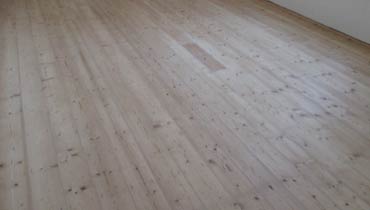
Floor stripping is the chemical removal of accumulated wax, polish, silicone residue, or old incompatible finish from a wood floor surface — using specialist stripping solutions and mechanical scrubbing — to restore a clean, uncontaminated base layer before a fresh maintenance treatment such as recoating, re-oiling, or waxing can be applied effectively.
Floor stripping is not the same as floor sanding. Sanding mechanically removes the finish and a thin layer of timber, taking the floor back to bare wood. Stripping uses chemical solutions to dissolve and lift the contaminated surface layer — the accumulated wax, polish, or residue — without removing any timber or significantly affecting the existing finish beneath. It is a surface treatment, not a structural one, and it does not damage the floor when carried out correctly.
Stripping is also distinct from professional wood floor cleaning. Deep cleaning removes surface soiling and light residue from a floor that is fundamentally in good condition. Stripping is needed when the contamination is heavier, more deeply ingrained, or chemically incompatible with the maintenance treatment that needs to be applied — a situation that cannot be resolved by cleaning alone.
Flooring Services London carries out professional floor stripping across London as part of our full floor maintenance service, working in residential and commercial properties throughout all London boroughs. Stripping is most commonly carried out as the preparatory stage before recoating, re-oiling, or waxing — ensuring the new treatment bonds correctly to a clean, uncontaminated surface.
When Floor Stripping Is Needed
The most common situations that require floor stripping in London properties are:
Years of domestic cleaning product buildup — many London homeowners clean their wood floors with supermarket products — "wood floor cleaners", shine restorers, furniture sprays — that contain wax emulsions, silicone compounds, or polymer-based shine additives. These products make the floor look good initially but leave a residue that builds up with every application. Over months and years this residue creates a dull, cloudy surface that no amount of mopping improves, and — critically — it prevents recoating and re-oiling products from bonding to the finish beneath. Stripping removes this contamination entirely.
Old wax buildup that has gone uneven — wax-finished floors that have been re-waxed regularly over many years can develop uneven layers of old wax — thick in some areas, thin in others, yellowed, and no longer providing adequate protection. Stripping removes the old wax entirely, providing a uniform base for fresh wax application. This is particularly common in London's period properties where the original floorboards or parquet have been wax-maintained for decades.
Switching from wax to oil or lacquer — a floor finished with traditional wax cannot be directly recoated with lacquer or re-oiled with hard-wax oil. The wax must be stripped from the surface first to allow the new finish to make direct contact with the timber. This is a common requirement in London period properties where the owner wants to move from the traditional wax finish to a more durable and lower-maintenance oil or lacquer system.
Silicone contamination — silicone-based products — aerosol furniture polishes, some spray-on floor cleaners — leave a residue that is particularly resistant to standard cleaning and highly incompatible with recoating products. Silicone contamination causes recoat products to bead up and not bond (a phenomenon known as fish-eye), producing a poor and unusable result. Stripping is the only reliable way to remove silicone contamination from a floor surface before recoating.
Incompatible previous treatment — where a floor has been treated with a product not designed for wood floors — emulsion floor polish, vinyl floor sealer, or other non-compatible products — stripping removes the incompatible layer before a correct treatment can be applied.
Pre-maintenance preparation in commercial properties — commercial floors in London restaurants, offices, and hospitality venues that have accumulated soiling and cleaning product residue over months of trading require stripping before recoating rather than a standard clean, as the level of contamination is too heavy for cleaning alone to resolve.
How Floor Stripping Works
The stripping process uses specialist chemical stripping solutions — pH-alkaline products formulated to dissolve and lift wax, polish, and residue without damaging the wood finish beneath. The process is entirely chemical and mechanical — no abrasives are used that would remove timber material. The key stages are:
1. Assessment — the floor is assessed to identify the type and extent of contamination. The existing finish type is confirmed (lacquer, oil, wax) and the appropriate stripping product selected. Different contamination types respond to different stripping solutions — wax requires a different product to silicone residue or polymer buildup.
2. Stripping solution application — the chemical stripper is applied to the floor surface in sections using a mop, applicator, or spray. The solution is allowed to dwell on the surface for the manufacturer's specified contact time — typically five to fifteen minutes — during which it penetrates and dissolves the contamination layer.
3. Mechanical scrubbing — a single-disc scrubbing machine fitted with an appropriate scrubbing pad is worked across the floor while the stripper is still active, providing mechanical agitation that breaks up and lifts the dissolved contamination. Edges and corners are scrubbed by hand with appropriate brushes and pads. The scrubbing machine works the stripper into the surface and physically lifts the contamination into the solution.
4. Residue removal — the contaminated stripping solution — now containing the dissolved wax, silicone, or polish — is removed from the floor by wet vacuum, mop, and bucket. This stage must be thorough — leaving stripping solution residue on the floor prevents the new treatment from bonding correctly.
5. Neutralisation and rinsing — a clean water rinse is applied to neutralise any remaining stripping chemical on the floor surface and ensure the pH is correct for the maintenance treatment to be applied. The floor is left to dry completely before any recoating, re-oiling, or waxing begins.
6. Maintenance treatment — once the stripped and dried floor is confirmed clean and uncontaminated, the specified maintenance treatment is applied — recoating, re-oiling, or floor waxing. Stripping as a standalone service, without a subsequent maintenance treatment, is rarely the right outcome — the purpose of stripping is to prepare the floor for what comes next.
Not sure whether your floor needs stripping, cleaning, or sanding? Call us on 020 7036 0625 or book a free site visit — we assess the floor and confirm the most appropriate and cost-effective treatment before any work is agreed.
Stripping vs. Sanding — Choosing the Right Treatment
This is the most important distinction to understand before deciding which service a floor needs.
Stripping is appropriate when:
- The contamination is in the surface layer — wax, polish, silicone, or cleaning product residue
- The existing finish beneath the contamination is fundamentally intact
- The timber surface itself is sound with no deep scratches, staining into the wood, or finish failure
- The goal is to prepare the floor for a maintenance treatment rather than a complete restoration
Sanding is needed when:
- The finish has worn through entirely and bare timber is exposed
- Deep scratches, water staining, or other damage has penetrated into the timber itself
- The existing finish is peeling, delaminating, or has structurally failed
- A complete colour or finish system change is required
- The floor has not been properly maintained and is beyond the point where stripping and recoating can produce a satisfactory result
In some cases — particularly floors with very heavy contamination over the top of a genuinely worn finish — the assessment during the site visit reveals that stripping alone will not produce the result needed and that sanding is the correct treatment. We always tell you this clearly and will not strip a floor if sanding is the more appropriate solution.
Products We Use for Floor Stripping in London
We use professional-grade stripping products from the leading wood floor maintenance brands, matched to the specific contamination type and existing finish:
Bona FloorCleaner Concentrate / Bona PowerScrub — Bona's professional stripping and deep cleaning system for heavily soiled and contaminated lacquered floors. pH-neutral to slightly alkaline depending on the product grade, effective against wax emulsion and polymer buildup without damaging the lacquer finish beneath.
Osmo Wash & Care / Osmo Interior Cleaner — specialist stripping and cleaning products for Osmo Polyx-oiled floors. Removes old wax and contamination from oil-finished surfaces without stripping the oil treatment itself where the oil is still in good condition beneath the contamination.
Loba-Wakol and equivalent specialist strippers — heavy-duty alkaline stripping solutions for floors with significant wax or polish buildup, particularly appropriate for older floors in London period properties and commercial environments where contamination is heavy and multi-layered.
The specific product used on your floor is confirmed during the assessment stage and is always matched to the existing finish type and contamination identified.
Floor Stripping Costs in London
Floor stripping is priced on a survey as costs depend on the floor area, the type and extent of contamination, and the number of stripping passes required. It is most commonly carried out as part of a combined stripping-and-maintenance-treatment visit.
| Service | Price |
|---|---|
| Floor stripping | Priced on survey |
| Wood floor recoating — lacquered floors | from £10/m² |
| Wood floor recoating — oiled floors | from £10/m² |
| Wood floor cleaning & polishing | from £9/m² |
All prices shown are exclusive of VAT. All prices are confirmed in writing after the free site visit. Properties within the London ULEZ and Congestion Charge zones may include a daily access surcharge stated explicitly in every quote. Full pricing for all maintenance services is available in our floor maintenance price guide.
Frequently Asked Questions — Floor Stripping in London
Will floor stripping damage my wood floor? No — when carried out correctly with the appropriate product for the existing finish type, stripping removes the contamination layer without damaging the finish or the timber beneath. The key is using the right product and not allowing it to dwell for longer than the manufacturer's recommended contact time. Over-stripping — using too strong a product or leaving it too long — can soften a lacquered surface, which is why professional assessment of the existing finish before product selection is important.
Can floor stripping remove silicone contamination? Yes — alkaline stripping solutions are effective against silicone residue from furniture sprays and silicone-based floor polishes. However, silicone contamination can be persistent and may require multiple stripping passes on heavily contaminated floors. We confirm the extent of silicone contamination during the site visit and include any additional passes required in the quoted price.
My floor has been cleaned with Flash or Mr Muscle for years — does it need stripping? Possibly. Many general household cleaning products leave a residue incompatible with recoating products. Whether stripping is needed depends on how heavily the residue has built up and what maintenance treatment is planned. We carry out a compatibility test on a small area during the site visit — if recoating or re-oiling products bond correctly without stripping, we proceed with a standard clean before the maintenance treatment. If not, stripping is confirmed as necessary before proceeding.
How long does floor stripping take? A standard room (15–25 m²) typically takes two to four hours for the full stripping process, including application, scrubbing, residue removal, neutralisation, and drying time before the maintenance treatment is applied. A full ground floor (50–80 m²) is usually a full day's work when combined with the subsequent recoating or re-oiling treatment. We confirm the expected duration in the written quote.
Can I strip my floor myself? The stripping products available to retail customers are significantly weaker than professional-grade products, and applying them incorrectly — wrong product for the finish type, wrong contact time, inadequate residue removal — can leave a floor in worse condition than before. For floors where a subsequent recoating or re-oiling treatment is planned and the result needs to be reliable, professional stripping is the lower-risk approach. We carry out both the stripping and the maintenance treatment in a single visit, ensuring the floor is properly prepared and correctly finished in one coordinated process.
Call us on 020 7036 0625 or request a free quote online — we respond to all floor stripping enquiries the same working day.