Monday - Friday 07:30 - 17:30, Saturday 07:30 - 16:00
Floor Polishing in London
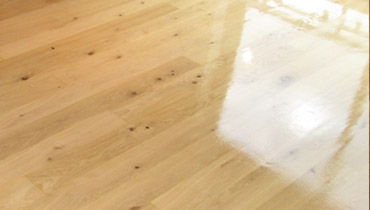
Floor polishing is the process of using a rotary or oscillating buffer machine — fitted with polishing pads or a fine abrasive — to smooth the surface of a wood floor, restore its sheen, and remove light marks and surface irregularities, without stripping or sanding the floor back to bare timber.
Polishing sits between everyday cleaning and full floor sanding in the spectrum of floor care. It is more intensive than mopping or routine cleaning, but far less disruptive and expensive than a full sand and refinish. Used appropriately and at the right intervals, polishing is an effective way to maintain the appearance of a lacquered or polished wood floor and extend the time between full restoration cycles.
Flooring Services London carries out floor polishing across London for residential and commercial clients, using professional rotary buffing machines and finish-compatible polishing compounds suited to each floor type. As part of our full range of floor maintenance services, polishing is often combined with wood floor cleaning, wood floor recoating, or floor waxing depending on the condition of the floor and the finish in place.
What Floor Polishing Does — and What It Doesn't
Understanding what polishing can and cannot achieve is important before deciding whether it is the right service for your floor.
Polishing can:
- Restore shine and surface gloss to a lacquered floor that has become dull through regular use
- Smooth light surface marks, minor scuffs, and fine surface scratches that are confined to the finish layer
- Even out micro-surface irregularities caused by foot traffic and furniture movement
- Refresh the appearance of a wax-finished floor when combined with fresh wax application
- Extend the interval between full sands by keeping the finish in better condition
Polishing cannot:
- Remove deep scratches that penetrate through the finish into the timber itself — these require floor scratch repair or sanding
- Restore a floor where the finish has worn through entirely and bare wood is exposed — this requires a full floor sanding and refinishing
- Fix structural problems — gaps, loose boards, squeaks — which require wood floor repair
- Recoat or renew the protective finish layer — this requires wood floor recoating
If a floor's finish has broken down beyond the point where polishing can restore it, we will say so clearly at the assessment stage and recommend the appropriate service instead. We do not carry out polishing on floors where it will not produce a meaningful improvement.
Types of Floor Polishing We Carry Out in London
Buffing and Shine Restoration
The most common polishing service — machine buffing using a rotary floor buffer fitted with a fine polishing pad to restore surface sheen to a lacquered wood floor. Buffing works by lightly abrading the very top surface of the lacquer, removing the micro-scratches and surface contamination that cause a floor to look dull, and leaving a smooth, light-reflective surface. No finish is removed or applied in the process — it is purely mechanical surface smoothing.
Buffing is particularly effective on satin and semi-gloss lacquered floors in London living rooms, hallways, and offices that see regular foot traffic. The surface becomes progressively duller through use as micro-scratches accumulate — buffing reverses this without any chemical treatment. A buffed floor looks noticeably brighter and cleaner immediately after treatment.
Buff and Recoat
For floors where buffing alone will not fully restore the finish — either because the finish has worn too thin in places, or because the floor would benefit from a fresh protective layer as well as a surface polish — buffing is combined with a light application of wood floor recoating product. The buffer first abrades the surface to remove dullness and provide a mechanical key for the new coat, then a fresh thin coat of compatible finish is applied across the entire floor.
A buff and recoat is one of the most cost-effective maintenance treatments available for a lacquered wood floor — typically costing £10–£16 per m² — and the results are close to a full sand and refinish at a fraction of the cost and disruption. It is the service we recommend most frequently for London landlords turning around a rental property, and for commercial clients in offices and hospitality venues where the floor needs refreshing without a full closure.
Wax Polishing
For floors finished with traditional floor wax or hard-wax oil, polishing involves a different approach: the surface is cleaned and any old wax buildup is assessed, fresh wax is applied by hand or with a buffing machine, and the surface is then machine-buffed to a sheen using a lambswool or white polishing pad. The result is a refreshed, lightly lustrous surface with renewed wax protection.
Wax polishing is more labour-intensive than lacquer buffing and needs to be carried out with wax products that are compatible with the existing finish on the floor. Applying the wrong wax product — particularly a silicone-based polish — over a hard-wax oil floor can contaminate the surface and prevent future maintenance treatments from bonding correctly. We identify the existing finish before any wax application and use only compatible products.
Wax-finished floors in London's period properties — original parquet, Victorian pine boards, and Edwardian oak floors finished with natural wax — benefit from annual or biannual wax polishing to maintain their protection and appearance. See our floor waxing page for full details on wax maintenance services.
Commercial Floor Polishing
Commercial environments in London — offices, hotel lobbies, restaurant dining rooms, retail spaces — require floor polishing on a more frequent schedule than residential properties. The volume of foot traffic, the use of cleaning equipment and chemicals by facilities staff, and the visual standards expected in customer-facing environments all mean that a commercial wood floor can look dull within weeks of a full refinish without regular buffing maintenance.
We carry out commercial floor polishing across London, typically scheduled outside trading hours — early mornings, evenings, or weekends — to avoid disruption. For commercial clients with ongoing maintenance requirements, we can provide a scheduled programme of periodic polishing and condition assessments. See our commercial floor cleaning page for details on our full commercial maintenance offering.
Floor Polishing Process
1. Assessment — We visit the property and examine the floor to confirm that polishing is the appropriate treatment. We identify the finish type, assess the extent of surface wear and dullness, check for any deeper damage that would require repair or sanding, and confirm which polishing approach will produce the best result.
2. Deep cleaning — The floor is cleaned thoroughly with a finish-compatible cleaner to remove ingrained dirt, residue from previous cleaning products, and surface contamination. This step is critical — polishing over a dirty or contaminated surface traps grime beneath the polish and produces a poor result. See our wood floor cleaning page for details on our professional cleaning process.
3. Stripping (where needed) — Where old wax, polish buildup, or incompatible product residue is present on the surface, a chemical strip is carried out before polishing begins. Stripping removes the contaminated surface layer and allows the polish or recoat to bond correctly to the finish beneath. See our floor stripping page for details.
4. Buffing — The rotary buffer is worked across the floor in overlapping passes, using the appropriate pad for the floor type and finish. Edges are hand-polished or buffed with a smaller edge tool. The process takes approximately 20–45 minutes per room depending on size.
5. Recoat application (buff and recoat only) — Where a recoat is part of the scope, the finish product is applied by roller or applicator pad across the freshly buffed surface, allowed to dry, and a second coat applied where specified. Floors are walkable in socks within 2–3 hours of a water-based recoat.
6. Final inspection and clean-up — Surface inspected for even sheen and coverage before handover. All equipment and materials removed, furniture replaced where moved.
How Often Should a London Wood Floor Be Polished?
The right frequency depends on the floor type, finish, and level of use:
| Situation | Recommended polishing frequency |
|---|---|
| Residential lacquered floor, light use | Every 2–3 years |
| Residential lacquered floor, busy household | Annually |
| Wax or oil-finished floor, residential | Annually to biannually |
| Rental or buy-to-let property | Between each tenancy |
| Office or retail floor | Every 6–12 months |
| Restaurant or hospitality venue | Every 3–6 months |
The suggestion of polishing every 2–4 months — sometimes seen in general floor care guides — applies only to self-polishing emulsion products used on hard floor tiles and vinyl, not to wood floors. Over-polishing a wood floor with abrasive buffing pads will accelerate finish wear rather than preserve it. We advise on the appropriate interval for your specific floor and use pattern during the assessment visit.
Floor Polishing Costs in London
| Service | Typical cost |
|---|---|
| Buffing and shine restoration (per m²) | from £9/m² |
| Buff and recoat (per m²) | from £10/m² (recoating) + from £9/m² (cleaning & polishing) |
| Wax polishing (per m²) | from £10/m² |
| Commercial polishing (priced on survey) | priced on survey |
*All prices shown are exclusive of VAT.
All prices confirmed in writing following the site assessment. Properties within the London ULEZ and Congestion Charge zones may include a daily access surcharge, stated explicitly in the quote.
Frequently Asked Questions — Floor Polishing in London
What is the difference between floor polishing and floor recoating?
Polishing is a mechanical process — a buffer machine smooths the surface of the existing finish to restore its sheen. No new finish is applied. Recoating applies a new layer of finish product over the existing one, renewing the protective coat and restoring both appearance and durability. Polishing is quicker and cheaper; recoating is more effective when the finish has worn thin. A buff and recoat combines both in a single visit for the best result when the floor needs both surface smoothing and finish renewal.
Can you polish a floor that has been cleaned with supermarket wood floor products?
Possibly, but a deep clean or strip is likely needed first. Many domestic floor cleaning products — particularly those sold as "shine restorer" or "floor polish" in supermarkets — contain silicone, wax, or polymer compounds that build up on the surface over time and are incompatible with professional polishing compounds and recoat products. We assess the surface condition during the site visit and carry out cleaning or stripping as needed before polishing begins.
Is floor polishing suitable for all wood floor types?
Polishing is most effective on lacquered solid wood, engineered wood, and parquet floors. It can also be used on wax-finished floors using appropriate wax polish products. It is not suitable for bare, unfinished timber, or for floors where the finish has completely broken down — these require sanding and refinishing rather than polishing. Laminate floors can be buffed with appropriate pads but cannot be recoated, as the surface layer is a printed film rather than real timber.
How long does floor polishing take and how soon can I use the floor?
A standard room (15–25 m²) takes approximately one to two hours for a buff and polish. A full ground floor (50–80 m²) is typically a half-day job. A buff and recoat takes longer due to the finish drying time between coats — usually a full day for a complete ground floor. Water-based recoat floors are walkable in socks within two to three hours of the final coat.
Do you polish floors in occupied properties and rental flats in London?
Yes — floor polishing is one of the least disruptive maintenance services we offer. It produces minimal dust, no strong odours with water-based products, and the floor is usable again within hours. It is particularly well-suited to occupied London flats and rental properties where the tenant remains in residence during the work.
Call us on 020 7036 0625 or request a free quote online — we respond to all floor polishing enquiries the same working day.