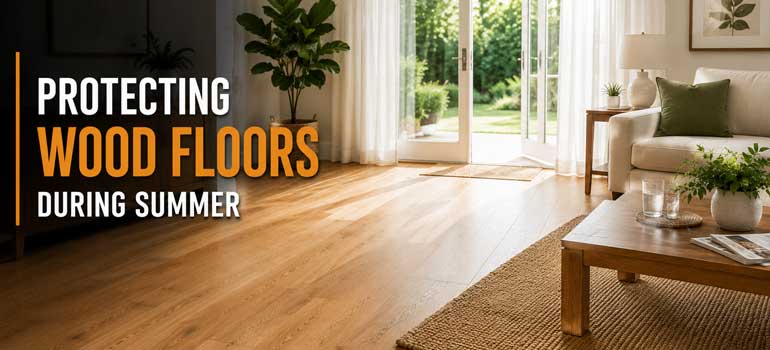
UK summers rarely bring extreme heat, but a real wood floor still reacts to the season, longer daylight hours, stronger sun angles, and shifting indoor humidity all leave their mark over time. A little attention through the warmer months goes a long way toward keeping a floor looking its best.
Sun Exposure And UV Fading
Direct sunlight is the biggest seasonal risk to a wood floor's appearance. Prolonged UV exposure causes genuine discolouration over time, and it can gradually degrade the protective finish itself, leaving the surface more vulnerable to everyday wear once that protection has broken down. Keeping blinds or curtains at least partly closed during the sunniest parts of the day, particularly in rooms with parquet flooring or any patterned floor where uneven fading would be especially noticeable, helps slow this process considerably.
If you're away for an extended period over summer, it's worth taking a few minutes before you leave to make sure direct sun isn't going to hit any particular section of the floor for days or weeks unchecked while nobody's there to notice or adjust anything.
Rotate Rugs And Furniture To Even Out Colour Change
You can't realistically keep blinds shut all summer, so some gradual colour change from sun exposure is normal. What's worth avoiding is an uneven result, a distinct patch left under a rug or sofa that never sees sunlight, sitting alongside the rest of the floor that has. Moving furniture and rugs occasionally through the season lets the whole floor age at roughly the same rate, rather than leaving an obvious outline once something is finally shifted.
Managing Humidity During Warmer Months
UK humidity doesn't disappear in summer the way it does in some climates, and wood floors are just as sensitive to excess moisture as they are to dryness. Keeping indoor relative humidity broadly within the recommended 30% to 50% range, rather than letting it climb during warm, muggy stretches, helps prevent the boards from absorbing excess moisture and pressing against each other at the seams. A dehumidifier is worth considering in particularly humid spells, and simply airing rooms out for short periods on drier days can help keep levels in check without much extra effort.
Give The Floor A Fresh, Protective Finish
If your floor's finish has started looking a little tired, summer is a sensible time to have it addressed, particularly since sun exposure is at its strongest exactly when protection matters most. Professional floor polishing can refresh the surface and, where relevant, apply a finish with UV-filtering properties, which meaningfully slows further sun-related fading compared with an older, unprotected finish.
What To Do Before A Summer Holiday
Going away for a week or two over summer is worth a small amount of prep for the sake of your floor:
- Close blinds or curtains in rooms that get strong direct sun, particularly if you'll be away during the sunniest part of the day for an extended stretch.
- Check the room's humidity settings if you have any climate control running, since an empty house with no one adjusting windows or ventilation can drift further from the ideal range than an occupied one.
- Avoid leaving rugs or furniture in the same spot for weeks at a time if you know the room gets strong sun, since that's precisely the kind of prolonged, unmonitored exposure that leaves a visible patch.
Frequently Asked Questions
Does direct sunlight actually damage wood flooring, or just fade the colour?
Both. Sunlight causes visible discolouration over time, but prolonged UV exposure can also degrade the protective finish itself, leaving the surface more vulnerable to everyday wear once that protection has broken down.
Is humidity still a concern for wood floors in summer, given the UK climate?
Yes. Warm, humid stretches can push indoor humidity above the ideal range just as easily as a dry winter can push it below it, and excess moisture causes boards to expand and press against each other at the seams.
Can uneven sun fading on a wood floor be fixed?
In many cases, yes, through sanding and refinishing, which removes the faded surface layer and reveals fresh timber underneath. Prevention through rotating rugs and furniture is easier and cheaper than correcting an uneven result afterwards, though.
Is it worth getting a floor recoated specifically for UV protection?
If your existing finish is older or already showing wear, yes, a fresh finish with UV-filtering properties gives better protection against summer sun than a worn, unprotected surface.
Call us on 020 7036 0625 or request a free site visit if your floor's finish needs refreshing before summer really sets in.