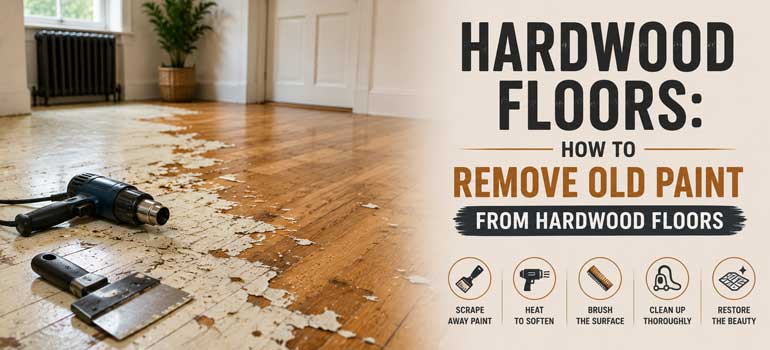
Old paint on a hardwood floor dulls the timber's natural beauty, traps in dirt, and can even hide damage underneath. The good news: there are safe, effective ways to strip it back and reveal the wood beneath, provided you approach it in the right order.
Why Is There Paint On Hardwood Floors In The First Place?
Patches or entire coats of paint on older hardwood floors are genuinely common. Past owners may have painted floors for aesthetic reasons, to cover existing damage, or simply because it was the trend at the time. Accidental spills during other renovation work, floors left uncovered while walls or ceilings were painted, account for a good share of it too.
Test For Lead Before You Do Anything Else
This is the single most important step, and it's worth getting right before touching anything else. Lead-based paint remained legal for sale and use in the UK until 1992, so any property with original paintwork from before that date could genuinely contain it, and the risk is meaningfully higher the older the property, Victorian and Edwardian paintwork specifically often had significant lead content. If you suspect lead paint is present, get it professionally tested before starting. For confirmed modern water- or oil-based paint, several safe DIY removal methods are available without needing specialist equipment.
Tools And Materials You'll Need
Depending on the method, requirements vary slightly, but a solid general kit includes:
- A plastic putty knife or scraper, non-metal, to avoid scratching the timber underneath.
- Medium to fine grit sandpaper or an orbital sander, for stubborn remaining patches.
- A paint remover or chemical stripper, ideally eco-friendly or low-toxicity.
- Warm soapy water and a sponge, plus clean microfibre cloths.
- Protective gloves and a mask, non-negotiable regardless of method.
- Protective sheeting and masking tape, where the work area needs containing.
Work in a genuinely well-ventilated space throughout, windows and doors open wherever possible, with a fan running if you're using any chemical products.
Method 1: Manual Scraping For Small Patches
Well suited where paint coverage is limited to small areas:
- Soften the paint first with warm soapy water, left to sit for several minutes.
- Scrape carefully with a plastic putty knife, always working with the grain rather than against it, to avoid gouging.
- Work paint out of grain lines and crevices with a soft wire brush or detail scraper where needed.
- Wipe the area down with a damp cloth and let it dry fully before applying anything further.
This method works best on water-based paint or areas where the coating is already chipping and lifting on its own.
Method 2: Chemical Paint Strippers
Better suited to larger areas or genuinely stubborn coatings:
- Choose a wood-safe stripper, ideally low-VOC and biodegradable for indoor use.
- Apply with a brush in manageable sections, rather than the whole floor at once.
- Let it work according to the manufacturer's instructions, typically five to thirty minutes, until the paint visibly bubbles or changes texture.
- Scrape away the loosened paint gently, following the grain, with a plastic scraper.
- Wash the floor thoroughly with warm water once finished, and check whether the specific product needs a separate neutralising step.
Method 3: Sanding To Remove Paint
Worth considering where paint is deeply embedded or built up in several layers:
- Test a small area first to see how the wood responds before committing to the whole floor.
- Use a medium grit, roughly 80 to 120, to lift the paint layer itself, since this is generally a lighter job than a full structural refinish, which typically starts much coarser.
- Move progressively to a finer grit to smooth and polish the wood once the paint is gone.
- Watch for oversanding, particularly on boards that have already been refinished multiple times, since removing too much material shortens a floor's remaining lifespan.
- Vacuum thoroughly and wipe with a slightly damp cloth once finished, ready for whatever finish comes next.
Common Mistakes To Avoid
- Using metal scrapers or harsh abrasives, which gouge the wood and cause damage that's often permanent.
- Using too much water, since hardwood and excess moisture genuinely don't mix well.
- Skipping the patch test, or working without proper ventilation, are both genuine risks to the wood and to your own health.
- Rushing the process, working in small, patient sections, avoids irreversible damage from a hasty pass.
When To Call In Professional Help
For a large painted area, multiple built-up layers, or any suspicion of lead paint, it's genuinely worth bringing in a professional restoration specialist rather than pushing through alone. It costs more than a DIY attempt, but it protects against damage and delivers a considerably more consistent result. Once paint is fully removed, floor sanding and a fresh wood floor stain or protective finish bring the newly revealed timber back to life properly.
Removing Paint From Hardwood Floors: Common Questions
How do I know if my hardwood floor's paint contains lead?
If any of the paintwork predates 1992, when lead-based paint was still legal for sale and use in the UK, it's worth professional testing before starting. Risk increases the older the property, particularly Victorian and Edwardian paintwork.
Is sanding always necessary to remove old paint?
Not always. Manual scraping or a chemical stripper can handle smaller areas or paint that's already lifting. Sanding becomes the more practical route for deeply embedded or multi-layered paint.
What grit sandpaper should I use to remove paint specifically?
Around 80 to 120 grit for lifting the paint layer itself, moving to a finer grit afterwards to smooth the exposed timber. This is generally lighter work than a full structural refinish, which starts much coarser.
Is it safe to remove old paint from hardwood floors myself?
For confirmed non-lead paint on a manageable area, yes, with proper ventilation, the right tools, and patience. For suspected lead paint or extensive, multi-layered coverage, professional help is the safer route.
Call us on 020 7036 0625 or request a free site visit if you'd rather have a professional handle paint removal, especially where lead is a possibility.