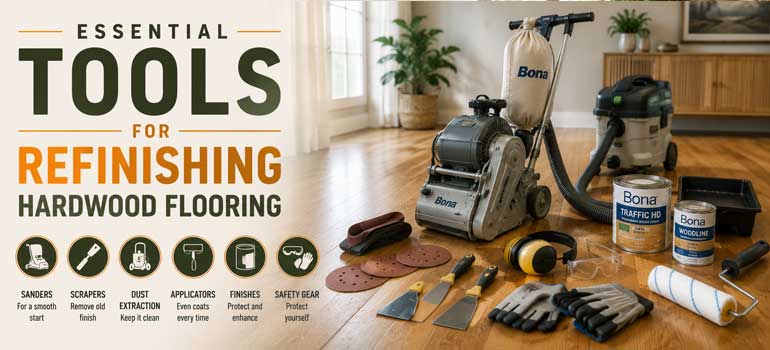
Refinishing genuinely can restore a tired, dull floor to something close to its original condition, but it's a bigger undertaking than a single sanding machine. Here's the complete list of what's actually involved, organised by stage, so you know what you're taking on before starting.
Preparation Tools
Getting the room ready properly makes everything after it go more smoothly:
- Vacuum cleaner, mop, and a wood-specific cleaning product, to get the floor genuinely clean and free of grit before sanding begins. Skipping this risks trapping dirt and dust in the finish later, or having loose grit scratch the bare wood once it's exposed.
- A floor pry bar, for removing baseboards around the room before sanding starts, protecting them from getting scuffed or damaged during the process.
Sanding Tools
This is the equipment-heavy part of the project, and it's worth being realistic about the cost and skill involved before committing:
- A drum or belt sanding machine, used to remove the old finish and take the floor back to bare wood. Most people don't own one, so this typically means hiring from a tool hire specialist rather than buying equipment you'll rarely use again. A machine with a proper vacuum attachment genuinely makes the whole process more manageable.
- A sanding edger, a smaller machine specifically for the perimeter of the room, corners, and areas along the walls that the main sander can't reach. This is worth hiring alongside the main sander, not treating as optional, since edge work that doesn't match the main floor is one of the most visible signs of an inconsistent job.
- A range of sanding belts in different grits, changed regularly through the process rather than run until worn out, since fresh abrasive material genuinely affects the quality of the final result.
- A carbide paint scraper, for hand-sanding tight spots the machines can't properly reach.
We've covered the specific brands and machine types professionals typically use in more depth elsewhere, worth a look if you want to understand what genuinely good equipment looks like before hiring.
Finishing Tools
Once sanding is complete, a couple more steps remain before the job is genuinely done:
- A buffer, used after sanding to smooth away the dull, rough texture of bare wood and prepare a genuinely even surface before finish goes on.
- Wood floor staining or a chosen finish product, whichever direction you're taking the floor's final colour and protection. There's a genuinely wide range of options here: oil, lacquer, wax, each with different application methods and long-term maintenance needs, so it's worth researching the right fit for your specific floor rather than grabbing whatever's available.
Being Realistic About The Scope
This is a genuinely substantial list of specialist equipment for a project most people only attempt once. Beyond the equipment itself, there's a real skill curve to using a drum sander without gouging the floor, and getting an even result across an entire room takes more practice than a first attempt usually allows. If working through this list leaves the project feeling like more than you'd bargained for, that's a completely reasonable conclusion, and hiring a professional for all or part of the job is often the more cost-effective route once equipment hire and the risk of a corrected mistake are factored in.
Tools For Refinishing Hardwood Flooring: Common Questions
Do I really need both a drum sander and an edger, or can I manage with just one?
Both, genuinely. The drum sander can't reach the perimeter of the room, and skipping the edger typically results in a visible mismatch between the main floor area and the edges.
Is it worth buying sanding equipment rather than hiring it?
For most people, no. This is specialist equipment used rarely by an average household, so hiring from a tool hire specialist is usually the more sensible route than buying machinery you'll use once or twice.
What's the buffer actually for after sanding?
It smooths the rough, dull texture left by sanding, preparing an even surface before the finish is applied, rather than being a substitute for the sanding process itself.
Should I choose the finish before or after sanding?
It's worth researching and deciding beforehand, since oil, lacquer, and wax each have different application processes and long-term maintenance needs, and the choice affects how the sanded surface should be prepared.
Call us on 020 7036 0625 or request a free site visit if the full scope of this project has you leaning toward professional help instead.