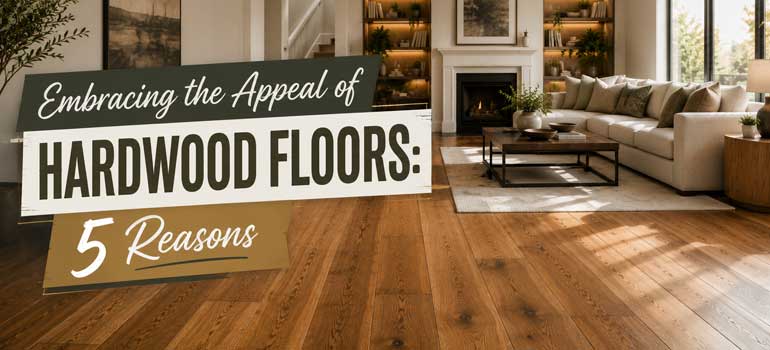
Wood flooring's biggest selling points, its versatility, durability, and ease of care - get discussed constantly, and for good reason. But there are a handful of less obvious advantages that deserve just as much attention.
It Genuinely Feels Warmer Underfoot Than Tile Or Stone
This isn't just a subjective impression, it's real physics. Wood has considerably lower thermal conductivity than tile, stone, or concrete, meaning it draws heat away from bare feet far more slowly. Even when a wood floor and a tile floor are at the same room temperature, the tile will feel noticeably colder, because it conducts heat away from your skin faster. This is the same principle behind why metal feels colder than wood at identical temperatures, it's about the rate of heat transfer, not the actual temperature of the material itself. In practical terms, it means a wood floor genuinely feels more comfortable to walk on barefoot, particularly in the colder months, without needing any additional heating.
It Adds Genuine, Tangible Property Value
Wood flooring is consistently viewed favourably by buyers and valuers, more so than most alternative flooring types, and particularly in period London properties, where original or well-restored floorboards are often treated as a genuine selling point rather than just a practical surface. This isn't a guarantee of a specific price increase, that depends on the wider property and market, but a well-maintained wood floor is rarely, if ever, viewed as a negative by a prospective buyer, which is more than can be said for some flooring alternatives.
It's A Genuinely Renewable, Long-Life Choice
Properly sourced wood, certified through schemes like FSC or PEFC, comes from managed, replanted forests rather than uncontrolled logging, making it a genuinely renewable material when sourced responsibly. Beyond sourcing, wood's exceptionally long service life is itself an environmental advantage: a floor that can be sanded and refinished repeatedly over a century or more consumes far fewer total resources across its lifetime than a flooring type that needs full replacement every decade or so.
It Can Genuinely Perform Well Acoustically
There's a common assumption that wood is inherently noisier than carpet, and while a bare wood floor is louder underfoot than carpet, that's only half the picture. Paired with the right acoustic underlay, a wood floor can perform genuinely well against both footstep noise and sound transmission between floors, which matters considerably in London flats, where lease terms often specify minimum acoustic standards before hard flooring can even be installed. The reputation for noisiness is really about unaddressed installation, not something inherent to the material itself.
It Develops Real Character Over Time, Rather Than Just Wearing Out
Most flooring materials simply look worse as they age, scuffed, faded, tired. Real wood does something genuinely different: it develops a natural patina, a subtle depth and warmth to its colour and surface that comes specifically from years of light exposure, foot traffic, and gentle wear. This is part of why older, well-maintained wood floors in period properties are often prized rather than replaced, the ageing process itself becomes part of the floor's character rather than simply a sign it needs attention.
Genuine Reasons To Choose Hardwood: Common Questions
Does wood flooring actually feel warmer than tile, or is that just perception?
It's genuinely physical, not just perception. Wood's lower thermal conductivity means it transfers heat away from bare feet more slowly than tile or stone, even at an identical room temperature, which is why it feels warmer to the touch.
Is wood flooring really better for a property's resale value than other flooring types?
It's generally viewed more favourably by buyers than most alternatives, particularly in period properties, though it's one factor among several rather than a guaranteed price boost on its own.
Can wood flooring genuinely be as quiet as carpet?
With the right acoustic underlay, it can perform very well against footstep noise and sound transmission, though a bare wood floor without any acoustic treatment will always be louder than carpet underfoot.
Does wood flooring's appearance actually improve with age?
In a genuine, meaningful way, yes. Wood develops a natural patina over years of light exposure and use, adding depth and character rather than simply looking worn the way some other materials do.
Call us on 020 7036 0625 or request a free site visit and we'll help you find the right wood flooring for your home.