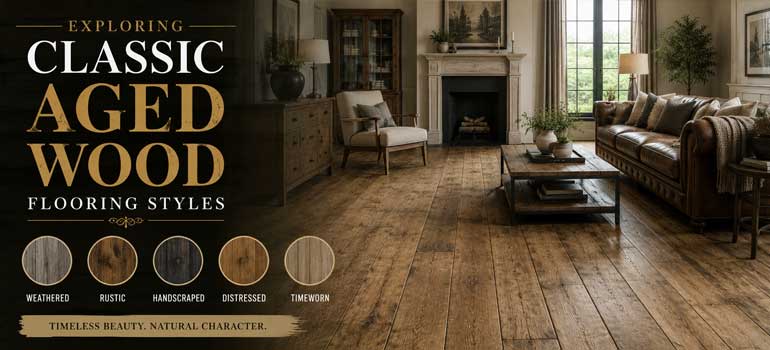
Aged and vintage-inspired wood flooring has stayed genuinely popular for good reason: it brings a sense of history and character that a perfectly uniform new floor simply can't replicate. But "aged look" covers several genuinely different styles, and understanding what actually defines each one helps you choose the right direction rather than just picking whichever photo looks appealing.
Reclaimed
Genuinely reclaimed timber, recovered and restored from an older building or previous flooring project, carries real dents, scuffs, and chips that developed over decades of actual use. We've covered this in more depth elsewhere, including its practical cost and sustainability advantages, but it's worth repeating here as the most authentic route to an aged look, since the wear is genuine rather than created.
Driftwood
This one's worth clarifying properly, since the name suggests something it isn't quite. Driftwood-style flooring isn't typically made from actual beach-sourced timber, it's a look achieved through grey, silvered stains combined with light texturing, designed to evoke the pale, weathered appearance real driftwood develops from sun and salt exposure. It's a genuinely popular choice for anyone after an airy, coastal, relaxed feel without the practical impossibility of sourcing enough genuine beach-weathered timber to floor a room.
Farmhouse
The farmhouse look leans on rustic-grade timber as its foundation, boards with visible knots, natural colour variation, and an unpolished, characterful grain pattern. We've covered wood grading in detail elsewhere, but the short version relevant here is that rustic grade isn't a quality compromise, it's purely a matter of how much natural character is left visible, which is exactly what gives the farmhouse look its authentic, lived-in warmth.
Dark Rustic
This takes the farmhouse foundation, rustic-grade timber, and pushes it further with a deeper, more dramatic stain. The combination of visible natural character and a darker tone creates something more intense and moody than the standard farmhouse look, while keeping the same underlying rustic-grade timber as its base. Wood floor staining applied after sanding is how this specific combination gets achieved on real timber.
Antique Finish
An antique finish combines a brushed texture with a UV-protective oil, producing warm, honey-toned floors with a subtle, tactile surface quality rather than a smooth, machine-uniform finish. We've covered brushing and wire-brushing techniques in more detail elsewhere, but the antique look specifically pairs that texture with an oil finish rather than lacquer, since oil tends to embrace and highlight texture in a way a glossy film doesn't.
Achieving Any Of These On An Existing Floor
Here's something worth knowing if you already have a solid wood floor rather than starting from scratch: most of these looks, dark rustic, antique, even a driftwood-inspired grey, can genuinely be achieved on your existing floor through floor sanding, the right stain, and the appropriate texturing or finish, rather than requiring a full replacement. This is often the more cost-effective route if the underlying timber is in good condition, since you're changing the surface treatment rather than the boards themselves.
Aged Wood Flooring Styles: Common Questions
Is driftwood flooring actually made from real beach-sourced wood?
No, generally not. It's typically new timber finished with grey, silvered stains and light texturing designed to evoke driftwood's naturally weathered appearance, rather than genuine beach-sourced material.
What's the actual difference between farmhouse and dark rustic styles?
Both use rustic-grade timber with visible natural character as their foundation. Dark rustic adds a deeper, more dramatic stain on top of that same rustic base, creating a moodier, more intense version of the farmhouse look.
Can I achieve an aged look on my existing wood floor rather than replacing it?
In most cases, yes, provided the underlying timber is in good condition. Sanding followed by the right stain and texturing or finish can achieve most of these looks on an existing floor, which is often more cost-effective than full replacement.
Does an antique finish use oil or lacquer?
Oil, specifically a UV-protective oil, paired with a brushed texture. Oil tends to embrace and highlight surface texture in a way a glossy lacquer film doesn't, which is part of what gives the antique look its distinctive, tactile character.
If you'd like to bring one of these looks to an existing floor, or discuss options for a new one, call us on 020 7036 0625 or request a free site visit.