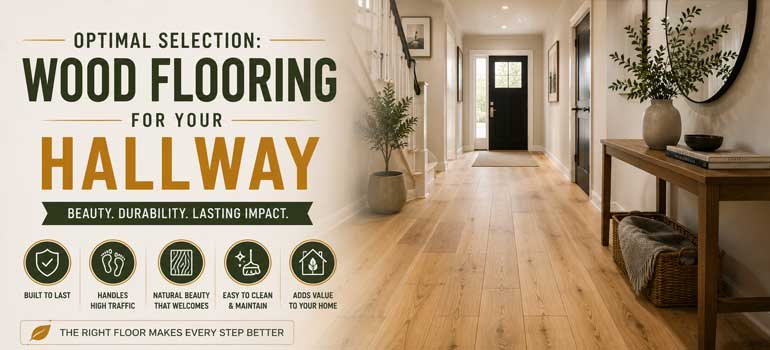
A hallway is usually the first thing anyone sees when entering a home, and it's also one of the hardest-working rooms in the house, taking constant foot traffic, dirt, and moisture that quieter rooms rarely see. Getting the right combination of construction and finish matters more here than almost anywhere else.
Solid Or Engineered: Underfloor Heating Decides A Lot
The construction decision often comes down to one simple question: is underfloor heating involved?
- If your hallway has, or will have, underfloor heating, engineered wood is the clear choice. Its layered, cross-grain construction resists the movement that heat cycling can cause in solid timber, and it's commonly installed as a floating floor, which suits underfloor heating systems particularly well for efficient heat transfer.
- Engineered wood can also be sanded and refinished within the depth of its veneer, which makes it a genuinely durable option for a high-traffic space like a hallway even without underfloor heating in the mix.
- If there's no underfloor heating involved, solid wood remains a genuinely strong option, and it holds a real advantage over engineered wood here: it can typically be refinished considerably more times over its life, since there's no veneer depth limiting how often it can be sanded.
Choosing The Right Finish For Heavy Traffic
Finish matters just as much as construction in a room that sees this much daily use:
- Varnish or lacquer offers strong, durable, hard-wearing protection that holds up well against a hallway's constant footfall, making it a genuinely sensible default for this specific room.
- Penetrating oil finishes wear down faster than varnish under heavy traffic, but they have a real advantage when it comes to repairs: a worn patch can simply be re-oiled locally, while a varnished floor generally needs a full sand and refinish to correct an uneven patch rather than a quick spot fix.
- The right choice depends on your priorities: maximum durability with a less flexible repair process, or a finish that wears faster but is genuinely easier to touch up as needed.
Doormats: Inside And Out
This is one of the simplest, most effective things you can do for a hallway floor specifically:
- An outdoor mat catches the bulk of dirt, grit, and moisture before it ever reaches the house, since this is what does most of the heavy lifting against the abrasive grit that causes fine scratching over time.
- An indoor mat, placed just inside the front door, catches whatever the outdoor mat missed, the finer dust and residual moisture that would otherwise track further into the hallway.
- Using both together, rather than just one or the other, meaningfully extends how long the floor's finish stays looking fresh, since each mat is catching a genuinely different stage of dirt.
A Few More Hallway-Specific Details
A couple of things worth considering that are easy to overlook:
- Transition strips, where the hallway meets a different flooring type in an adjoining room, tile in a kitchen, carpet in a bedroom, give a clean, secure edge and allow for the natural expansion and contraction that a change in flooring materials needs room for.
- Stair nosing, if the hallway leads directly onto a staircase, finishes that transition properly and holds up to the heavier wear stair edges take, rather than treating it as an afterthought once the main hallway floor is done.
Wood Flooring For Hallways: Common Questions
Should I choose solid or engineered wood for a hallway without underfloor heating?
Either works well. Solid wood offers more total refinishing over its life, while engineered wood offers easier installation and strong stability, so the choice often comes down to your subfloor and personal preference rather than one being clearly better for a hallway specifically.
Is varnish or oil the better finish for a hallway?
Varnish generally holds up better against heavy daily traffic, while oil is easier to spot-repair when wear does occur. The right choice depends on whether you'd rather prioritise maximum durability or easier touch-ups.
Do I really need two doormats, or is one enough?
Two works considerably better than one. An outdoor mat catches the bulk of dirt and grit, while an indoor mat catches what's left, and using both extends how long the floor's finish stays looking fresh.
Does a hallway need a different approach where it meets other rooms?
Yes, generally. A transition strip where the flooring type changes gives a clean, secure edge and allows for natural expansion, and if the hallway leads to a staircase, proper stair nosing matters just as much as the main floor.
Call us on 020 7036 0625 or request a free site visit and we'll help you choose the right wood, finish, and details for your hallway.