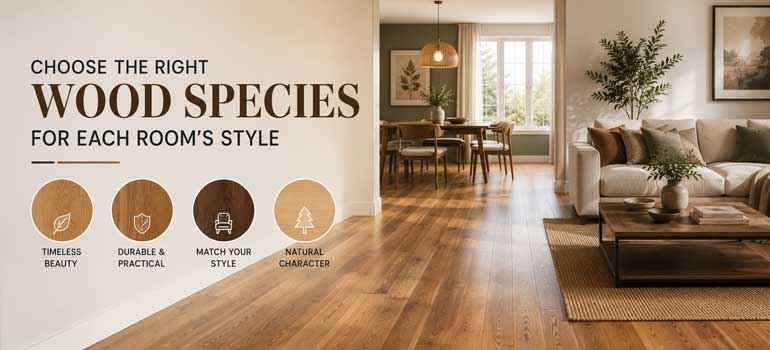
With so many wood species available for flooring, deciding which one is right for your home can feel overwhelming. It's not just about which one looks best in a photo — species affects durability, colour, how the wood ages, and how well it suits a particular room. Getting this decision right at the outset saves you from a floor that looks wrong for the space or wears out faster than it should. Here's how to think it through properly.
Why Species Matters Beyond Just Looks
Every wood species has its own natural colour, grain pattern, hardness, and stability characteristics. Two floors that look similar in a showroom sample can behave very differently once installed — one might be significantly more resistant to dents and scratches, while another might be better suited to a room with fluctuating humidity. Choosing based on appearance alone, without considering how the species performs, is one of the most common regrets homeowners have after a new floor is fitted.
The Most Common Species for London Homes
A handful of species account for the vast majority of wood floors fitted across London, each with a distinct character:
- Oak — by far the most popular choice, and for good reason. It's widely available, takes stain and finish beautifully, offers a good balance of hardness and workability, and comes in a huge range of tones from pale Scandinavian-style blonde through to deep, rich browns.
- Walnut — a naturally dark, warm-toned wood with a striking grain. It brings an immediate sense of luxury to a room but is comparatively soft, so it's better suited to lower-traffic spaces such as bedrooms and formal living rooms.
- Ash — pale, strongly grained, and tough. A good option for anyone who wants a light floor with more visual texture than maple, and one that stands up well to daily use.
- Maple — smooth, subtle grain in a pale creamy tone. Popular for a clean, contemporary look, though it can show scratches more readily than oak due to how evenly it takes stain.
- Pine — the classic choice for original Victorian and Edwardian floorboards across London. Softer than oak, it dents more easily but develops a warm, characterful patina with age that many period-property owners specifically want to preserve rather than replace.
Matching Species to Room Type and Light Levels
The room a floor is going into should influence the species as much as personal taste does. Smaller or darker rooms generally benefit from lighter species like maple or ash, which reflect more light and make the space feel larger and airier. Rooms that get plenty of natural light, or larger open-plan spaces, can carry a darker species like walnut without feeling closed in.
Foot traffic matters just as much as light. High-traffic areas — hallways, kitchens, living rooms used daily by a family — do better with harder, more resilient species like oak, since scratches and dents are more visible on soft, dark timber than on a harder, more forgiving surface. Lower-traffic rooms like bedrooms and formal reception rooms give you more freedom to choose a softer or darker species purely on how it looks.
Solid Wood vs Engineered: Does Species Choice Change?
Almost every popular species is available in both solid and engineered wood formats, so the species choice and the solid-versus-engineered choice are largely independent. Engineered boards use a thinner layer of the chosen species bonded to a stable plywood core, which makes them more tolerant of humidity changes and suitable for rooms — like those with underfloor heating — where solid wood can struggle. The visible surface, colour, and grain character are identical to solid wood in the same species; what changes is stability and, in some cases, long-term sandability.
Grain and Character After Sanding and Finishing
How a species looks isn't fixed until it's been sanded and finished. Open-grained species like oak and ash take stain evenly and predictably, which is why wood floor staining is often used to fine-tune the exact tone once a species has been chosen, rather than relying on the timber's natural colour alone. This is particularly useful if you're trying to match new flooring to existing boards elsewhere in the property, or want a specific interior design colour that the raw timber doesn't produce on its own.
If you're drawn to a patterned look rather than plain boards, many of these species — oak in particular — are also available in parquet formats such as herringbone and chevron, which significantly changes the character of the room even when using the same underlying wood.
FAQ
What's the most versatile wood species for flooring?
Oak, by a clear margin. It works with almost any interior style, takes stain evenly, and is widely available in a huge range of tones.
Is a harder wood species always the better choice?
Not always. Hardness matters most in high-traffic areas like hallways and kitchens. In a bedroom or a formal room with lighter use, a softer species like walnut or pine is perfectly practical and often preferred for its character.
Does wood species affect how well underfloor heating works?
Not directly, since heating performance is mostly about the floor's overall thickness and construction rather than the species itself. What does matter is whether you choose solid or engineered wood, as engineered wood handles the heat cycles more reliably.
Can two different wood species be used in adjoining rooms?
Yes, and it's fairly common, especially where rooms have different functions or traffic levels. Keeping a similar tone or undertone across the transition usually helps the change feel deliberate rather than disjointed.
Get Advice Tailored to Your Room
The right species genuinely depends on the room, the light, the traffic levels, and the look you're going for — there's no single "best" answer that applies to every home. If you'd like advice specific to your property, call us on 020 7036 0625 or request a free site visit and we'll talk through which species and finish will suit your space best.