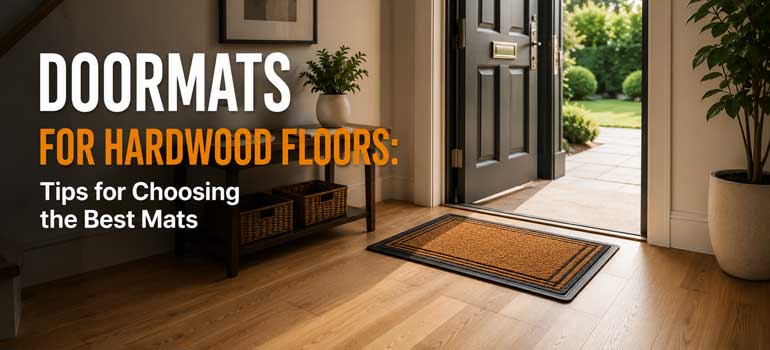
It's easy to overlook, but a proper doormat setup is one of the cheapest and most effective things you can do to protect a wood floor. Grit, sand, and dirt tracked in on the soles of shoes act like sandpaper underfoot, and over months and years that constant low-level abrasion wears through a finish far faster than most people realise. The floor still looks fine day to day, right up until the finish is visibly dulled and scratched.
Why This Matters More Than It Seems
Every step onto a wood floor with grit stuck to a shoe grinds tiny particles into the surface. Individually, none of it looks like anything. Over a year of daily traffic through a hallway or entrance, though, it adds up to real, visible wear, and it's often the single biggest cause of a wood floor needing an early refinish. A doormat at the door intercepts most of that grit before it ever reaches the floor.
Outdoor Mats
An outdoor mat is the first line of defence and should be tough enough to genuinely scrape debris off the sole of a shoe rather than just sit there. The most effective materials are:
- Coir or bristle mats, with stiff natural or synthetic fibres that dig into shoe treads and pull out grit and mud.
- Rubber-backed mats, which hold up well to weather and don't shift underfoot the way lighter mats can.
- Metal boot scrapers, useful in addition to a mat where mud and heavier debris are a regular problem, particularly in wetter months.
Indoor Mats
A second, softer mat placed just inside the door catches what the outdoor mat misses. Outdoor mats are built to scrape; indoor mats are built to absorb and hold the finer dust and residual moisture that outdoor bristles can't fully remove. This is the mat doing most of the actual protective work for the floor itself, since it's the last barrier before feet reach the wood.
A few things worth checking when choosing one:
- Look for a rubber or non-slip backing that won't let moisture bleed through onto the floor underneath, since a mat that traps water against a wood floor can cause its own problems over time.
- Go slightly larger than feels necessary. A mat with enough surface area for two or three full steps catches far more dirt than a small one that only covers a single footprint.
- Choose a mat that's easy to shake out or vacuum regularly, since a doormat that's saturated with trapped dirt stops doing its job properly.
Placement And Habits That Help
The mats themselves only do half the work. A few habits make a real difference alongside them:
- Place mats at every external door, not just the main entrance, since side and garden doors see the same grit exposure.
- Encourage a shoes-off habit where practical, particularly in winter when road salt and grit are at their worst and cause more damage than ordinary dirt.
- Keep an eye on pets' paws after walks, since mud and grit on paws causes exactly the same abrasive wear as it does on shoe soles.
- Clean the mats themselves regularly. A doormat that's never shaken out or washed eventually just becomes a store of the exact grit it was meant to stop.
The Cost Comparison Worth Remembering
Even a high-quality pair of indoor and outdoor mats is a genuinely small cost next to what it protects. A worn, scratched finish caused by years of untrapped grit eventually needs a full sanding and refinishing to put right, which costs considerably more than a decent doormat ever will. Whether your floor is solid wood or engineered wood, the same logic applies: doormats are one of the lowest-effort, highest-value things you can do for the floor's long-term appearance.
Frequently Asked Questions
Do doormats actually make a noticeable difference to a wood floor's lifespan?
Yes, genuinely. Most of the fine scratching that dulls a wood floor's finish over time comes from grit and dust ground in underfoot, and a doormat setup removes the bulk of that before it ever reaches the floor.
Should I use one doormat or two?
Two works better than one. An outdoor mat scrapes off the heavier debris, while a softer indoor mat catches the finer dust and residual moisture the outdoor mat leaves behind.
Can a doormat damage a wood floor if it traps moisture?
It can, if the mat sits directly on bare wood without a breathable or non-slip backing and stays damp for long periods. Choosing a mat designed for hard floors, and making sure it dries out rather than staying permanently wet, avoids this issue.
How often should doormats be cleaned?
Regularly enough that they aren't visibly full of trapped dirt. A doormat that's saturated with debris has effectively stopped protecting the floor and starts depositing what it's collected instead.
Call us on 020 7036 0625 or request a free site visit if it's time for a full sand and refinish, or if you'd like advice on protecting a newly fitted floor.