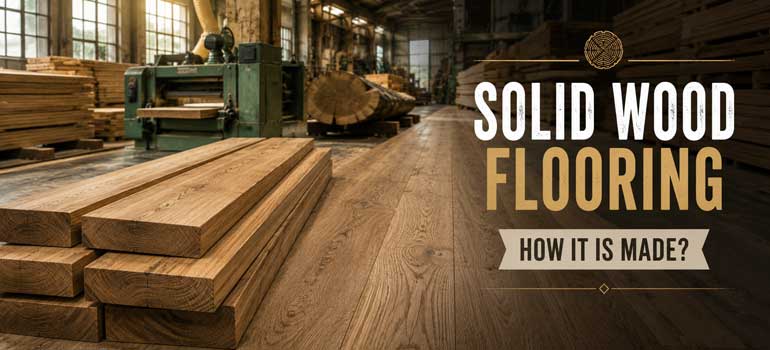
Solid wood flooring gets described as a "natural" product, and it genuinely is, but it's not simply cut from a tree and installed straight into a home. There's a real manufacturing process behind every plank, and understanding it helps explain why solid wood behaves the way it does once it's in your house.
It Starts With Selecting The Right Logs
Not every log becomes flooring. Once trees are felled, sections with few knots and a tight, consistent grain are specifically selected and set aside for flooring, while less consistent sections go toward other timber products entirely. This selection stage matters because it's what allows the eventual planks to respond to humidity and temperature changes as consistently as possible once installed, uniform grain moves more predictably than knotty, irregular timber.
Three Ways To Cut A Log
Once a log is selected, it's cut into rough planks using one of three main methods, and the choice genuinely affects both appearance and price:
- Flat or plain sawn, the most common method, produces the classic, flowing "cathedral" grain pattern most people picture when they think of wood flooring. It's also the most efficient method in terms of yield from each log, which keeps it the most affordable option.
- Quarter sawn, where the log is divided into quarters before cutting, produces a straighter grain with distinctive fleck patterning, particularly visible in species like oak. It's more stable than flat sawn, since the growth rings run more consistently through each plank, but it generates more waste per log, pushing the price up.
- Rift sawn, cut at yet another angle again, produces the straightest, most uniform grain of the three, with no fleck at all. It's the most stable option and generally the most expensive, since it produces the least usable timber per log of any of the three methods.
Drying The Timber Before It's Milled
This is a genuinely important step that's easy to overlook: freshly cut timber holds far more moisture than is safe for flooring, and it needs to be dried down to a target moisture content, typically somewhere around 6% to 9%, before it can be milled into finished planks. This is usually done through kiln drying, a controlled process that removes moisture steadily and evenly, rather than letting the wood dry naturally and unevenly, which risks warping and cracking. Skipping or rushing this stage is one of the reasons cheap, poorly manufactured flooring can develop problems soon after installation, the timber simply wasn't stable enough to begin with.
Grading By Appearance, Not Quality
Once dried, planks are sorted into grades, prime, select, natural, and rustic, based purely on how much visible character, knots, and colour variation they show. This sorting affects appearance and price, not structural quality or durability, all grades come from timber that's been through the same drying and preparation process.
Milling, Tongue And Groove, And Finishing
The dried, graded planks are then planed smooth on all sides to remove saw marks and bring every board to a consistent thickness, and a machine cuts the tongue and groove edges that allow individual planks to interlock once fitted. Finally, unless the flooring is being sold unfinished for on-site finishing, the boards are sealed with either wood floor staining and a protective coating, or left with a factory-applied oil or lacquer finish, depending on the product.
How Solid Wood Flooring Is Made: Common Questions
Why does the sawing method affect a solid wood floor's price?
It comes down to how much usable timber each method yields from a log. Flat sawn produces the most usable planks and is the most affordable, while quarter and rift sawn generate more waste but produce a straighter, more stable grain, which pushes the price up.
Why does timber need to be kiln dried before becoming flooring?
Freshly cut wood holds far more moisture than is safe to install. Kiln drying brings it down to a stable target moisture content evenly, which prevents warping and cracking that naturally, unevenly dried timber would be prone to.
Does grade affect how durable or well-made a solid wood floor is?
No. Grading is purely about visible appearance, knots, colour variation, and grain character, not structural quality. Every grade comes from timber processed through the same drying and manufacturing steps.
What's the difference between rift sawn and quarter sawn timber?
Both are cut at different angles from flat sawn to produce straighter, more stable grain. Rift sawn is cut at a further angle still, producing the straightest, most uniform grain of all three with no visible fleck, and is generally the most expensive due to higher waste per log.
Call us on 020 7036 0625 or request a free site visit and we'll help you choose the right solid wood species, cut, and grade for your project.