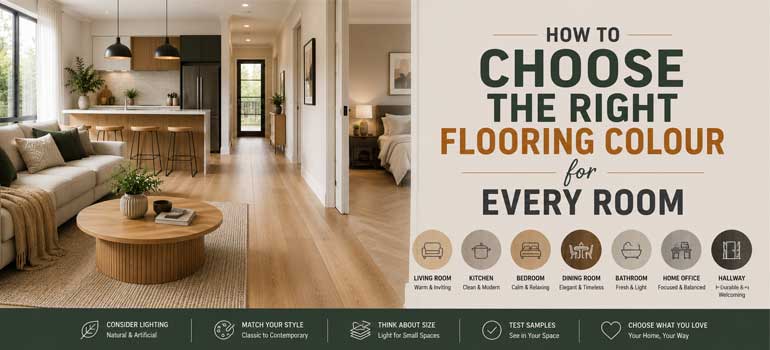
Flooring colour is one of the biggest decisions in any renovation, yet it's often left until last. With so many stains, oils, and natural wood tones available, it's easy to feel overwhelmed. The colour you choose will set the tone for the whole room, affect how light or spacious it feels, and needs to work with the fixed elements of your home — walls, worktops, staircases — for years to come. Here's how to approach it properly, whether you're refinishing existing boards or starting a new floor fitting project.
Why Flooring Colour Matters More Than Paint
Unlike a wall colour, a floor finish isn't something you repaint every couple of years. It's a long-term decision that touches every piece of furniture, every rug, and every wall colour you choose afterwards. Getting it right from the start saves you from a mismatched room down the line.
Key Factors to Weigh Up
Before you look at a single sample, think through:
- Natural light — a north-facing or smaller room with limited daylight generally benefits from a lighter floor tone, which reflects light and makes the space feel larger and airier.
- Room size and ceiling height — darker floors create a cosier, more dramatic feel and work well in larger, well-lit rooms, but can make a small room feel boxed in.
- Existing fixed finishes — skirting boards, staircases, kitchen worktops, and any woodwork that won't be changing need to sit comfortably alongside your new floor colour.
- Foot traffic and practicality — busy hallways and kitchens show dust, scuffs, and pet hair more readily on very dark or very light floors; a mid-tone finish tends to hide daily wear better.
- Flow between rooms — if your home has an open-plan layout or rooms leading into one another, keeping a consistent tone (even if the wood species changes) helps the space feel connected rather than chopped up.
Light, Mid-Tone, or Dark: What Each Look Delivers
- Light and blonde tones (limed oak, whitewashed finishes) suit modern, Scandinavian-style interiors and small or dark rooms that need to feel brighter.
- Natural mid-browns are the safest, most versatile choice — they suit almost any furniture style, hide everyday marks well, and rarely date.
- Dark and espresso tones bring a formal, elegant character and work best in larger rooms with good natural light, but require more maintenance to keep scuff marks from showing.
Matching Colour to Wood Species and Finish
The final colour depends as much on the finish as the wood itself. Wood floor staining lets you achieve a shade that the natural timber wouldn't produce on its own — useful if you want a grey, dark walnut, or driftwood look on an oak or pine floor. Different species also take colour differently: oak has a pronounced open grain that holds stain well and shows real depth, ash tends to lighten a stain slightly because of its paler base tone, and walnut is naturally dark enough that it often needs little more than an oil finish to bring out its colour. If you're not sure which combination of species and stain will give you the look you want, it's worth asking for a site visit — we can show you finished samples on the actual wood type you're considering rather than a printed swatch.
Why Sampling Before You Commit Is Essential
Don't choose a colour from a photo or a small swatch under shop lighting. Instead:
- Bring your own samples in — a paint chip, a cupboard door, or a fabric swatch from the room helps you compare against real flooring samples rather than guessing.
- Limit yourself to 2-3 options — too many samples side by side makes it harder to decide, not easier.
- Place samples next to your furniture — lay them where the floor will actually go, next to the pieces that will sit on it.
- Check them in different light — view the samples in daylight, in the evening under artificial light, and again the next day. Colours can shift dramatically between morning sun and warm lamplight.
FAQ
How do I know if I should go light or dark with my flooring colour?
Look at how much natural light the room gets and how big it is. Small or dim rooms generally read better in lighter tones, since they reflect more light and open the space up. Larger, well-lit rooms can carry a dark floor without feeling closed in.
Do flooring colour trends matter, or should I just pick what I like?
Trends are worth being aware of for resale value, but a floor is a long-term fixture in your home, not something you'll replace in a year or two. Choosing a colour you'll genuinely like living with matters more than chasing whatever's currently popular.
Can I change my floor colour without replacing the whole floor?
Yes, if it's real wood. Sanding back to bare timber and applying a different stain can shift the colour significantly without a full replacement, provided the boards have enough depth left to sand.
How many samples should I take home before deciding?
Two or three is the sweet spot. Any more than that and it becomes harder, not easier, to tell them apart and make a decision.
Get Expert Advice and Free Samples
If you're still weighing up your options, our team can talk you through what tends to work best in your type of property and lighting. We offer free samples so you can test colours at home before committing to a full floor. Call us on 020 7036 0625 or request a free site visit and we'll bring samples matched to the wood species and finish you're considering.