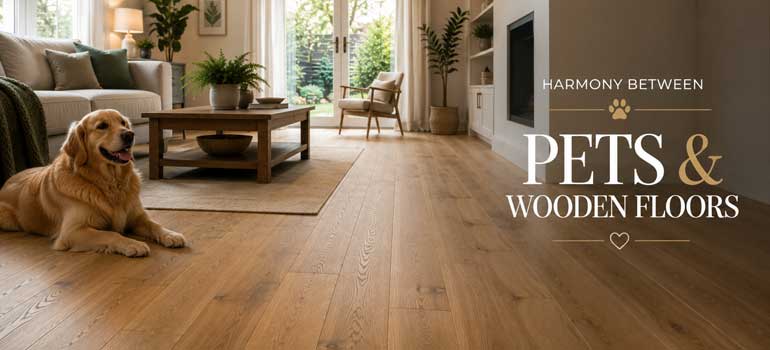
Pets and wood flooring can coexist perfectly well, but it does take a bit more deliberate care than a pet-free household needs. A few genuinely effective habits make the difference between a floor that shows real wear within a year and one that holds up beautifully for decades.
Trim Nails Regularly
This is the single most effective thing you can do. Long, untrimmed nails are what actually cause the fine scratch trails that build up over time, and it matters most for larger dogs, whose extra weight drives nails into the finish more forcefully than a smaller pet's would. Regular trims, rather than occasional ones, keep this genuinely under control. For dogs that are particularly hard on floors, nail caps are worth considering as an extra layer of protection alongside regular trimming.
Manage Dirt And Moisture From Outside
Pets track in dirt, grit, and moisture from outside constantly, and grit ground into a floor by paws causes the same fine abrasive wear that dirty shoes do. A doormat at every entrance helps catch the worst of it, and wiping paws down after walks, particularly in wet weather, prevents a lot of that grit ever reaching the floor at all. Regular bathing helps too, though it's really the paw-wiping habit that does most of the day-to-day work.
Strategic Rug Placement
Rugs earn their place in a pet household more than almost any other room accessory:
- At entrances, to catch dirt and moisture before it spreads further into the home.
- In play areas, wherever pets tend to run, jump, or wrestle, since this is where scratching and scuffing concentrates most heavily.
- Under food and water bowls, to catch spills before they reach the finish directly.
Choosing A Durable Species And Construction
Denser, harder wood species genuinely resist scratches and dents better than softer ones, and species like hickory are worth discussing with a supplier if durability against pets is a real priority for you, though availability varies, so it's worth checking what's realistically sourceable for your project rather than assuming any particular species is stocked.
Construction matters too, not just species hardness. Engineered wood's layered build can offer genuinely good scratch resistance depending on the wear layer and finish used, so it's a reasonable option to weigh alongside solid wood rather than assuming solid is automatically tougher. Finish also plays a real role: matte or textured finishes hide fine scratches and everyday marks considerably better than a high-gloss lacquer, where every mark catches the light and stands out.
Dealing With Accidents Quickly
This is something the usual pet-and-flooring advice tends to skip over, but it matters a genuine amount. Pet urine, if left sitting rather than cleaned up promptly, can damage a finish and, if it soaks through to bare wood, cause staining and discolouration that's difficult to fully reverse. Clean accidents up immediately with a cleaner genuinely designed for the job, an enzymatic cleaner formulated for pet accidents works considerably better than a generic household product, and check the affected area again after it's dried to make sure nothing's been left behind under the surface.
Living With Pets And Wood Floors: Common Questions
Can wood flooring genuinely survive a household with pets long-term?
Yes, very much so, with reasonably consistent care. Nail trimming, doormats, and prompt cleanup of accidents cover the majority of the real risk pets pose to a wood floor.
Does a harder wood species really make a noticeable difference with pets?
Yes, genuinely. Denser species resist scratches and dents better than softer ones, though finish and construction also play a real role alongside species hardness.
How urgent is it to clean up a pet accident on a wood floor?
Quite urgent. Urine left sitting can damage the finish and, if it reaches bare wood, cause staining that's difficult to fully remove, so prompt cleanup with the right product genuinely matters.
Are scratches from pets ever fully avoidable?
Not entirely, some fine wear is realistic to expect over time even with good habits. Regular nail trims, a matte or textured finish, and prompt attention to any deeper scratches keep it to a genuinely manageable, mostly invisible level.
If scratches or marks have already built up, scratch repair can usually address them without a full refinish. Call us on 020 7036 0625 or request a free site visit for advice on the right species and finish for a pet-friendly home.