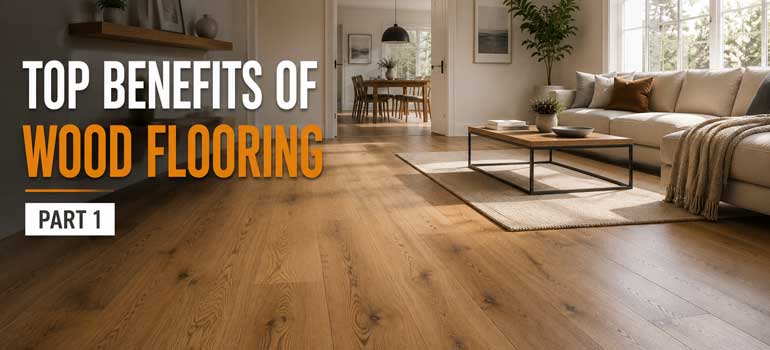
Wood flooring has a long track record of staying popular, and it's not simply a matter of taste. Parquet was installed at the Palace of Versailles in 1684, specifically to replace marble floors that needed constant washing and were rotting the joists underneath them. That's a genuinely practical reason, not just an aesthetic one, and the same basic appeal, a durable, natural material that improves rather than degrades a space, still holds up today.
This is the first of two parts looking at what actually makes wood flooring worth choosing. Part one covers durability, appearance, and long-term value.
Built To Last
Wood's biggest practical advantage is simply how long it lasts. There are hundreds of hardwood and softwood species to choose from, and a properly maintained floor, whether solid wood, engineered wood, or parquet, can realistically last a century or more. Timber's natural structure gives it a useful combination of hardness and flexibility, which is part of why it holds up so well across such different environments and levels of daily use.
What makes this especially valuable is that wood floors don't just survive, they can be restored. Sanding and refinishing removes decades of wear and reveals the original timber underneath, which is something almost no other flooring type can genuinely offer. A carpet or a laminate floor gets replaced when it wears out. A wood floor gets brought back to life.
A Look That Doesn't Date
Appearance is always somewhat subjective, but wood flooring has a track record most other materials can't match. It brings a warmth and character to a room that's genuinely hard to replicate with a manufactured product, and the range of options is enormous:
- Species — from pale ash and maple through to rich walnut and deep, dark oak stains.
- Grades and textures — from smooth, uniform boards to rustic, characterful grades with visible knots and grain variation.
- Patterns — plain planks, herringbone, chevron, and traditional block parquet all give a completely different feel to the same underlying wood.
- Finishes — matt, satin, or gloss lacquers, or oiled finishes that keep the natural texture of the timber more visible underfoot.
That range means a wood floor can be genuinely tailored to a specific room and style, rather than being a one-size-fits-all product.
A Genuinely Long-Term Investment
Wood flooring isn't the cheapest option on the market - laminate and vinyl will always undercut it on upfront price, but it earns that cost back over time in ways cheaper flooring doesn't. A well-installed and maintained wood floor rarely needs major repair, and its ability to be sanded and refinished means the same floor can effectively be renewed multiple times over its life rather than replaced.
Looked at over a couple of decades rather than a single purchase, wood flooring often works out as the more economical choice, not the more expensive one, simply because it isn't something you keep buying every few years again.
What's Coming In Part Two
Part one has focused on durability, appearance, and value. Part two looks at some of the other practical reasons wood flooring continues to be chosen over its alternatives, including how it performs day to day and what it means for a property's overall value.
Frequently Asked Questions
Is wood flooring really worth the higher upfront cost compared to laminate or vinyl?
Over the long term, usually yes. A wood floor can be sanded and refinished multiple times rather than replaced, which spreads its higher initial cost across decades rather than years.
How long does wood flooring actually last?
With proper installation and maintenance, a wood floor can genuinely last a century or more, particularly solid wood, which can be refinished repeatedly throughout its life.
Is engineered wood as durable as solid wood?
It's built differently but is genuinely durable in its own right, and in some conditions, such as rooms with underfloor heating or less stable humidity, it actually performs more reliably than solid wood.
Why was parquet originally used at Versailles?
Parquet replaced the palace's marble floors in 1684, largely because the marble needed constant washing and the moisture was rotting the timber joists beneath it, not purely for decorative reasons.
Call us on 020 7036 0625 or request a free site visit and we'll help you find the right wood flooring option for your home.