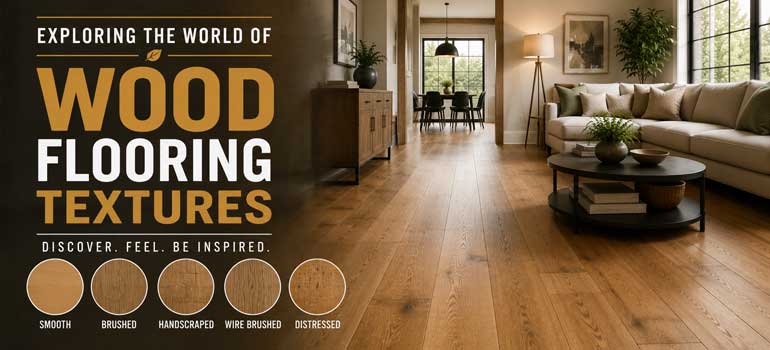
Colour and grade get most of the attention when choosing a wood floor, but texture is its own genuinely separate decision, the tactile, physical surface quality of the wood itself, independent of both tone and how much natural character the grade shows. It's worth thinking about deliberately rather than as an afterthought.
Smooth And Prime-Grade Surfaces
At the calmest end of the spectrum, smooth surfaces offer a regular, even feel underfoot with minimal texture variation. This is most commonly associated with prime-grade timber, where minimal knots and consistent grain naturally lend themselves to a smoother finished surface. It's a strong match for minimalist and contemporary interiors, where a clean, uniform floor supports the overall calm of the room rather than adding visual or tactile noise.
Hand-Scraped Versus Machine-Distressed
These two get lumped together often, but they're genuinely different techniques with different results:
- Hand-scraped flooring is worked by hand using traditional scraping tools, producing a genuinely irregular, artisan finish where no two boards look quite the same. This is the more labour-intensive, and typically more expensive, of the two.
- Machine-distressed (tumbled) flooring achieves a similarly aged appearance through mechanical processes, with boards tumbled together with abrasive materials to create dents, chips, and wear marks. The result looks convincingly aged but tends to be more uniform and repeatable across a whole floor than genuine hand-scraping.
Both achieve a characterful, lived-in look, the choice between them usually comes down to budget and whether genuine handcraft variation matters to you specifically.
Brushed And Wire-Brushed Textures
Brushing opens up the wood's natural grain, creating a subtle, regular texture that highlights the grain pattern more than a standard smooth finish does. Wire-brushing takes this further, using stiffer brushes to create a deeper, more pronounced texture that removes some of the softer grain material entirely, leaving the harder grain lines standing out more dramatically. Both are frequently paired with an oil finish, which tends to embrace and highlight the texture rather than smoothing it over the way a glossy lacquer would.
Reclaimed Wood's Natural Texture
Beyond manufactured texture treatments, reclaimed timber carries its own genuinely irregular texture, dents, chips, scuffs, and wear marks that developed naturally over the material's previous life rather than being deliberately created. This gives it a texture that manufactured distressing techniques can approximate but never fully replicate, since it comes from real history rather than a production process.
Texture Affects More Than Looks
This is worth knowing before choosing purely on appearance: textured surfaces genuinely hide everyday wear better than perfectly smooth ones. Fine scratches, minor dents, and dust are considerably less visible against a hand-scraped, distressed, or wire-brushed surface than against a smooth, uniform one, since the existing texture disguises small imperfections rather than letting them stand out against a flawless backdrop. This is the same underlying logic behind why matte finishes hide marks better than gloss, texture and sheen both affect how forgiving a floor is of everyday life, not just how it looks in a photograph.
Wood Flooring Textures: Common Questions
Is hand-scraped flooring genuinely different from machine-distressed, or just marketing language?
Genuinely different. Hand-scraping is a manual process producing real board-to-board variation, while machine distressing achieves a similar aged look through a more uniform, repeatable mechanical process.
Does texture affect how well a floor hides scratches and everyday wear?
Yes, considerably. Textured surfaces, hand-scraped, distressed, or wire-brushed, disguise fine scratches and minor dents far more effectively than a perfectly smooth, uniform surface does.
What's the difference between brushed and wire-brushed wood?
Wire-brushing goes further than standard brushing, using stiffer brushes to create a deeper, more pronounced texture that removes more of the softer grain material, leaving a more dramatic textured surface.
Can reclaimed wood's texture be replicated with new timber and manufacturing techniques?
It can be approximated through distressing and hand-scraping, but genuinely reclaimed wood carries texture that comes from real prior use, which manufactured techniques can imitate closely but not fully reproduce.
If you're weighing texture alongside solid wood flooring or engineered wood, call us on 020 7036 0625 or request a free site visit and we'll help you choose the right texture and finish for your room.