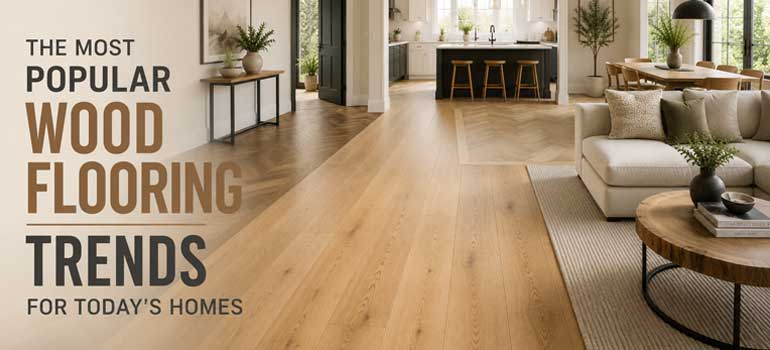
Trends in wood flooring aren't really about fashion for its own sake, they're a decent signal of how people actually want to live with their homes. Right now, that shift is towards floors that look considered and warm but also hold up to daily life without demanding constant attention. Here's what's actually shaping choices in 2026.
Warm Tones Are Replacing Cool Grey
For several years, cool grey and heavily whitewashed floors dominated. That's fading. Homeowners are now moving toward warmer oak shades, honeyed mid-tones, smoked finishes, and natural browns that feel more grounded and less clinical underfoot. This isn't a rejection of light flooring altogether, it's a shift in undertone, from cool and grey toward warm and honeyed, which tends to sit better against the kind of layered, textured interiors that are also currently popular.
Matt Finishes Over High Gloss
A high-shine lacquer used to be the default marker of a premium floor. That's no longer the case. Low-sheen, natural-looking finishes are now the preferred choice, since they soften visual noise, day-to-day dust, minor marks, and light scratching are all noticeably less obvious on a matt surface than a glossy one. This suits both restored original floorboards and newly fitted engineered planks equally well.
It's worth being aware there's a trade-off here. Some oil and matt lacquer finishes have different maintenance needs, and not every product suits every room, kitchens and hallways generally still need a tougher finishing system than a quiet bedroom or formal reception room, regardless of how the surface looks.
The Return Of Pattern
Herringbone and chevron have moved firmly back into the mainstream after years of plain plank flooring dominating. Statement patterns and traditional parquet layouts are being specified in both period restorations and new-build interiors, giving a floor genuine visual character rather than treating it as a neutral backdrop.
Sustainable Sourcing Is No Longer A Niche Concern
Interest in responsibly sourced timber has grown considerably. Homeowners are actively looking for wood that's genuinely certified, most commonly through FSC (Forest Stewardship Council) or PEFC, rather than accepting vague "eco-friendly" labelling without any backing. This has become a mainstream buying consideration rather than something only a small minority of clients ask about.
Engineered Wood For Underfloor Heating And Efficiency
UK renovation habits have shifted noticeably toward improving existing homes rather than moving, partly driven by government energy-efficiency initiatives and rising property costs. That shift has pushed engineered wood further into the mainstream, since its layered construction handles underfloor heating and fluctuating conditions far more reliably than solid timber, making it the practical choice for the kind of whole-home efficiency upgrades many homeowners are now prioritising.
Practical Concerns Are Driving Choices, Not Just Looks
Perhaps the clearest overall shift is that people are asking sharper, more practical questions before choosing a floor:
- Durability — will the finish hold up to the household's actual daily use, not just look good on day one.
- Repairability — can the floor be refinished later, or does wear mean full replacement.
- Acoustics — particularly relevant in flats, where lease requirements often dictate minimum sound performance for hard flooring.
- Longevity of look — will the finish still feel current in five or ten years, rather than dating quickly the way high-gloss grey floors have.
That combination, practical and considered rather than purely decorative, is really what's defining wood flooring choices this year more than any single colour or pattern.
Frequently Asked Questions
Are grey wood floors going out of style?
Cool grey tones have been fading in popularity for a while now, with warmer oak shades and honeyed mid-tones taking over as the preferred look for 2026. Grey floors aren't disappearing entirely, but they're no longer the default choice they were a few years ago.
Is herringbone parquet still popular?
Yes, and it's arguably become more popular than plain plank flooring in recent years, appearing in both period property restorations and new-build interiors.
Do matt floor finishes need different maintenance than gloss?
Sometimes, depending on the specific product. Certain oils and matt lacquers have their own care routines, and high-traffic areas like kitchens and hallways generally still benefit from a tougher finishing system regardless of sheen level.
Why is engineered wood becoming more popular for renovations specifically?
It handles underfloor heating and fluctuating humidity more reliably than solid wood, which matters more as homeowners increasingly renovate for energy efficiency rather than purely for appearance.
Call us on 020 7036 0625 or request a free site visit and we'll help you choose a wood floor that suits both your style and how you actually live.