Monday - Friday 07:30 - 17:30, Saturday 07:30 - 16:00
Engineered Flooring in Cricklewood, NW2
Back to Portfolio
Engineered Flooring in Cricklewood, NW2
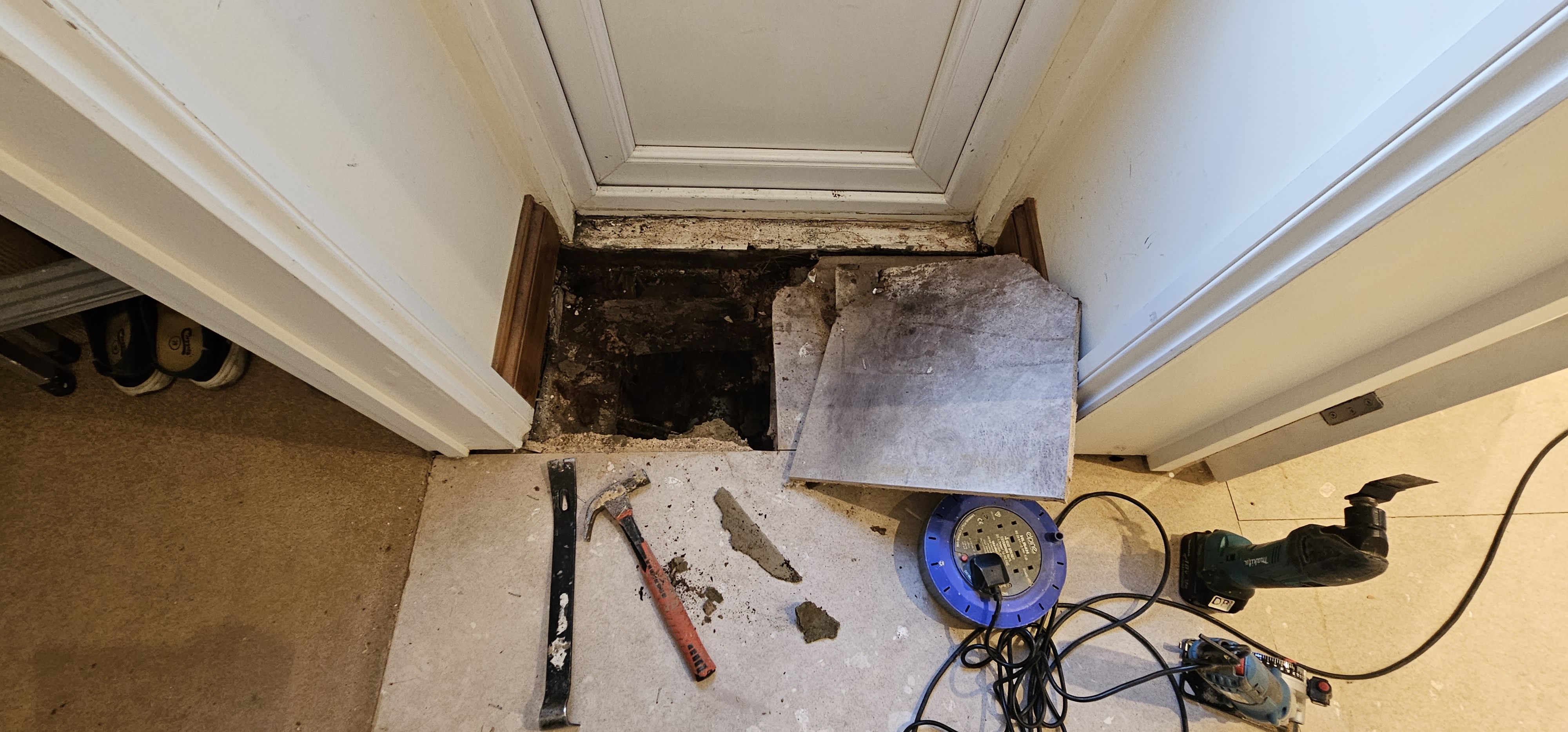
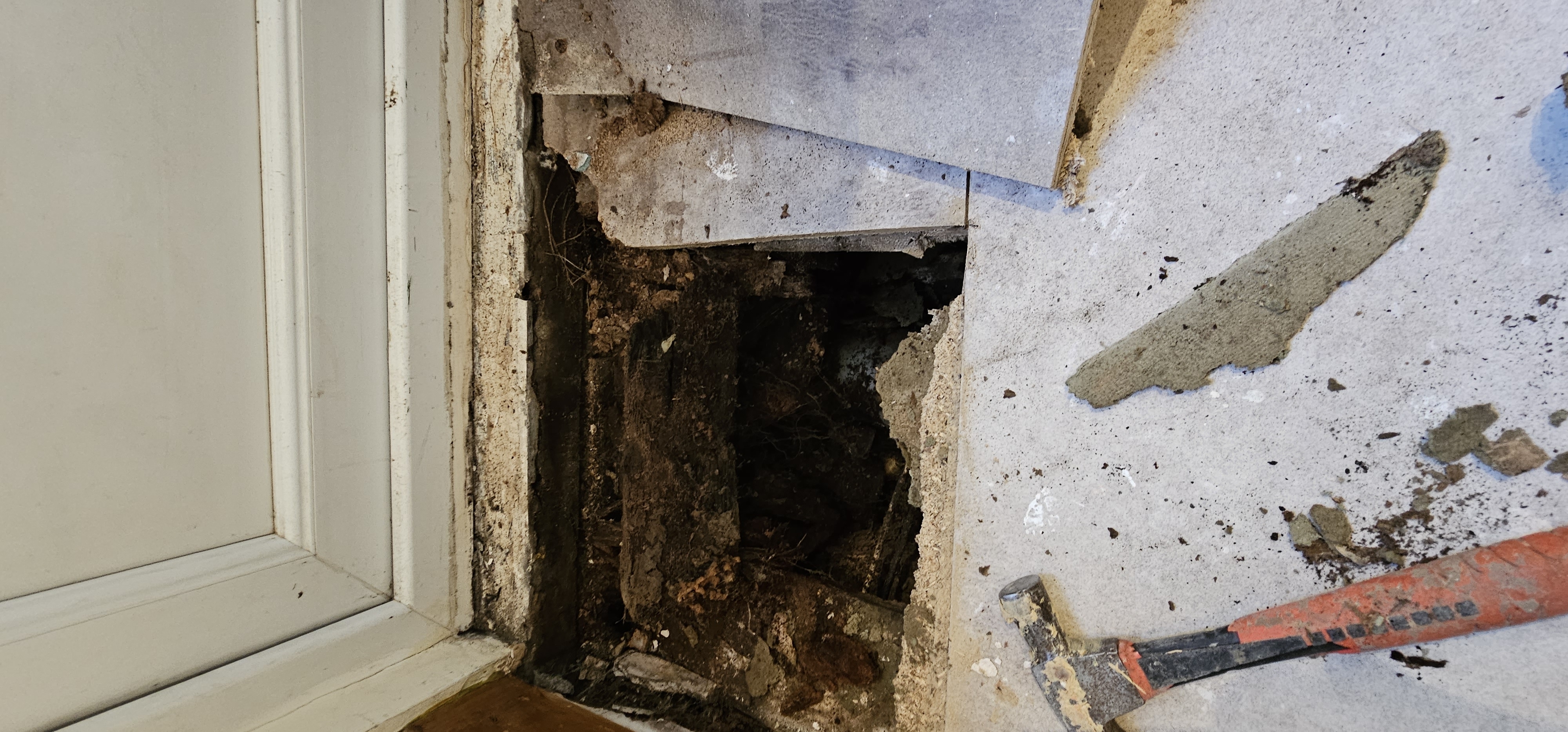
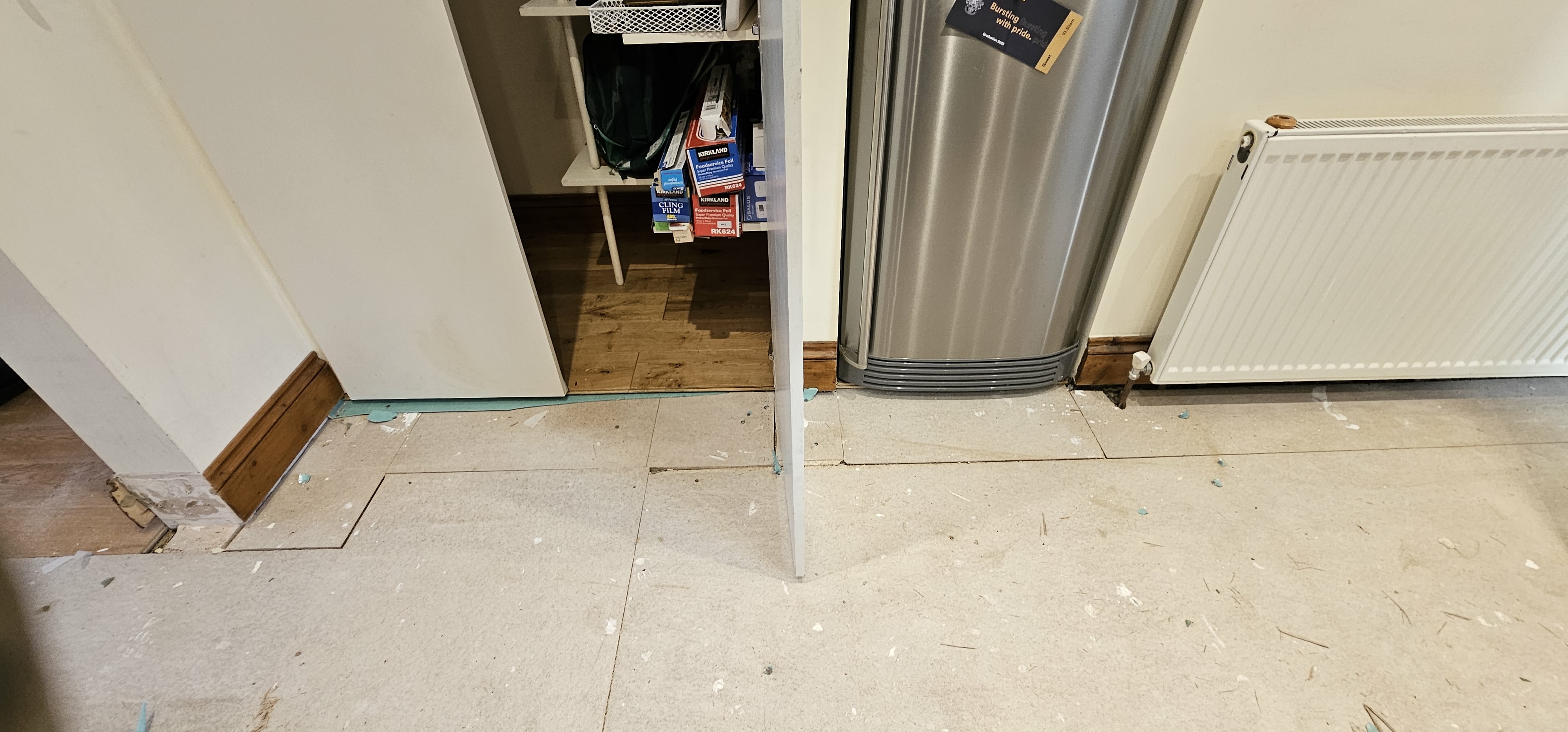
We recently completed engineered wood flooring installation across a 120 square metre apartment in Cricklewood. The property, a converted Victorian building, required careful subfloor preparation and precision fitting to ensure the new floor would perform well in this period property. The client wanted a modern oak finish that would complement the original cornicing and features.
Work carried out
- Full subfloor survey and moisture testing
- Removal of existing carpet and underlay
- Levelling and preparation of the concrete base
- Installation of moisture barrier membrane
- Floating engineered wood floor fitting across all ground floor areas
- Fitting expansion gaps and acoustic underlay
- Bespoke threshold and edging installation
About the project
This Cricklewood apartment presented the challenges typical of Victorian conversions. The concrete subfloor had settled unevenly over the years, with variations of up to 8mm across the room. We couldn't simply lay the engineered boards over this uneven surface, so we spent time levelling the base using self-levelling compound. The property also sat on a clay base with a history of moisture issues, something common in this area. We installed a proper moisture barrier before laying any flooring, testing the substrate moisture content at several points to ensure it was within acceptable tolerances.
Our approach was to use a floating installation method rather than fixing the boards directly to the floor. This allows the engineered boards to move slightly with seasonal changes in temperature and humidity, something that matters in older properties where the building envelope can be less controlled than in modern construction. We fitted 2mm acoustic underlay beneath the boards to reduce impact noise and provided a small expansion gap around the perimeter walls. The job took five working days from initial survey to final fitting.
About our Cricklewood, NW2 service
Cricklewood has a distinct character among North West London neighbourhoods. Much of the housing stock comes from the Victorian and Edwardian eras, particularly the side streets near Cricklewood Lane where substantial terraces and converted mansions dominate. We also work on newer residential developments and conversions that have appeared over the last two decades. This mix means we work with different structural types, from timber joists to concrete rafts, often within the same day's work schedule.
Engineered flooring suits Cricklewood properties well because it handles the variable conditions of older buildings better than solid hardwood. Moisture levels in Victorian buildings can fluctuate more than in newer construction, and engineered boards are designed with a plywood base that resists warping from these changes. We regularly fit oak, walnut, and ash engineered boards in properties here, usually choosing finishes that work with the period character while meeting modern durability requirements. The conversion properties we work on often have mixed subfloor types, so our survey process helps identify the right preparation and fitting method for each specific situation.
Frequently asked questions
How much does engineered flooring fitting cost in Cricklewood?
Fitting costs typically range from £35 to £60 per square metre, depending on subfloor condition and the complexity of the layout. A space like the apartment we completed, with straightforward access and standard room shapes, cost £42 per square metre for the floating installation. Properties with extensive moisture problems or heavily uneven floors may cost more because they require additional preparation work.
What preparation work is needed before fitting can start?
We always carry out a full survey first. This includes checking existing floor levels, testing moisture content in the subfloor, and identifying any structural issues. In Victorian properties especially, levelling work is often necessary. You should expect removal of old flooring and underlay to be factored into the timeline, and in some cases, subfloor work may take longer than the actual fitting itself.
How long does the fitting process usually take?
Fitting a typical room or apartment usually takes 4 to 6 working days, including survey and preparation. The actual laying of boards goes quite quickly once the base is properly prepared, typically covering 30 to 40 square metres per day depending on layout complexity. Rooms with many doorways or irregular shapes take longer. After fitting, you should allow 24 hours before walking on the floor.
Project Gallery