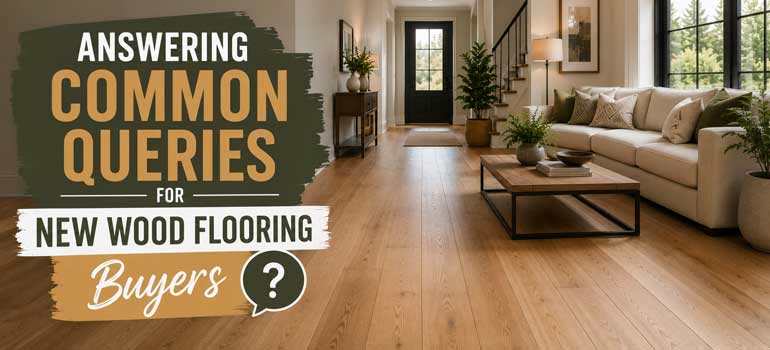
Most people looking at new wood flooring have a general sense of what they like but haven't fully worked out what they actually need. That's completely normal, there's a genuinely wide range of options, and narrowing it down starts with a handful of honest questions about your household and your priorities, not with browsing colours first.
What's Your Household Lifestyle?
Start here, since it narrows the field more than almost anything else. Do you have young children or pets in the house? Is your household generally active or relatively calm? Do you spend most of your time at home, or are you out more than you're in? The answers genuinely steer species and construction choices: a busy household with kids and a dog benefits from a harder, more forgiving species and a durable finish, while a quieter household with older or no children has considerably more freedom to prioritise appearance over sheer toughness.
What's Beneath Your Existing Floor?
This is a practical question that shapes what's actually possible: is your property built on a solid slab, over a crawlspace, or above a basement? Properties with a suspended structure beneath them, or any risk of ground moisture reaching the subfloor, generally do better with engineered wood, which handles humidity and subfloor variation more reliably than solid timber. Knowing this upfront saves time later, since it can rule certain options in or out before you've fallen in love with something that isn't practical for your specific property.
What's Your Interior Style?
Wood flooring spans an enormous range of species, tones, patterns, and finishes, and not all of them suit every interior equally. A pale, minimalist Scandinavian-style room and a warm, traditional period property genuinely call for different directions, undertone, grain intensity, and pattern all matter here, not just colour in isolation. If you already have a clear sense of your interior style, that's worth articulating clearly before comparing options, since it narrows the field considerably faster than working through species one at a time.
How Long Do You Plan To Stay?
This one's worth being honest about, since it genuinely affects how much weight to give personal taste versus broader appeal. If you're planning to stay in the property long-term, choosing purely on what you love makes complete sense. If a sale within the next several years is a realistic possibility, it's worth leaning toward classic, broadly appealing tones rather than a bold, highly personal choice, since wood floor staining always gives you room to adjust the colour later if your circumstances or taste change.
What's Genuinely Flexible In Your Budget?
Before comparing specific products, it's worth being clear with yourself about whether your budget is a hard ceiling or has some genuine flexibility. Solid wood typically costs more upfront but can be refinished repeatedly over decades, which changes the long-term value calculation considerably compared with cheaper alternatives that can't be restored the same way. Knowing where your actual flexibility lies, rather than working it out mid-conversation, makes any consultation considerably more productive.
Buying A Wood Floor: Common Questions
Does my household lifestyle really change which wood species I should choose?
Yes, genuinely. A busy household with children and pets benefits from harder, more forgiving species and durable finishes, while a quieter household has more freedom to prioritise appearance over sheer toughness.
Why does the subfloor type matter before I've even chosen a wood species?
Because it can rule certain constructions in or out entirely. A property with a suspended structure or moisture risk beneath the floor generally needs engineered wood, regardless of which species or colour you're drawn to.
Should I choose a floor based purely on personal taste, or think about resale value too?
It depends on how long you plan to stay. Long-term ownership makes personal taste the priority, while a possible sale within a few years is worth weighing against broader, more classic appeal.
Is it worth being flexible on budget for a wood floor?
It's worth at least understanding where your flexibility genuinely lies. Solid wood costs more upfront but offers decades of refinishing potential, which changes the real long-term value compared with cheaper, non-restorable alternatives.
Call us on 020 7036 0625 or request a free site visit and we'll ask the right questions to help you find the right floor for your home.