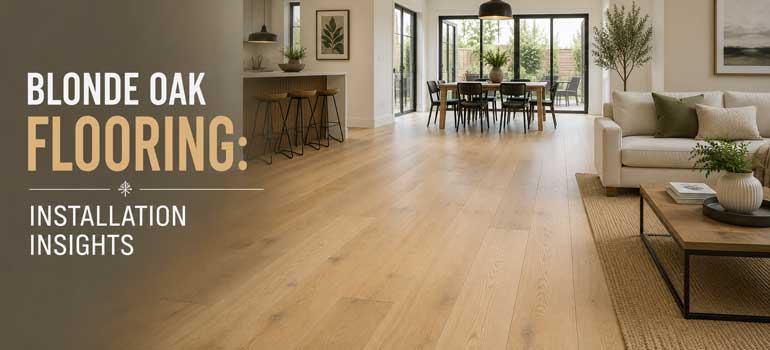
Blonde oak has become one of the most requested looks in flooring, and it's easy to see why: it brings a light, calm, understated feel to a room without going fully stark white. Getting the shade and the construction right for each room matters more than people expect, though, since blonde oak isn't equally suited to every space in a home.
What Actually Makes Oak Read As "Blonde"
Oak's natural colour on its own is a warm mid-brown, so the pale, almost bleached look people mean by "blonde oak" is achieved through the finishing process rather than the timber's raw state. This is usually done through whitewashing or liming, techniques that lift the wood's natural warmth and leave a paler, cooler tone, or through a light, low-pigment stain that mutes the colour without fully bleaching it. The exact effect varies depending on the technique and the oak's own natural undertone, so it's worth seeing a sample on the actual species you're considering rather than judging from a photo alone.
Where Blonde Oak Works Best
Light floors reflect more ambient light than darker ones, which makes blonde oak particularly effective in smaller rooms or spaces with limited natural daylight, opening the room up rather than closing it in. It also suits Scandinavian-influenced and minimalist interiors especially well, since the pale, calm base pairs naturally with clean lines and a restrained colour palette elsewhere in the room.
Kitchens: Go Engineered For Stability
Kitchens bring genuine humidity and temperature swings into the mix, along with the general risk of spills, which makes them a more demanding environment than most other rooms in the house. Engineered oak handles this considerably better than solid timber, thanks to its layered, cross-grain construction resisting the kind of movement solid wood struggles with. Pairing a blonde finish with a UV-filtering oil or lacquer is worth considering too, since light finishes can be more visibly affected by sun-related fading over time than darker ones, and a UV-protective top coat helps the colour stay even for longer.
Bedrooms: More Freedom, Less Risk
Bedrooms see comparatively gentle daily use, which opens up more flexibility on construction. Both solid and engineered oak work well here, and the choice mostly comes down to your subfloor and whether you value the deeper future refinishing potential of solid wood over engineered's easier installation and stability. Either way, blonde oak's soft, calm tone suits a bedroom particularly well, reinforcing the sense of a restful, uncluttered space rather than a bold, dramatic statement.
Hallways And Living Areas: Durability Still Matters
Running blonde oak continuously through hallways and living areas creates a genuinely spacious, unified feel across a home, but these are also the rooms that take the most daily footfall, so the finish needs to hold up to that. A durable lacquer finish is generally the more practical choice for these busier spaces, since it wears better under sustained traffic than a lighter-maintenance oil finish would in the same conditions. If you'd rather keep the softer, more natural look oil gives, it's worth being realistic about the more frequent re-oiling schedule that comes with choosing it for a high-traffic area.
Blonde Oak Questions Worth Asking Before You Buy
Is blonde oak the natural colour of the wood, or is it achieved with a finish?
It's achieved through the finishing process, whitewashing, liming, or a light, low-pigment stain, since oak's natural colour on its own is a warmer mid-brown rather than a pale, bleached tone.
Does blonde oak fade more than darker wood finishes?
It can be more visibly affected by sun exposure over time, since fading shows up differently against a pale base. A UV-filtering finish helps slow this considerably compared with a standard, unprotected coating.
Is solid or engineered oak better for a blonde finish?
The finish itself works equally well on either. The choice comes down to the room, engineered generally suits kitchens and spaces with humidity or underfloor heating better, while solid works well in more stable rooms like bedrooms.
Does blonde oak work in a small, dark room, or does it need natural light to look right?
It genuinely helps in smaller or darker rooms specifically, since light floors reflect more ambient light and make the space feel more open, which is one of blonde oak's biggest practical advantages.
Call us on 020 7036 0625 or request a free site visit and we'll help you get the right blonde oak shade and finish for each room.