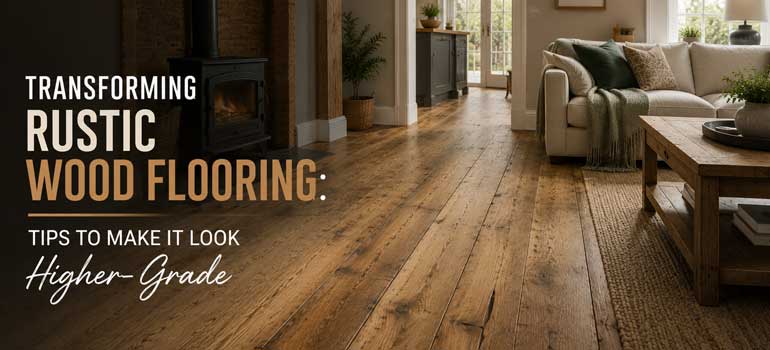
Wood flooring gets sorted into grades based purely on appearance, not quality. Prime sits at one end with a clean, uniform look and minimal visible knots or grain variation, while rustic sits at the other, full of natural character, knots, colour variation, and mineral streaks. Neither is better built or more durable than the other; it's genuinely a style choice, and the price difference reflects how much of the tree's natural variation is left visible rather than any difference in how the wood performs.
If you've ended up with a rustic floor and would rather it read as calmer and more refined, here's what actually helps.
What The Grades Actually Mean
Most manufacturers use some version of four categories: Prime, the most uniform and consistent look with very few visible features; Select, slightly more character but still fairly clean; Natural, a genuine mix of tones and small knots; and Rustic, the most varied and characterful grade, with prominent knots, colour variation, and sometimes small natural splits or mineral streaks. Understanding where your floor sits on that scale helps set realistic expectations, since a rustic floor won't ever look identical to prime, but its overall impression can be shifted considerably.
Filling And Smoothing Larger Features
Some of a rustic floor's character comes from genuinely larger features, small knot holes, splits, or gaps that catch the eye more than fine grain variation does. Colour-matched gap and knot filling smooths these out without changing the wood underneath, and it's often the single biggest step toward a calmer overall look, since it's usually the larger, more prominent features doing most of the work in making a floor read as rustic rather than the finer grain patterns.
Choosing A Stain That Calms The Look
Stain choice makes a genuine difference here. A uniform, mid-to-light stain tends to reduce the visual contrast between a knot or a colour variation and the surrounding wood, which softens how much those features stand out. Very dark stains, by contrast, often increase contrast against lighter natural features and can make character marks more noticeable rather than less. Professional wood floor staining carried out after a proper sanding gives the most even, considered result, since DIY staining on an already-characterful floor can easily end up patchy or uneven across the different grain patterns.
Sheen Level Changes The Read Of The Floor
This is a genuinely underused lever. A higher sheen finish tends to read as more formal and refined, which pairs naturally with the calmer look you're going for, while a very matte or raw-looking finish tends to emphasise a floor's natural, rustic texture. Moving from a matte oil finish to a satin or semi-gloss lacquer, where appropriate for the room, can shift the overall impression of the floor without touching the timber itself.
Leaning Into It Instead: Furniture And Rugs As A Style Choice
It's worth saying plainly: not everyone needs to fight a rustic floor's natural character. If the rustic look genuinely doesn't appeal, bold, statement furniture pieces can shift the room's focal point away from the floor entirely, and strategically placed rugs cover the areas where character marks are most visible while still leaving the rest of the floor on show. This isn't a lesser option, plenty of interiors are built specifically around a rustic floor's natural warmth. It's simply a different, equally valid direction from trying to visually calm the floor down.
Frequently Asked Questions
Is rustic grade wood flooring lower quality than prime grade?
No, not in terms of durability or performance. The grading system is purely about appearance: how much natural character, knots, and colour variation is visible, not about how well the floor is built or how long it will last.
Can a rustic floor actually be made to look exactly like prime grade?
Not exactly, since the underlying timber's natural character remains, but filling prominent features, choosing the right stain, and adjusting the finish sheen can meaningfully calm the overall look and shift it noticeably closer to a prime aesthetic.
Does a darker stain help hide a rustic floor's character marks?
Generally not. Dark stains tend to increase contrast against lighter natural features, which can make knots and colour variation more noticeable rather than less. A lighter, more uniform stain usually softens that contrast better.
Is filling knots and gaps in a rustic floor worth doing before staining?
Yes, it's usually the single most effective step, since larger visible features like knots and gaps tend to stand out more than fine grain variation. Addressing those first gives the stain a much more even surface to work with.
Call us on 020 7036 0625 or request a free site visit and we'll advise on the right filling, staining, and finish combination for your floor.