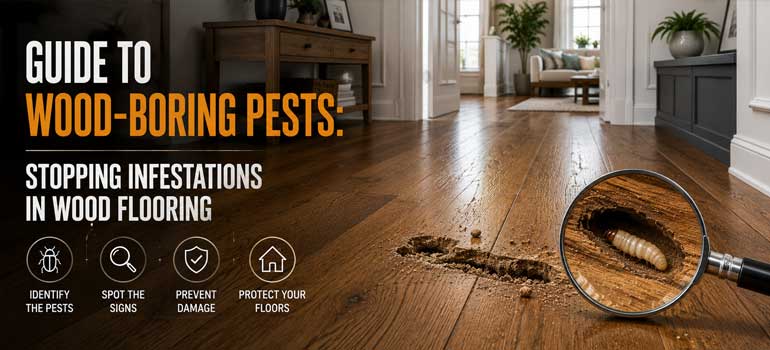
Wood flooring doesn't usually need much beyond a regular cleaning routine, but every so often something more serious turns up: small round holes, fine powdery dust, and the unmistakable sign of a wood-boring pest at work. Knowing what you're actually dealing with makes a real difference to how it gets treated.
The Main Culprits You'll Actually Find In The UK
A handful of species account for the vast majority of wood-boring damage in UK properties:
- Common furniture beetle, better known as woodworm, is by far the most widespread of the group. It attacks softwood and the sapwood of hardwoods, and leaves small round exit holes along with fine bore dust.
- Deathwatch beetle favours older hardwood, particularly oak, that's already affected by damp or fungal decay. It's more common in older buildings than new ones, and leaves noticeably larger holes than common furniture beetle.
- Powder post beetle specifically targets the starch-rich sapwood of hardwoods like oak and ash, which makes flooring and joinery a natural target. Left untreated, it can reduce affected timber to fine powder.
- House longhorn beetle is a less common pest overall, and its impact tends to be geographically concentrated in parts of Surrey and Hampshire, mainly affecting roof timbers rather than floors specifically. It's not something most London properties need to worry about.
- Wood-boring weevil is a secondary pest that specifically targets timber that's already damp or decaying, and it tends to disappear on its own once the underlying moisture problem is resolved.
Spotting An Active Infestation
Every wood-boring pest leaves holes, but not every hole means an active, ongoing problem, some may be old damage from years ago. A few signs point specifically to current activity:
- Fine, powdery bore dust around or beneath the holes, which suggests recent tunnelling rather than old damage.
- Fresh, clean-edged holes, round or oval depending on the species, rather than discoloured or weathered ones.
- Dead beetles near the affected timber, particularly if found repeatedly over time.
A magnifying glass is genuinely useful here, since the difference between a fresh hole and an old one is often down to how clean and sharp the edges look.
Why Moisture Is Almost Always Behind It
Most wood-boring pests are drawn to timber that's damp or already showing signs of decay, healthy, dry wood is far less appealing to them. This is why addressing the underlying moisture, poor ventilation, a leaking pipe, or an old roof issue matters just as much as treating the insects themselves. Some species, wood-boring weevil in particular, will largely resolve on their own once the damp conditions that attracted them in the first place are properly fixed.
What To Do If You Find Signs Of Infestation
Treating an active infestation properly means addressing both the insects and their eggs and larvae, which can survive inside timber for a number of years depending on the species and how damp the wood remains. This is genuinely a job for pest control professionals, who have access to the right chemical treatments and the expertise to confirm whether an infestation is actually active before recommending anything.
Once the pest issue itself has been properly treated, that's where flooring specialists come back into the picture. Damaged sections often need floorboard repair to replace the worst-affected timber, and the rest of the floor typically benefits from sanding and refinishing to restore an even, healthy-looking surface once the underlying problem is resolved. In cases where damage is extensive, a full solid wood floor replacement may be the more sensible option than trying to patch a heavily affected area.
Frequently Asked Questions
Is every hole in a wood floor a sign of an active infestation?
Not necessarily. Old, weathered holes without fresh bore dust nearby usually indicate historic damage rather than an ongoing problem, though it's worth having it checked properly if you're unsure.
Can wood-boring insects be treated without professional help?
It's not recommended for anything beyond a very minor, confirmed case. Treating eggs and larvae properly, not just visible adult insects, requires the right products and expertise, which is squarely pest control territory rather than a DIY job.
Does moisture really attract wood-boring beetles?
Yes, significantly. Most species are drawn to damp or decaying timber, which is why fixing the underlying moisture source, alongside any pest treatment, is essential to stop the problem recurring.
Can a floor be repaired after a beetle infestation, or does it need full replacement?
It depends on the extent of the damage. Isolated affected boards can often be replaced individually, with the rest of the floor sanded and refinished. Widespread damage across a large area may make full replacement the more practical option.
Call us on 020 7036 0625 or request a free site visit once any infestation has been treated, and we'll assess and restore the affected flooring.