Monday - Friday 07:30 - 17:30, Saturday 07:30 - 16:00
Floorboards Repair in London
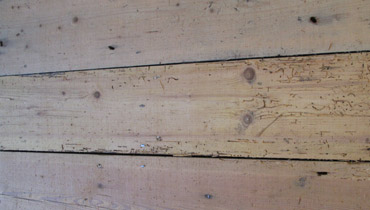
Floorboards repair is the targeted fixing, securing, or replacement of individual damaged, loose, squeaking, or structurally compromised tongue-and-groove timber boards in an existing floor — without lifting or disturbing the surrounding boards that are in acceptable condition.
Floorboard repair is distinct from floorboards sanding, which restores the entire floor surface through sanding and refinishing, and from floorboards fitting, which involves laying a new floor. Repair work is targeted and surgical — addressing the specific boards or sections that are causing a problem while leaving the rest of the floor undisturbed.
London's Victorian and Edwardian terraced houses have the highest concentration of period pine floorboards of any city in the UK, and the range of repair issues we encounter across these properties is wide. A floor that is structurally sound and in reasonable overall condition does not need a full sand or replacement — targeted repair resolves the specific problem at a fraction of the cost, and in most cases, the repaired floor can be maintained and lived on for many more years before any further intervention is needed.
Flooring Services London carries out floorboard repairs across London for residential and commercial clients, as part of our full wood floor repair service. Original floorboard repairs are priced from £12/metre, excluding the cost of replacement seasoned pine boards where needed. Our floor restoration price guide covers all charges in full.
Common Floorboard Problems We Repair in London
Squeaking and Creaking Boards
Squeaking floorboards are the most common repair complaint we receive from London homeowners, and the most frequently misunderstood. A squeak is caused by friction — one surface moving against another under load. The three most common sources in London period properties are:
- Board-to-board friction — the tongue of one board rubbing against the groove of its neighbour as both move slightly under foot traffic. Most common where boards have dried and shrunk, leaving the tongue-groove joint loose
- Board-to-joist friction — a board that is not firmly fixed to the joist beneath rocks slightly under load, causing the nail or fixing to create a squeaking sound as the board lifts and settles
- Board-to-nail friction — a nail that has worked partially loose over decades causes the board to move fractionally with each step, generating a creak at the nail location
Identifying the exact source of a squeak is the critical first step — applying the wrong fix to the wrong cause produces no improvement. We locate the source precisely before recommending and applying any repair.
Where underfloor access is available — through a basement, crawl space, or accessible void — squeak elimination from below is the most effective approach. Screwing the board firmly down to the joist from below, or adding timber blocking between joists to support a section of board that has no fixing directly beneath it, eliminates the movement entirely without any visible fixings on the floor surface above.
Where only above-floor access is possible, the board is secured using concealed fixings countersunk through the face of the board and filled, or using purpose-made staircase-type fixings driven at an angle through the board edge. Powdered graphite or PTFE lubricant applied between boards is used for friction-based squeaks that do not require mechanical fixing.
Loose and Lifting Boards
Boards that have become loose from their fixings — lifted at the edges, springing underfoot, or rocking when walked on — need to be re-secured before they sustain further damage or create a trip hazard. Loose boards in London period properties are most commonly caused by:
- Original cut nails that have worked loose over decades as the subfloor timber has moved
- Previous repair attempts using the wrong fixing type or length for the specific joist depth
- Joist movement or rot that has left sections of board without adequate support beneath
- Boards that were never properly fixed at installation — a common finding in extensions and conversions of varying quality across London
Re-securing loose boards uses appropriate screws or ring-shank nails driven at the correct angle into the joist beneath, with countersunk fixings filled flush where visible. Where the joist itself is the source of the problem — inadequate, damaged, or missing — joist repair or blocking is carried out before the board is re-fixed.
Damaged, Rotten, or Missing Boards
Individual boards that are cracked through their width, split along the grain, rotted from moisture ingress, or missing entirely need to be replaced. The replacement process involves:
- Carefully lifting the affected board without damaging its neighbours — which in tongue-and-groove construction requires cutting the tongue along both long edges before lifting
- Assessing the joist and subfloor beneath for any moisture or structural issues that caused or contributed to the damage
- Cutting a replacement board to the exact length and fitting it securely to the joists beneath
- Filling any minor gaps at the joints with flexible filler and finishing to blend with the surrounding floor
Matching replacement boards to existing Victorian pine is one of the most important aspects of floorboard repair in London period properties, and one we do regularly. The standard Victorian pine board profiles — 75mm, 100mm, and 125mm face widths in 19–22mm thickness — are available in new softwood, but new pine does not match the density, colour, or grain character of century-old original boards. Where visual matching is important, we source reclaimed Victorian and Edwardian pine in the correct profile — timber that has been seasoned for over a century and blends far more naturally into an existing original floor.
Wide Gaps Between Boards
Gaps between floorboards that are too wide for standard gap filling — over 10mm — or gaps that have developed because a board has shrunk significantly or been poorly fitted, sometimes require a repair approach rather than simple filling. Options include:
- Re-laying a section of floor — lifting and relaying a run of boards with slightly tighter spacing, eliminating the gaps by redistributing the space across the full width of the room
- Inserting a new board — where a gap is concentrated in one location, a new board of appropriate width can be fitted into the space
- Strip filling — for gaps between 6mm and 15mm, fitted timber slivers glued into place, which is a more durable solution than resin filler in wider gaps
We assess the gap situation during the site visit and recommend the most practical and cost-effective approach.
Water-Damaged and Stained Boards
Water damage to individual boards — from leaking radiators, burst pipes, window condensation, or rising damp in ground-floor rooms — typically manifests as grey or black staining, cupping (the board edges lifting upward), or in severe cases structural rot. The repair approach depends on the extent and depth of the damage:
- Surface staining that has not penetrated deeply through the board can often be addressed through localised sanding combined with oxalic acid treatment to neutralise the grey or black discolouration before refinishing
- Cupped boards that have lifted at the edges due to moisture absorption are often left to dry and re-acclimatise once the moisture source is resolved — boards frequently return to flat as they dry out, at which point they can be sanded flush
- Structurally rotted boards must be replaced entirely — rot cannot be sanded or treated out of timber that is structurally compromised
We always identify and confirm the source of moisture damage before carrying out any repair. Repairing boards without addressing the underlying damp issue simply results in the same damage recurring.
Not sure whether your floor needs repair, sanding, or replacement? Call us on 020 7036 0625 or book a free site visit — we assess the floor honestly and recommend only the work that is genuinely needed.
Repair and Sanding — When to Combine Them
Floorboard repair and floor sanding are frequently combined in a single project — and doing so produces the best result. The correct sequence is always:
- Structural repairs first — loose boards secured, damaged boards replaced, squeak sources addressed, water damage repaired
- Sanding — the entire floor sanded to level the surface, blend replacement boards with original boards, and remove surface damage
- Gap filling — flexible resin or timber slivers applied after sanding and before finishing
- Finishing — two or three coats of the specified finish applied across the complete floor
Attempting to sand before repairs are completed produces poor results — an unsecured board moves under the sander; a newly replaced board stands proud of its neighbours until sanded flush. Combining both services in the right sequence produces a consistent, finished floor where repairs are not visible in normal use.
Where a floor needs only targeted repair — a single squeaking board, two or three damaged sections — without a full sand, we carry out the repair work and match the finish as closely as possible to the surrounding floor. An exact match between a repaired area and an aged original floor is rarely achievable, but a well-executed repair is not noticeable in normal use.
Floorboards Repair Costs in London
| Service | Price |
|---|---|
| Original floorboard repairs | from £12/metre |
| Solid wood / engineered floor repairs | from £375/day |
| Gap filling — resin (up to 5mm) | from £7/m² |
| Strip gap filling (over 5mm) | from £15/m² |
| Floor sanding, buffing & varnishing | from £25/m² |
All prices shown are exclusive of VAT. Floorboard repair pricing is per linear metre of board repaired — the exact cost depends on the number of boards, the extent of damage, the access situation, and whether reclaimed or new replacement timber is required. All prices confirmed in writing after the free site visit. Properties within the London ULEZ and Congestion Charge zones may include a daily access surcharge stated explicitly in every quote.
Frequently Asked Questions — Floorboards Repair in London
Can you fix squeaking floorboards without lifting them? In most cases yes — and this is always our preferred approach where possible. From above, we use concealed fixings, countersunk screws, or lubricant treatments depending on the source of the squeak. From below, where basement or void access is available, screwing boards down to joists from underneath is the most effective and completely invisible method. We locate the squeak source precisely before recommending the repair approach.
Can you match Victorian pine replacement boards to my existing floor? Closely, yes. We source reclaimed Victorian and Edwardian pine in the correct profile — 75mm, 100mm, or 125mm face width in 19–22mm thickness — which is significantly closer in density, colour, and grain to original boards than new softwood. New boards will always be slightly different in tone, but this difference is greatly reduced when the complete floor is sanded as part of the same project, as the sanding process brings the entire surface to the same level before finishing.
How do I know if a loose board is a surface issue or a joist problem? A board that simply rocks or springs underfoot without squeaking is usually a fixing issue — the board has worked loose from the joist but the joist itself is sound. A board that sags noticeably or has a larger area of movement around it may indicate a joist issue beneath. We check joist condition from above where possible and from below where access allows, and confirm the cause before recommending any repair.
Can you repair floorboards in a room that is still furnished? Yes — we work in occupied and furnished London properties regularly. For targeted repairs involving only a few boards, most furniture can remain in place and we work around it. For repairs requiring access to a larger section of floor, we ask that the relevant area is cleared in advance. We confirm the preparation requirements during the site visit.
Is it worth repairing individual boards or should I replace the whole floor? For structurally sound original Victorian and Edwardian pine floors with isolated damage in a few boards, targeted repair is almost always the more appropriate and cost-effective choice. Original period timber is irreplaceable — its density, grain, and character cannot be matched by new softwood, and replacing a largely sound floor because of a few damaged sections is rarely justified. We give an honest assessment during the site visit and recommend replacement only when the extent of damage is so widespread that targeted repair is no longer practical.
Call us on 020 7036 0625 or request a free quote online — we respond to all floorboard repair enquiries the same working day.