Monday - Friday 07:30 - 17:30, Saturday 07:30 - 16:00
Solid Wood Floor Repair in London
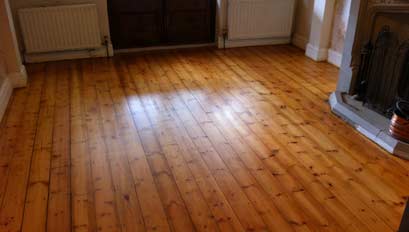
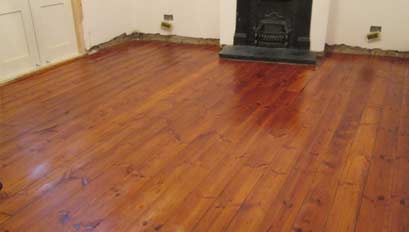
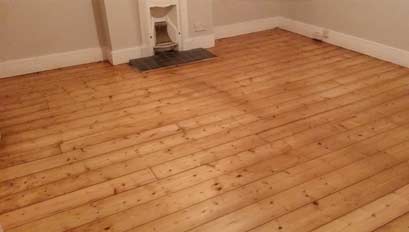
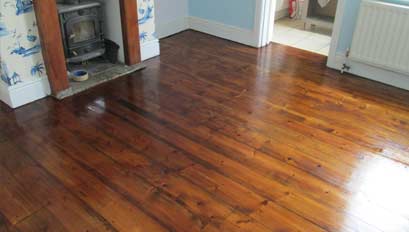
Solid wood flooring is one of the most durable floor types available — a well-laid solid hardwood floor can last well over a century in a London home, and can be sanded and refinished multiple times throughout its life. But even the most robust solid wood floor is not immune to damage. Scratches, gaps, warped boards, water staining, squeaks, and surface wear are all common issues in London's period housing stock, and most of them are fully repairable without the cost or disruption of full floor replacement.
Flooring Services London has been repairing solid wood floors across London for over 20 years, working in Victorian terraces, Georgian townhouses, Edwardian mansion flats, and modern residential and commercial properties throughout all London boroughs. Our wood floor repair service covers everything from minor surface scratches to full board replacement and structural subfloor work — assessed honestly and priced fairly before any work begins.
What Is Solid Wood Floor Repair?
Solid wood floor repair covers any intervention that restores the appearance, stability, or structural integrity of a solid hardwood, pine, or oak floor without full replacement. Unlike engineered floor repair — where the thin wear layer limits the options available — solid wood boards are typically 18–22mm thick, giving far more scope for sanding, re-profiling, filling, and mechanical repair work.
The appropriate repair approach depends entirely on the type and extent of the damage, the species of timber, the current finish, and the age of the floor. We assess every job individually and recommend only the work that is genuinely needed.
Types of Solid Wood Floor Repair We Carry Out in London
Floor Scratch Repair
Surface scratches are the most common complaint we receive about solid wood floors. Light scratches that have only affected the finish — not penetrated into the timber itself — can often be repaired without any sanding at all, using a compatible finish touch-up or a localised recoat. Deeper scratches that have cut into the wood fibres require localised sanding and refinishing to level the surface before a new finish coat is applied.
For scattered scratches across a large area, a full floor sanding and refinishing is often more cost-effective than treating each scratch individually. We will advise honestly on which approach is appropriate during the site visit.
Floor Board Repair
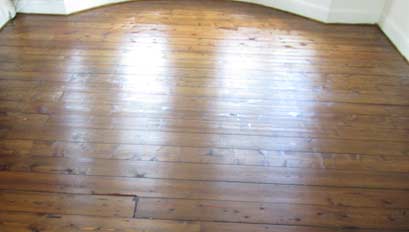
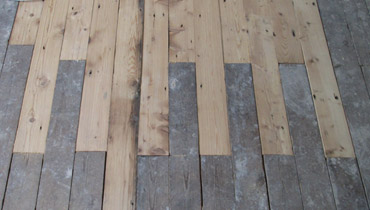
Individual boards that are cracked, split, rotted, heavily stained, or structurally compromised can be lifted and replaced without disturbing the surrounding floor. This is a technically demanding job — the replacement board must be cut to fit, secret-nailed or glued to the subfloor, and finished to match the surrounding boards in species, grain direction, colour, and sheen level.
For London's Victorian and Edwardian period floors, sourcing a matching replacement board often requires reclaimed timber. We work with reclaimed flooring suppliers to find the closest available match in species, width, and profile, and we use staining and finishing techniques to blend the repair into the existing floor as seamlessly as possible.
Gap Filling
Gaps between solid wood floorboards are extremely common in London's period housing stock. Solid timber expands and contracts with seasonal changes in temperature and humidity — central heating in winter dries the boards, causing them to shrink and pull apart; summer humidity brings them back. Over decades, this repeated movement can leave noticeable gaps, particularly in Victorian and Edwardian pine floors where the boards were often not kiln-dried before laying.
We offer two main gap filling approaches for solid wood floors:
Flexible resin filler — blended with fine sawdust produced during the sanding process to match the board colour closely. Applied after the main sand and before finishing. Suitable for gaps up to approximately 5–6mm. Allows for continued seasonal movement without cracking.
Timber slivers — thin strips of matching hardwood glued into wider gaps. More durable than resin for larger gaps, but requires careful colour and species matching. Particularly appropriate for London period properties where the floor will be on display and cosmetic quality is a priority.
Gap filling is always carried out as part of a complete sanding and refinishing project — it is not effective as a standalone repair without sanding, as the filler needs to be sanded flush with the surrounding boards to produce a clean result.
Squeak and Movement Repair
Squeaking floorboards are a common issue in London's older housing stock, caused by boards moving against each other, against the joists beneath, or against fixings that have worked loose over time. In most cases, the source of the squeak can be located and eliminated without lifting the boards.
Where access from below is possible — through a ceiling void or basement — we can secure boards to joists from underneath using appropriate screws and blocking, which is the most effective and least disruptive approach. Where access from above is the only option, we use concealed fixings countersunk through the board face and filled, or apply lubricants and powdered graphite between boards to eliminate the friction causing the noise.
Water Damage and Stain Repair
Water is the most damaging agent for solid wood floors. Common sources of water damage in London properties include leaking radiators, overflowing baths, condensation around poorly sealed windows, and rising damp in basement or ground-floor rooms.
The extent of the repair work depends on how deep the water penetration has gone and how long it was left before being addressed:
Surface staining — grey or black water marks that have penetrated the finish but not deeply into the timber can often be removed through localised sanding and oxalic acid treatment before refinishing.
Cupped or bowed boards — boards that have absorbed moisture and warped upward at the edges (cupping) often flatten out once the moisture source is eliminated and the floor is allowed to dry fully. We assess whether boards have returned to flat before sanding — sanding a cupped floor too early removes material from the edges and leaves a convex surface once the board flattens.
Rotted or deeply stained boards — boards with structural rot or staining that goes full depth through the board require replacement. We identify and lift affected boards, treat any subfloor damp before relaying, and fit matching replacement timber.
We always identify and confirm the source of water damage before carrying out any repair work — repairing a floor without addressing the underlying damp issue will only result in the same damage recurring.
Structural and Subfloor Repair
Sometimes the cause of a floor problem lies not in the boards themselves but in the subfloor beneath. Joist movement, inadequate fixing, subfloor levelling issues, and damp in the substructure can all cause boards to lift, move, or deteriorate over time.
Where structural subfloor work is needed — joist sistering, noggin installation, board re-fixing, or subfloor levelling — we carry this out as part of the repair process before addressing the surface of the floor. A solid wood floor is only as stable as what it is fixed to.
Solid Wood Floor Repair Process
1. Free site visit and assessment — We visit the property, examine the floor in detail, identify the cause and extent of all damage, and provide a fixed-price written quote. We will always tell you if a repair is not worth doing relative to the cost of replacement.
2. Preparation — Furniture moved, protruding fixings addressed, and any structural or subfloor work completed before surface work begins.
3. Repair work — Board replacement, gap filling, squeak elimination, and water damage treatment carried out in the correct sequence before any sanding or finishing begins.
4. Sanding — Where sanding is part of the repair scope, we use dust-free equipment that captures up to 99% of airborne particles. We use floor sanding as the method to level repaired areas, blend replacements into the surrounding floor, and prepare the entire surface for a consistent finish.
5. Finishing — The appropriate finish is applied to the entire floor or to the repaired section, matched to the existing finish where a full resand is not part of the scope. Finish options include water-based lacquer, hard-wax oil, Danish oil, and wax — we advise on the most appropriate choice for your floor type and use pattern. See our floor sealing page for full details on finishes.
6. Aftercare guidance — Written aftercare instructions and product recommendations are left with you at the end of every job.
Solid Wood Floor Repair Costs in London
Repair costs vary significantly depending on the type, extent, and complexity of the damage. As a general guide:
| Repair type | Typical cost |
|---|---|
| Surface scratch treatment (localised) | from £375/visit |
| Single board replacement (inc. matching and finishing) | from £375/day |
| Gap filling (per room, as part of a sand) | from £7/m² (resin) / from £15/m² (strip) |
| Water damage repair (localised, surface staining) | from £375/day |
| Full floor repair and resand (per m²) | from £25/m² |
*All prices shown are exclusive of VAT.
All prices are assessed on site and confirmed in writing before work begins. London ULEZ and Congestion Charge zones may include a daily access surcharge, stated explicitly in the quote.
Frequently Asked Questions — Solid Wood Floor Repair in London
Is it worth repairing a solid wood floor rather than replacing it?
In almost all cases, yes. Solid hardwood boards are typically 18–22mm thick and can be sanded multiple times over their lifetime. Even a badly damaged Victorian pine floor with gaps, staining, and surface wear will usually cost significantly less to repair and refinish than to replace — and the result, properly done, is often better than new flooring. We will tell you honestly during the site visit if we believe replacement is genuinely the more sensible option.
Can you match replacement boards to my existing Victorian or Edwardian floor?
We work regularly with reclaimed timber suppliers across London to source matching boards for period floors. Species, width, thickness, and profile can all be matched closely in most cases. Colour is brought into line through staining and finishing. An exact match is rarely achievable — timber from different sources and different ages will always have some variation — but a skilled repair blends into the surrounding floor to the point where it is not noticeable in normal use.
My floor has gaps in winter but closes up in summer — do I need to repair it?
Seasonal movement is normal in solid wood floors and does not necessarily need to be repaired. If the gaps are small (under 2–3mm) and close up completely in summer, filling them is optional and largely cosmetic. If gaps are wider, remain open year-round, or are causing draughts or trip hazards, gap filling is worth doing — ideally with a flexible resin filler that can accommodate continued seasonal movement without cracking.
Can you repair a solid wood floor that has been water-damaged?
Yes, in most cases. The extent of the repair depends on how severe and how prolonged the water exposure was. Surface staining and minor cupping can usually be remedied through sanding. Structural rot or full-depth staining requires board replacement. We always identify and confirm the moisture source has been resolved before carrying out any repair — without addressing the cause, the same damage will recur.
Do you repair solid wood floors in commercial properties in London?
Yes. We carry out solid wood floor repair in offices, restaurants, retail spaces, schools, gyms, and other commercial environments across London. For commercial clients, we work around trading hours where possible and can provide documentation, including method statements, risk assessments, and insurance certificates on request.
Call us on 020 7036 0625 or request a free quote online — all solid wood floor repair enquiries receive a same-day response.