Monday - Friday 07:30 - 17:30, Saturday 07:30 - 16:00
Parquet Floor Repair in London
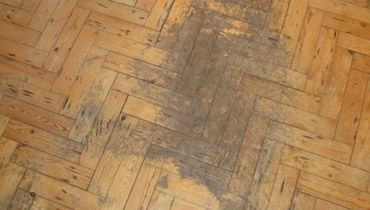
Parquet floor repair is the process of restoring damaged, loose, or deteriorating patterned wood flooring — including herringbone, chevron, basket weave, and block parquet — by re-adhering or replacing individual blocks, stabilising the subfloor, filling gaps, and refinishing to return the floor to a consistent, even, and structurally sound condition.
Parquet is one of the most technically demanding floor types to repair well. The patterned layout of individual blocks — typically laid in herringbone or basket weave patterns across hallways, reception rooms, and landings — means that damage to one section affects the visual continuity of the entire floor. A single missing or mismatched block in the middle of a herringbone field is immediately visible. Getting the repair right requires knowledge of parquet construction, access to matching reclaimed timber, and the specialist sanding techniques that patterned floors demand.
Flooring Services London has been repairing parquet floors across London for over 20 years. London's Victorian, Edwardian, and inter-war housing stock contains an exceptional concentration of original parquet — much of it still in excellent structural condition despite being 80 to 120 years old — and we work regularly with these floors in properties across all London boroughs. Our wood floor repair service covers all aspects of parquet restoration, from targeted block replacement to full floor re-laying and refinishing.
Why London Properties Have So Much Original Parquet
Parquet flooring was at the height of its popularity in London from the 1880s through to the 1930s. The Edwardian period in particular — roughly 1900 to 1914 — saw parquet installed as standard in the hallways, dining rooms, and drawing rooms of middle-class and upper-middle-class London houses across Kensington, Chelsea, Belgravia, Mayfair, Islington, Hackney, and the inner suburbs. The same period saw widespread installation in mansion flat buildings, mansion conversions, and the smarter purpose-built apartment blocks in areas like Marylebone, Bayswater, and Paddington.
Most of this original parquet was laid in solid oak blocks, typically 230mm x 70mm x 20mm in a standard herringbone pattern, directly onto a bitumen-coated concrete or solid subfloor, or onto a batten-and-board subfloor in timber-framed buildings. The blocks are dense, tight-grained Edwardian oak — a timber quality that is not readily available today — and they were designed to be sanded and refinished repeatedly over generations. Many London parquet floors that we restore have never been properly sanded or refinished since they were first laid.
Common Parquet Floor Problems We Repair in London
Loose and Lifted Blocks
The most common parquet repair we carry out in London. Original Edwardian parquet was laid with bitumen adhesive — a material that remains effective for decades but eventually dries out, becoming brittle and losing its bond. As the adhesive fails, individual blocks or sections begin to lift at the edges, become loose underfoot, and eventually detach entirely. Walking on loose parquet blocks accelerates the damage — a loose block rocks on the subfloor, stressing the adhesive bond of neighbouring blocks and spreading the failure across a wider area.
Repairing loose parquet involves lifting the affected blocks cleanly, removing old adhesive residue from both the block face and the subfloor, assessing and repairing the subfloor surface where necessary, and re-adhering the blocks with a modern flexible wood flooring adhesive. Modern adhesives — such as Bona R848, a moisture-curing polyurethane — form a far stronger and more durable bond than the original bitumen and allow for a degree of seasonal movement in the timber. Where the subfloor itself has deteriorated, levelling compound or localised repair is carried out before re-laying begins.
Missing and Damaged Blocks
Blocks that have been lost, broken, or too badly damaged to re-lay require replacement. Sourcing matching replacement parquet blocks for London's original Edwardian floors is one of the most important and most challenging aspects of the repair. The standard Edwardian herringbone block — 230mm x 70mm x 20mm solid oak — is no longer produced in the same grade of timber, and new reproduction parquet does not match the density, colour, and grain character of century-old material.
We maintain a stock of reclaimed Edwardian and Victorian parquet in the most common block sizes and timber species — primarily oak and pitch pine — sourced from demolished or renovated London properties. For less common block sizes or unusual patterns, we work with specialist reclaimed flooring suppliers to find the closest available match. Colour differences between new and original blocks are addressed through staining and careful finish matching during the final sanding and refinishing stage.
Gaps Between Parquet Blocks
Gaps in parquet floors occur for two main reasons: seasonal timber movement (blocks expand and contract with changes in humidity, and over many decades of this cycle, small cumulative gaps develop) and adhesive failure (where blocks have partially lifted and settled back in a slightly different position, leaving micro-gaps at block joints).
Small gaps in parquet — up to 1–2mm — are often best left alone, as flexible filler in very small gaps can look worse than the gap itself. Wider gaps, particularly those that run consistently along the joint lines of a herringbone pattern, are filled with a flexible resin mixed with fine oak sawdust produced during the sanding process, coloured to match the block faces as closely as possible. Gap filling in parquet is always carried out after the main sanding stage and before the final finish coats are applied.
Cupped, Bowed, or Uneven Blocks
Parquet blocks that have absorbed moisture become unstable — they cup upward at the edges, bow in the centre, or lift unevenly from the subfloor. This is most common in London basement and ground-floor rooms where moisture can rise through or around a solid subfloor, and in rooms that have experienced water leaks or flooding.
The repair approach for moisture-damaged parquet depends on the extent and duration of the moisture exposure. Blocks that have lifted and moved significantly may need to be fully re-laid after the subfloor is dried and treated. Blocks that have cupped but remain adhered are often left in place to re-acclimatise once the moisture source is removed — cupped parquet frequently returns to flat as it dries out, after which it can be sanded level. Sanding cupped parquet before it has fully dried removes material from the block edges and leaves a convex surface once drying is complete. We always allow adequate drying time and measure moisture content before committing to sanding.
Surface Wear, Staining, and Finish Failure
Parquet that is structurally sound but showing surface wear, staining, or finish breakdown — cloudy lacquer, worn patches in high-traffic zones, black water staining around door thresholds — can be fully restored through parquet floor sanding and refinishing. The sanding process for parquet is distinct from standard floorboard sanding: the block pattern means the sanding direction must run diagonally across the herringbone field, typically at 45 degrees to the main laying direction, to avoid sanding against the grain of individual blocks and causing tearing or chatter marks.
We use belt and drum sanders for the main field area, edge sanders along the perimeter, and hand-held oscillating tools for corners and doorway thresholds where machine access is limited. After the main sand, gap filling is carried out where needed, and the finish coats are applied. See our floor sanding page for full details on the sanding process and available finishes.
Parquet Floor Repair Process
1. Free site visit and assessment — We visit the property, examine the parquet in detail, identify all areas of loose, missing, or damaged blocks, assess subfloor condition and moisture levels, and provide a fixed-price written quote. We will always tell you honestly if the extent of the damage makes full re-laying more cost-effective than targeted repair.
2. Block lifting and subfloor preparation — Affected blocks are lifted cleanly, old adhesive is removed from block faces and subfloor, and the subfloor is assessed for level, damp, and structural integrity. Levelling compound or damp-proof membrane is applied where needed before re-laying begins.
3. Block replacement and sourcing — Replacement blocks sourced from reclaimed stock or specialist suppliers. Block size, timber species, and cutting direction matched as closely as possible to the original.
4. Re-laying and adhesion — Blocks re-laid using modern flexible wood flooring adhesive, checked for level and pattern alignment throughout. Temporary weighting is applied where needed during curing.
5. Sanding — Full floor sanded diagonally across the herringbone pattern using professional equipment with dust extraction capturing up to 99% of airborne particles. Edge and corner sanding completed by hand where necessary.
6. Gap filling — Flexible resin filler blended with sanding dust applied to gaps between blocks before the final finish coats.
7. Finishing — Two or three finish coats applied, depending on the product specified. Finish options include water-based lacquer (Bona Mega, Bona Traffic HD), hard-wax oil (Osmo Polyx, Bona Craft Oil), Danish oil, and wax. For original Edwardian parquet, we typically recommend a hard-wax oil or penetrating oil finish — it enhances the natural grain of the old timber and is easier to maintain and spot-repair than lacquer. See our floor sealing page for full details.
8. Aftercare guidance — Written care instructions and product recommendations provided at the end of every job.
Parquet Repair Costs in London
| Repair type | Typical cost |
|---|---|
| Loose block re-laying (per m²) | from £30/m² |
| Full parquet re-lay (per m²) | from £30/m² |
| Gap filling (as part of a sand) | from £7/m² (resin) / from £15/m² (strip) |
| Full repair, sand and refinish (per m²) | from £25/m² (sanding) + from £30/m² (repairs) |
*All prices shown are exclusive of VAT.
Costs vary based on the extent of damage, block sourcing difficulty, subfloor condition, and property location. Properties within the London ULEZ and Congestion Charge zones include a daily access surcharge, stated explicitly in the written quote. All prices are confirmed in writing before work begins.
Frequently Asked Questions — Parquet Floor Repair in London
Can you repair parquet that has been covered by carpet for decades?
Yes — and this is one of the most rewarding jobs we carry out. Parquet that has been under carpet is often in surprisingly good structural condition, protected from foot traffic and UV light. The main issues are typically adhesive drying out (causing looseness in sections) and residual carpet adhesive or underlay tacking strips at the perimeter. We assess the floor fully before committing to a repair and sanding approach, and in most cases, the result is exceptional given the floor's age.
Can you match Edwardian herringbone parquet blocks that are no longer available new?
In most cases, yes. We maintain reclaimed parquet stock and work with specialist reclaimed flooring suppliers to source matching blocks in the correct size, species, and cut. An exact visual match to century-old timber is never guaranteed — old growth oak has a density and grain character that new timber cannot replicate — but a skilled repair with appropriate staining and finishing blends into the surrounding floor effectively in normal use.
My parquet floor has bitumen adhesive residue — is it repairable?
Yes. Bitumen adhesive residue on the subfloor is very common in London properties with original Edwardian parquet. It does not prevent re-laying — we remove old adhesive from the block face and subfloor surface before re-adhering with modern flexible adhesive. Where bitumen residue is widespread across a concrete subfloor, a self-levelling compound can be applied over it to provide a clean, level laying surface.
Is it worth repairing the original parquet rather than replacing it with new?
Almost always yes. Original Edwardian and Victorian parquet blocks are made from old-growth oak and pitch pine of a quality and density that is simply not available in new timber. Reproduction parquet — even at premium price points — does not match the character of original material. Where the existing blocks can be retained, re-laid, and refinished, the result is far superior to replacement, and the cost is typically lower than full replacement and re-laying with new parquet.
How long does parquet floor repair take?
A targeted repair — re-laying a loose section and refinishing — typically takes two to three days, including sanding and finish drying time. A full parquet restoration involving re-laying, sanding, gap filling, and two or three finish coats across a large reception room or hallway (30–50 m²) typically takes three to five days. We will confirm the expected duration in your written quote.
Call us on 020 7036 0625 or request a free quote online — we respond to all parquet floor repair enquiries the same working day.