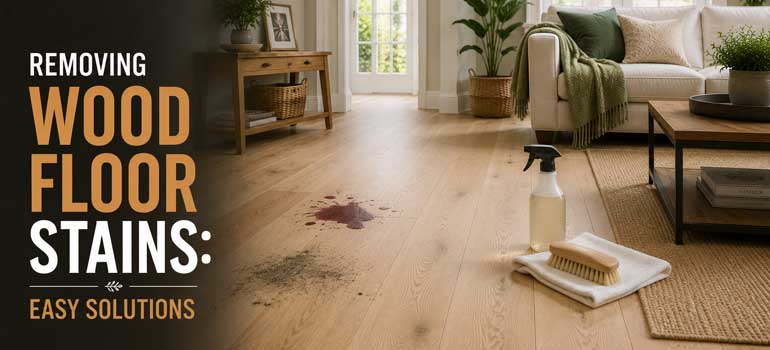
A stain on a wood floor feels worse than it usually is. Most marks respond well to the right treatment, provided you act reasonably quickly and treat the specific type of stain correctly rather than reaching for whatever's under the sink.
Identify The Stain Before You Treat It
Not every mark on a wood floor needs the same approach, and treating the wrong type incorrectly can make things worse rather than better. Broadly, stains fall into a few categories:
- Water-based marks, rings from glasses or spilled drinks that haven't fully soaked in.
- Sugary or sticky substances, sweets, juice, soft drinks.
- Alcohol spills, which can affect a finish differently to plain water.
- Oily or greasy marks, from food, cooking splashes, or hand creams.
- Ink, dye, or pigment-based stains, from pens, markers, or coloured liquids.
Knowing which category you're dealing with matters, since the right cleaning approach genuinely differs between them.
Why Speed And Finish Condition Both Matter
Two things determine how easily a stain comes out: how long it's been sitting, and how much protective finish remains in that spot. A fresh spill on a floor with a solid, intact finish is usually a quick fix, since the liquid hasn't had the chance to penetrate past the protective layer. A stain left for days on a floor with a worn or thinning finish is a different story entirely, since it's had both time and a way through to reach the bare wood underneath, where it's far more likely to become permanent.
Safe Cleaning Methods By Stain Type
A few general approaches, matched to what you're actually dealing with:
- Water rings and sugary spills usually respond well to warm water combined with a cleaning product specifically formulated for wood floors, applied with a soft cloth rather than scrubbed aggressively.
- Alcohol spills should be wiped up as quickly as possible, since alcohol can interact with certain finishes more readily than plain water.
- Oily, greasy, or pigment-based stains (ink, dye) need a bit more care. Avoid reaching for harsh household chemicals like ammonia or bleach, which can strip or discolour certain finishes, particularly oil-based ones. Instead, use a cleaner genuinely designed for wood flooring, and always test it on a small, hidden section of the floor first before applying it to the visible stain.
- Any stain, regardless of type, should be blotted rather than rubbed, working from the outside of the mark inward, to avoid spreading it further across the surrounding area.
When A Stain Has Gone Too Deep
If a stain has already reached the bare wood, through a worn finish, or simply sat too long before being noticed, surface cleaning won't be enough to fully remove it. At that point, the stain has effectively become part of the timber rather than sitting on top of the finish, and the only real fix is floor sanding the affected area down past the stained layer and refinishing it to match the rest of the floor. This is genuinely a case where DIY attempts, particularly with stronger chemicals, can make the eventual professional fix harder rather than easier, so it's worth stopping and getting advice once a stain looks like it's gone beyond surface level.
Preventing Stains Before They Happen
A few habits go a long way toward avoiding this problem altogether:
- Wipe up spills immediately, rather than letting them sit even briefly.
- Keep your floor's finish in good condition, since a healthy, intact finish is what actually stops most spills from ever reaching the bare wood in the first place. Professional wood floor recoating refreshes a worn finish without needing a full sand, provided the wood underneath is still in good shape.
- Use the right cleaning products consistently, since routine wood floor cleaning with the correct products, rather than generic household cleaners, helps keep the finish intact for longer rather than gradually wearing it down.
Stain Removal Questions Worth Knowing The Answers To
Is it safe to use ammonia on a wood floor stain?
Not generally recommended. Ammonia can strip or discolour certain finishes, particularly oil-based ones, so it's safer to use a cleaner specifically designed for wood flooring and test it on a hidden area first.
How can I tell if a stain has gone all the way through the finish?
If the mark doesn't lift at all with a wood-safe cleaner and appears darker or more set-in than a typical surface stain, it's likely reached the bare wood, which usually means sanding is the only way to fully remove it.
Does the type of finish affect how easily stains come out?
Yes, considerably. A healthy, intact finish, whether oil or lacquer, is the main barrier that stops most spills reaching the wood at all, which is why keeping the finish well maintained matters as much as treating stains quickly.
Can old, set-in stains always be removed?
Not always through cleaning alone. Once a stain has genuinely penetrated the bare timber, sanding down to fresh wood and refinishing is usually the only reliable way to fully remove it rather than just fade it.
Call us on 020 7036 0625 or request a free site visit if a stain has gone beyond what cleaning alone can fix.